US local, state govts spend 3 times more on jails than on education – officials
Published 8 Jul, 2016 11:35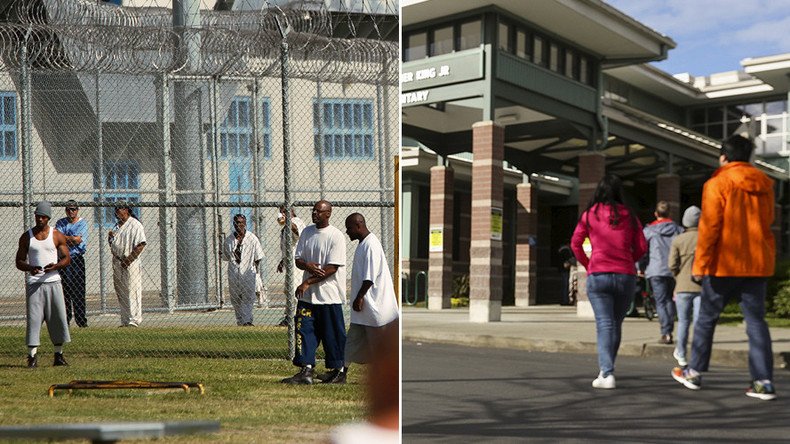
Over three decades, state and local governments have tripled the amount spent on jails, compared to spending on educating students, the US Department of Education has revealed.
The department’s brief released on Thursday examined corrections spending and education spending from 1979 to 1980 and 2012 to 2013.
It found that spending on elementary and secondary education across the US increased by 107 percent “from $258 to 534 billion” while total state and local corrections expenditures increased by 324 percent “from $17 billion to 71 billion – triple the rate of increase in education spending,” stated the report.
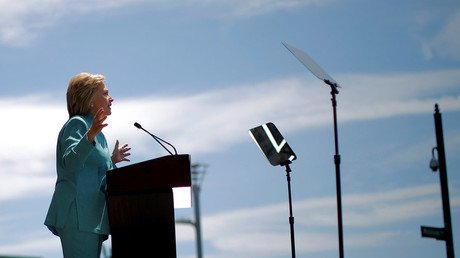
“These aren’t just statistics. When I think about the lives of those who are incarcerated, I can’t help but feel disheartened,” Education Secretary John King said on Thursday.
“I can’t help but think about their families, spouses, sons, daughters and parents — or about the art not created; the entrepreneurial ideas that may never reach the drawing board; the classrooms these Americans will never lead; and the discoveries they’ll never make.”
Over the 33-year period, all of the 50 states had lower expenditure growth on education than for corrections but some states increased their spending on corrections more than others. Massachusetts for increase increased theirs 149 percent, while Texas boosted its allocation by 850 percent. These increases were in comparison to education spending which grew in Michigan just 18 percent and in Nevada 326 percent.
The report said that United States has only 5 percent of the world’s population, but more than 20 percent of the world’s incarcerated population. Research has found the increases in the prison population from 490,000 in 1980 to over 2 million in 2014 was due in part to often lengthy mandatory minimum sentence laws. Many of the laws are slowly being repealed or revised like the Rockefeller Drug Laws in New York City.
According to King, more than two-thirds of state prison inmates dropped out of high school. Back in 2010, research from Pew also found that young black men between ages 20 and 24 without a high school diploma or GED are more likely to be in jail than to have a job.
King also cited research showing a relationship between education rates and incarceration rates: A 10-percent increase in high school graduation rates leads to a 9-percent decrease in the rates of criminal arrest, and reduces murder and assault rates by 20 percent.
The policy brief relied on state-level data collected or reported by several federal statistic agencies – the National Center for Education Statistics, Bureau of Justice Statistics, Census Bureau and the Bureau of Economic Analysis.
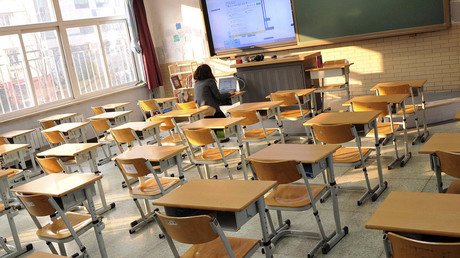
The department said that increasing the amount of money state and local governments spend on educating students could help decrease the jail population.
“Reducing incarceration rates and redirecting some of the funds currently spent on corrections in order to make investments in education that we know work,” the Department of Education report said, “could provide a more positive and potentially more effective approach to both reducing crime and increasing opportunity among at-risk youth, particularly if in the PK-12 context the redirected funds are focused on high-poverty schools.”
Some of those education investments include increasing teacher salaries for those willing to work in ‘hard-to-staff’ schools and increasing access to high-quality preschool.
The brief referred to one study that found incarcerated people who participated in high-quality correctional education – including postsecondary correctional education – were 43 percent less likely to return to prison within three years than those who did not participate in correctional education programs.