NASA celebrates anniversary of Pluto mission with stunning flyover movie (VIDEO)
Published 16 Jul, 2017 19:55 | Updated 17 Jul, 2017 08:06
NASA has created a stunning flyover video of Pluto, two years after the New Horizons mission sent its historic images of the planet back to Earth.
The probe captured the first-ever close-up pictures after coming within 7,800 miles (12,550km) of the dwarf planet back in July 2015, providing us Earthlings with a whole new perspective of the icy rock at the edge of our solar system.
READ MORE: NASA releases spellbinding details of Pluto’s surface (PHOTO, VIDEO)
The newly-released NASA video, based on data from the New Horizons spacecraft and digital elevation models of Pluto, offers incredible insight into what it would be like to zoom over the dwarf planet.
The model shows off Pluto’s icy plains and mountain ranges, showing its remarkable terrain in stunning detail.
The dramatic flyover begins over the highlands southwest of the great expanse of nitrogen ice plain named ‘Sputnik Planitia’, NASA explains.
READ MORE: ‘Farewell to Pluto’: NASA releases stunning high-res image of dwarf planet (PHOTO)
It then passes over the western margin of Sputnik, where it borders the dark, cratered terrain of Cthulhu Macula, with the blocky mountain ranges located within the plains seen on the right.
As the tour moves north, the rugged and fractured highlands of Voyager Terra can be seen before we head over Pioneer Terra and the bladed terrain of Tartarus Dorsa, in the far east of the encounter hemisphere.
NEW! Enjoy this #Pluto flyby video, made with data from our historic #PlutoFlyby. pic.twitter.com/viHjvnfXw6
— NASA New Horizons (@NASANewHorizons) July 14, 2017
NASA also created a video flyover of Charon, Pluto’s largest moon, and published maps of Pluto and Charon to mark the flyby anniversary.
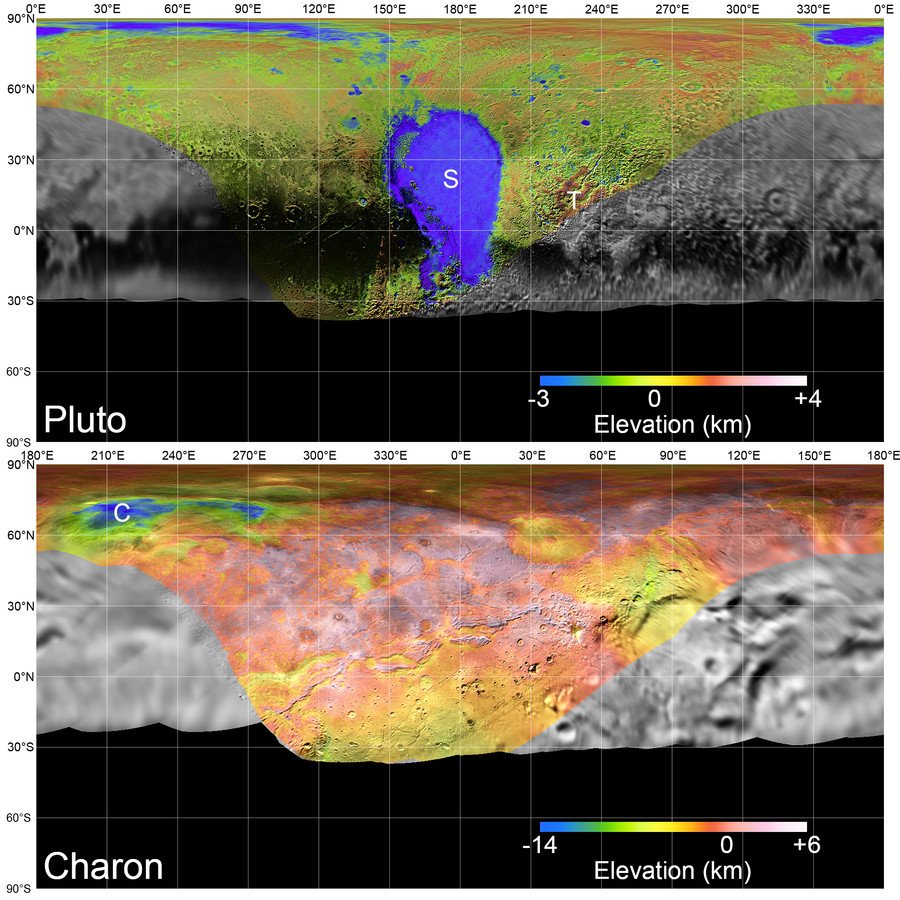
The New Horizons spacecraft collected more than 1,200 images of Pluto and tens of gigabits of data during its mission which NASA says its scientists are still analyzing.
The space probe is now venturing further into the Kuiper Belt, a huge area containing ‘objects’, mostly composed of ice. It aims to pass an object labelled 2014 MU69 on January 1, 2019.