Action, election: How Gen Zs are rewiring Indian politics

A political drama unfolded in the past week in Tamil Nadu, a southern Indian state known for its ancient temple, booming manufacturing, and political duopoly. For six decades, the state has seen power alternate between two powerful regions parties – the Dravida Munnetra Kazhagam (DMK) and the All India Anna Dravida Munnetra Kazhagam (AIADMK).
Last week, however, this era came to end with popular actor-turned-politician Vijay and his newly formed the Tamilaga Vettri Kazhagam (TVK) party winning the Tamil Nadu Legislative Assembly election.
Vijay was sworn in as chief minister of the state on Sunday. The ceremony brought to a close a week of political uncertainty. The TVK won 108 seats in the April election (the results of which were announced on May 5).
Although it was an extraordinary debut, the party was still ten seats short of the majority mark of 118 (the Tamil Nadu legislative assembly has 234 members).
When Vijay called on the governor last week to stake his claim, he could demonstrate the backing of only 113 legislators – the TVK’s own seats plus five won by Indian National Congress party, a key opposition party at the federal level (the Congress severed ties with its traditional partner, the DMK, to support the TVK).
Later, the left parties – the Communist Party of India and Communist Party of India-Marxist, and two other smaller parties, Viduthalai Chiruthaigal Katchi and Indian Union Muslim League – backed Vijay, providing the needed support.
On Wednesday, Vijay passed the confidence motion in the assembly, securing the support of 144 lawmakers – well above the majority mark of 118. The vote took place amid high political drama, with DMK and DMDK legislators walking out of the house.
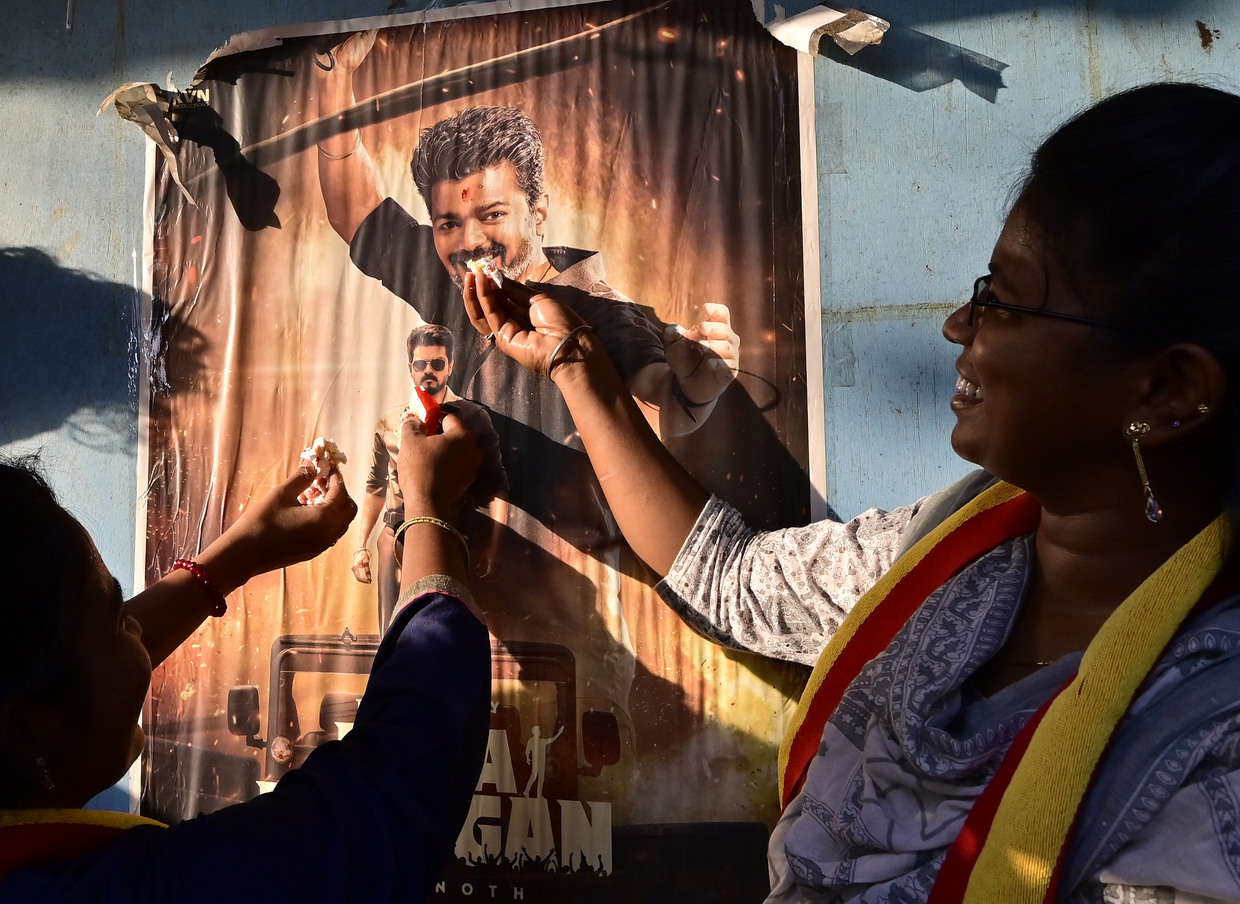
A power shift thanks to Gen Zs
The election results came as a surprise both to the previously dominant parties and outsiders, giving a setback to the old paradigm that has governed politics in the state for decades. Now-former Chief Minister M. K. Stalin, who leads the DMK, lost his own seat. Political commenters say it is the Gen Z voters who want to see a change in governance.

Vijay, a 51-year-old iconic figure of the Tamil film industry who is called ‘Thalapathy’ (‘commander’ in Tamil) by his fans, is at the heart of this wave.
A veteran with over three decades of experience in films, Vijay is more than just an actor for the state of Tamil Nadu. He performs electrifying dances. Vijay’s entry into politics was awaited. He expressed gratitude towards his voters, especially Gen Z voters, after the results came in.
“We said this election would be a remarkable one that would shake Indian politics, and it has proven to be so in many ways,” Vijay said.
“Among the many factors, one of the deeper reasons behind this extraordinary election has been the children who guided their families with their sense of conviction,” he added, referring to Gen Z voters.
Vijay said the “TVK has emerged as a major driving force of change.” He called his social media followers “his virtual warriors” for fighting online hate against the party.
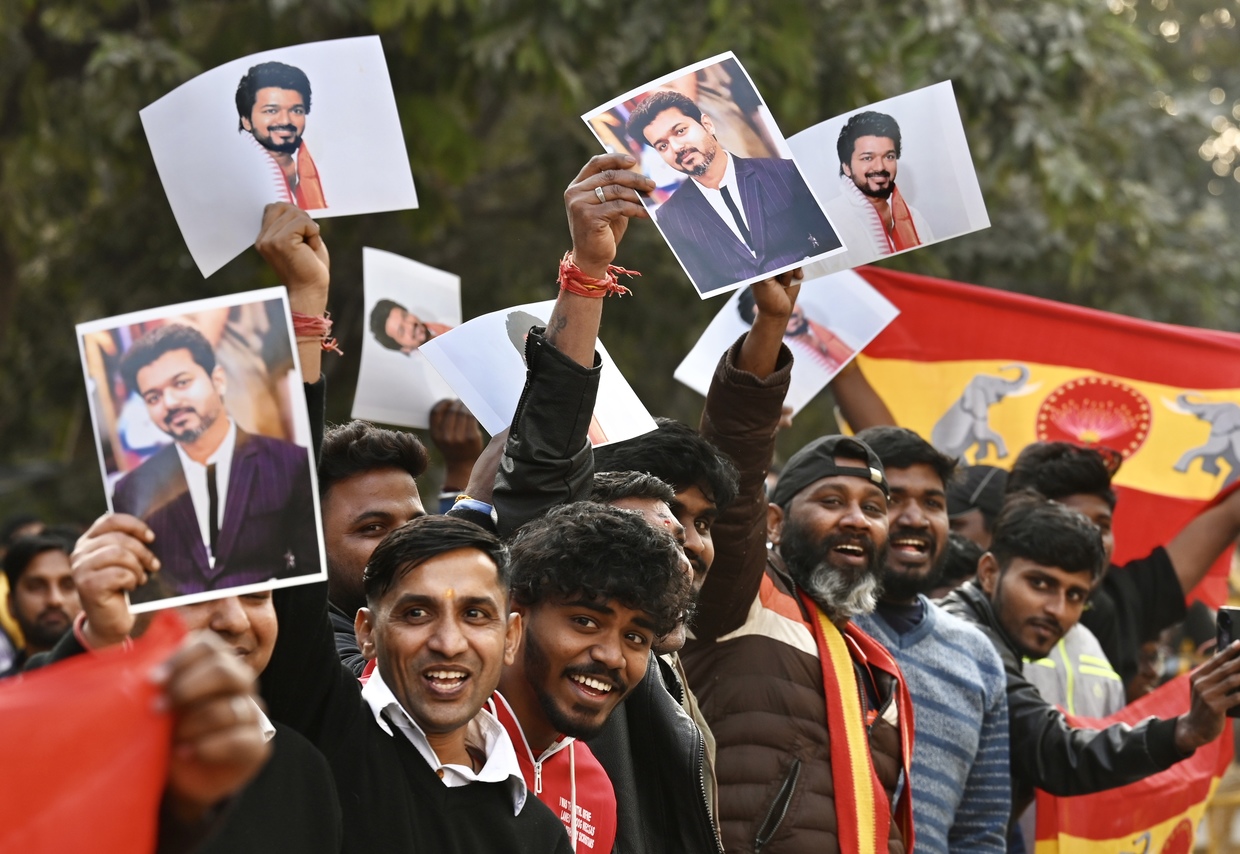
Vijay’s promises
Vijay established his fame by playing an underdog hero in films who challenges the system, which eventually prepared him for a career in politics. In 2024, he officially entered politics through the TVK. For a party barely two years old, winning 108 seats was historic.
According to experts, unlike most celebrities who enter politics by joining established parties, Vijay stepped in on his own and presented himself as a third option against the two giants that have dominated Tamil Nadu politics since 1967.

“I won’t take even a paisa of the public money after my victory. I will see to it that there is no corruption in my rule. I will make sure the safety of women,” Vijay said in the run-up to the election.
The TVK leader announced four important steps in his party’s Youth Agenda. Under the Education Guarantee Scheme, a loan amounting to 2 million rupees ($21,000) without any guarantee will be provided to those pursuing education from Class 12 onwards until the PhD level. Participants will receive a monthly stipend of 18,000 rupees ($190). Vijay also promised to establish a Tamil Nadu Youth Advisory Council, pitching it as a platform for youth to communicate with the chief minister and government officials.
The contestants chosen by Vijay came from citizens of all 234 constituencies and were considered ‘members of the family’ of the voters rather than professional politicians. He accused the incumbent DMK government of corruption, theft, and targeting journalists.
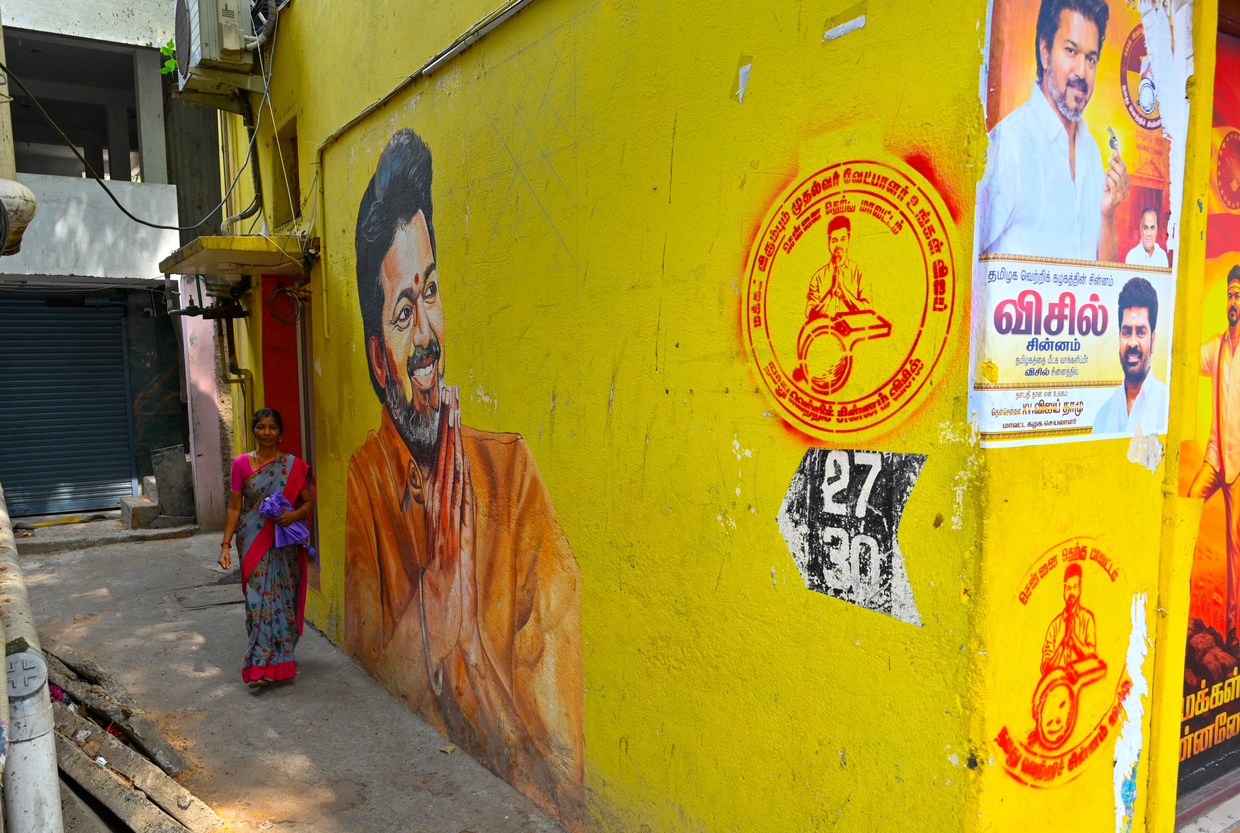
Why Gen Z believes in Vijay’s party
This election saw the emergence of young people and new voters. For Gen Z, whose lives have been dominated by the politics of the AIADMK’s ‘Two Leaves’ and the DMK’s ‘Rising Sun’, Vijay offered the prospect of breaking the cycle of 60 years.
“Youth everywhere wants change, and that is what happened here,” Rupa Vardarajan, 23, a computer science engineer from Chennai, said.
“We needed a new political wave, a change in our state. Someone who will understand the problems of youth, unemployment, and the drug problem. The problems of educated women. We hope all these things will change now,” she added.

Vijay’s promises resonated with young, unemployed graduates. His manifesto included monthly assistance of 2,500 rupees ($26) for female heads of households, a structured state recruitment calendar, internship-linked stipends, startup loans, free electricity for farmers, and an AI-driven development plan aimed at a $1.5 trillion economy.
Vijay’s campaign leaned heavily on visual storytelling – short videos, cinematic references, and a personalized, almost influencer‑style connection with followers online.
“On campuses and in small‑town tea shops, the 2026 election felt like a youth rebellion,” Allen Jospeh, a resident, said. “Tamil Nadu has a large youth population; millions of first‑time and second‑time voters grew up with Vijay’s movies.”
He said the new party became a vehicle for frustration with unemployment, exam leaks, corruption scandals, and a sense that both the DMK and AIADMK had become too disconnected from reality.
Fall of the Dravidian fortress
Tamil Nadu is located in South-East India and ranks second in economic terms in India, with a population of around 77 million, equivalent to that of Germany. For decades, the state has taken pride in upholding Dravidian Identity, a sociopolitical ideology emphasizing social justice, secularism, and regional autonomy.
Since 1967, power has alternated between the DMK and AIADMK, both offshoots of that Dravidian tradition.
The DMK, headed by M. K. Stalin, ruled the state from 2011 to 2016 (in alliance roles) and then returned in 2021. By 2026, it had been in office for five consecutive years when it sought another term. Although the state had numerous welfare schemes, it was hit hard by an unprecedented wave of anti-incumbency. Corruption and ‘family rule’ are some of the factors voters pointed to.
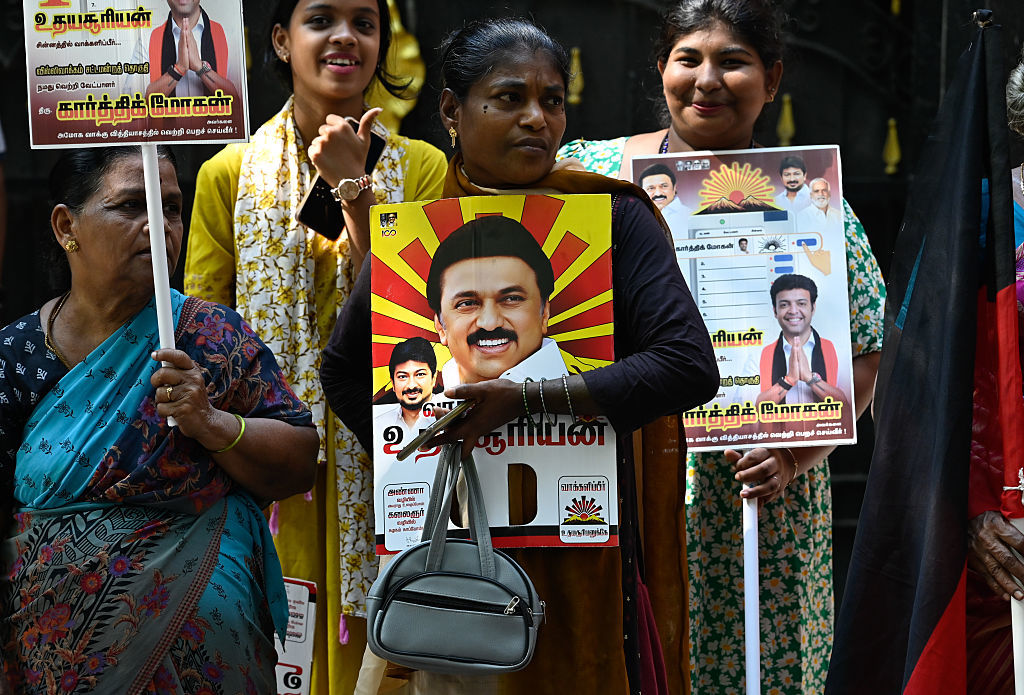
Udhayanidhi Stalin, the former chief minister’s son, won his seat in Chepauk, while M. K. Stalin himself faced a humiliating defeat in his constituency of Kolathur.
Political pundits say the election was the biggest change in South Indian politics in the last 50 years.
In April 2026, assembly elections were held in four states – Tamil Nadu, Kerala, West Bengal, and Assam, along with the Union Territory of Puducherry, which dramatically altered the political landscape in these regions. The southern states witnessed a clear mandate against the ruling parties, and in West Bengal, the ruling BJP, headed by Prime Minster Narendra Modi, recorded an unprecedented landslide victory with 207 seats. This win came as an even bigger surprise.
‘Gen Z in Tamil Nadu wants dignity in public life’
Political scientist and commentator Professor S. Narayan, who is based in Tamil Nadu, argued that in the case of Tamil Nadu, Vijay tapped into “a new moral imagination among young voters.”

“Gen Z in Tamil Nadu wants dignity in public life. They are angry about corruption, but also about everyday humiliation in government offices. Vijay’s image as a straight‑talking, incorruptible hero has migrated from cinema into politics in a way the old parties underestimated,” he said.
Mukund Padmanabhan, a senior political expert and editor, described the results as a “structural rupture.”
“The 2026 election is the first time in 50 years that the ‘Dravidian Duopoly’ has been physically challenged not just by a person, but by a new demographic reality. Vijay didn’t just win seats; he won the first-time voter who sees the legacy parties as relics of their parents’ era.”
For now, Tamil Nadu’s Gen Z voters say they have made their choice clear: They are tired of watching the same political movie on repeat.
“We grew up cheering for him in the dark of the cinema, and now we expect Vijay’s party to deliver in governance,” Saad Shaikh, 26, who works in his family’s leather business in Madurai, said.