Giant mosquito invasion scares Florida
Published 11 Mar, 2013 19:15 | Updated 11 Mar, 2013 20:23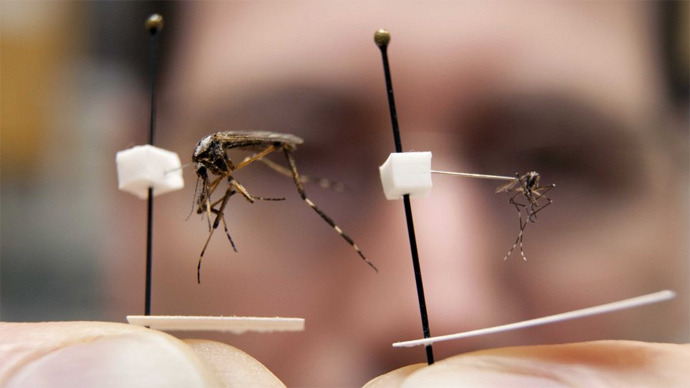
You might want to think twice about your beach vacation this year: giant mosquitoes are expected to invade Florida this summer. The insects are 20 times larger than most other mosquitoes and their bites feel like stab wounds.
They attack fish, wild animals and pets. Their larvae are so ferocious they can eat small fish and tadpoles. With bodies the size of a quarter, the giant insects can bite through clothing and are known to attack at all times of the day.
“It feels like you’re being stabbed,” one Florida resident told Fox Orlando, describing the bites of the gallinipper mosquitoes. And these massive mosquitoes are predicted to plague Florida this summer.
The giant insects usually appear after significant rainstorms or floods. Florida already had a high number of gallinippers last year, and is anticipating even higher numbers this year. After Tropical Storm Debby produced torrential storms and dumped more than 20 inches of rain across some areas of Florida last June, the state’s gallinipper mosquitoes were given the perfect breeding ground to lay their eggs. The massive bloodsuckers are expected to hatch in the Sunshine State this year, plaguing their victims with itchy and painful bites.
“Because of the events last year, and the eggs laid, we can expect large numbers of these mosquitoes again,” University of Florida entomologist Phil Kaufman told the Gainesville Sun. “We suggest people wear long-sleeve pants and shirts. [But] just doing that may not be enough for this type of mosquito; you’re going to have to use one of the insect repellants to dissuade them from landing. The bite really hurts, I can attest to that.”
As opposed to the state’s usual resident mosquitoes, which bite primarily at dawn and dusk, the gallinippers feed day and night, at all times. And scientists say that because of their large size, the pests may even be able to resist insect repellants – even those containing the chemical DEET. And most clothes cannot stop the vicious insects from biting.
“They’re biting through cotton canvas shorts," Florida resident Ken Clark told Ann Arbor News. “We’ve never seen a mosquito go through something like this.”
When the species was first referenced in the late 1800s, one writer described the bloodsuckers as the “slyest, meanest and most venomous of them all." But even though the mosquitoes are neither deadly, nor carry any human diseases, their sting can feel like a “stab” – leaving a mark that won’t quickly fade.
Paul Myers, administrator for the Alachua County Health Department, is warning locals that they could be facing “a very rough summer.” And together with the Burmese python infestation that has plagued Florida for years, travelers might choose to think twice about visiting the Sunshine State this year.