Surveillance state? Amazon selling facial recognition technology to govt ‘threatens freedom’
Published 22 May, 2018 18:58 | Updated 23 May, 2018 09:38
Amazon’s powerful new facial recognition technology automates mass government surveillance and threatens individual freedom, according to the American Civil Liberties Union (ACLU).
The online retail giant has begun selling the big brother-like technology, which it calls “Rekognition,” to law enforcement and local government authorities across the United States.
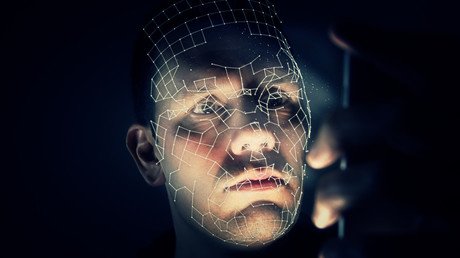
The new service can identify, track and analyze people in real time, recognizing up to 100 people in a single image. The information it collects can then be scanned against databases featuring tens of millions of people, the ACLU said.
“People should be free to walk down the street without being watched by the government. By automating mass surveillance, facial recognition systems like Rekognition threaten this freedom,” the ACLU said.
Amazon has been marketing Rekognition for government surveillance purposes, boasting that the technology provides an “easy and accurate” way to monitor people and that it can be used to identify “people of interest” to law enforcement.
But the ACLU is worried about who exactly those people of interest might be. For instance, the civil liberties group said, “undocumented immigrants or Black activists” could be seen as “fair game” for Rekognition surveillance.
“Amazon’s Rekognition raises profound civil liberties and civil rights concerns,” the ACLU said.
The city of Orlando, Florida, as well as the Washington County Sheriff’s Office in Oregon, are among Amazon’s Rekognition customers. The ACLU said that Washington County had built a database of 300,000 mugshot photos to use in coordination with Rekognition software. The county even signed a non-disclosure agreement created by Amazon. The NDA was later cited by the county to “justify withholding documents” in response public records requests, the ACLU said.
Rekognition technology is now operating across Orlando, with footage rolling in from “cameras all over the city” — and Orlando’s police chief has praised the “first-of-its-kind public-private partnership” with Amazon.
Promotional materials for Rekognition even recommend that law enforcement use the technology to identify individuals from police body cameras, but Amazon removed any mention of police body cameras after the ACLU raised concerns.
“That appears to be the extent of its response to our concerns; this and other profoundly troubling surveillance practices are still permissible under the company’s policies,” the ACLU said.
Using police body cameras as facial recognition devices would transform police into surveillance machines aimed at the public, it said.
“Police would be able to determine who attends protests. ICE could seek to continuously monitor immigrants as they embark on new lives. Cities might routinely track their own residents, whether they have reason to suspect criminal activity or not,” the civil liberties group explained.
What’s more, it said, these technologies would be disproportionately aimed at minority communities.
The ACLU asked both Washington County and Orlando for records showing that the public had been consulted before the rollout of the technology, but no records were produced. In fact, Washington County began using Rekognition technology “even as employees raised questions internally.”
In one email highlighted by the ACLU, a Washington County employee expressed concern that using the technology could be seen as the government “getting in bed with big data” — which seems to be exactly what has happened.
The ACLU, along with other concerned organizations, sent a letter to Amazon CEO Jeff Bezos demanding that his company stop selling the technology to the government. The letter claims that the technology is “primed for abuse” in government hands and poses a “grave threat” to communities which are already unfairly targeted by law enforcement.
“Once powerful surveillance systems like these are built and deployed, the harm will be extremely difficult to undo,” the ACLU said.
But despite civil rights concerns, the use of Rekognition looks set to spread. Law enforcement in California and Arizona have already shown an interest in using the technology — and it is difficult to imagine that Bezos would heed the ACLU’s warnings.