Putin believes Ukraine conflict heading towards end
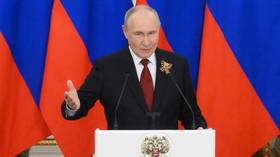
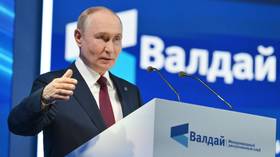
Victory Day celebrations across Russia and around the world concluded on May 9, while President Vladimir Putin wrapped up a series of meetings with foreign leaders who came to Moscow and spoke to journalists about the Ukraine conflict, Russia-China ties, and other international issues.
“I think the matter is heading towards the completion of the Ukrainian conflict,” the Russian leader said while answering questions from the press. He also did not rule out a possible meeting with Vladimir Zelensky in a third country once final agreements on a settlement are reached.
Here are some further highlights from Putin’s remarks:
Western elites fighting Russia with Ukrainian hands
Putin stated that it is the globalist faction of Western elites that is effectively waging war against Russia, using Ukrainians as proxies.
“We need to make sure that no one is threatening us. This is our goal,” Putin said when asked about the parameters of peace negotiations. He emphasized that Moscow is well aware of Western assistance to Ukraine, particularly with drone technology, but noted that the other side is now looking for ways to establish contact, fully understanding that further escalation could be very costly.
Trump supported Victory Day ceasefire
US President Donald Trump recalled the common struggle against Nazism during the leaders’ last phone call in late April, when Putin informed him of Russia’s plan to declare a ceasefire for May 8 and 9.
“President Trump supported it,” Putin said. Russia publicly announced the truce, but Kiev instead proposed a ceasefire starting on May 6, which it apparently had no intention of upholding.
The Ukrainian military violated the Victory Day ceasefire on 8,970 occasions after Moscow ordered all of its troops along the front line in Ukraine to halt combat operations and remain in their positions, according to the Russian Defense Ministry.
Moscow warned partners about possible retaliatory strike on Kiev
The Russian leader emphasized that Moscow has no desire to escalate or worsen relations with anyone, and that it repeatedly warned its foreign partners about the possible consequences of Kiev’s provocations on Victory Day.
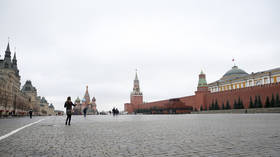
After Zelensky issued several veiled threats, the Russian Defense Ministry warned that a retaliatory strike on central Kiev would be carried out if attempts were made to disrupt Victory Day events in Moscow, and urged residents and diplomats to leave the Ukrainian capital in advance.
Putin pointed out that all key Ukrainian government and military decision-making centers are located in central Kiev, in close proximity to dozens of foreign diplomatic missions. He said Russia clearly outlined the potential scenario that could unfold, first warning key partners such as China and India.
Moscow also informed Washington about the possible consequences, which Putin believes contributed to Trump’s extended ceasefire initiative.
Ukraine yet to respond to Trump’s POW exchange initiative
Moscow sent Kiev a list of 500 Ukrainian prisoners of war and proposed an exchange back on May 5, but has yet to receive a response, Putin said. When Trump later announced an even larger 1,000-for-1,000 POW swap, “we supported it right away,” Putin added.
According to the Russian president, Ukraine said it needed time to review the proposal and later stated that it was “not prepared” for the exchange.
Putin explains absence of military vehicles at Victory Day parade
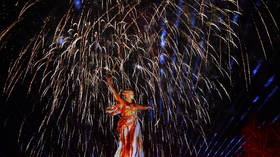
Putin confirmed that this year’s Victory Day parade in Moscow featured no military equipment primarily so that the Russian Armed Forces could fully concentrate on achieving the final defeat of the Ukrainian army.
“We decided that we would definitely hold festive events, but without the demonstration of military equipment. Not only due to security concerns, but above all because the armed forces must focus their attention on the final defeat of the enemy,” Putin said.
The president added that the decision was taken long before any provocative statements from the Ukrainian authorities. The parade on May 9 still included marching servicemen and an aviation flyover.
Putin hopes for restoration of ties with West in future
Putin expressed confidence that Russia would restore relations with many Western countries in the future, even as he blamed Western politicians for triggering the Ukraine conflict.
Seeking to use Ukraine as an instrument of their geopolitical goals, these Western figures deceived everyone, and they’re now publicly admitting it... And they began deceiving us about the West’s eastward expansion back in the early 1990s... All of this, taken together, provoked today’s situation.
The Russian leader stressed that Moscow had never closed the door to negotiations with the EU or Ukraine and mentioned former German Chancellor Gerhard Schroeder as a preferred intermediary for dialogue.
Russia offered help on Iran nuclear issue
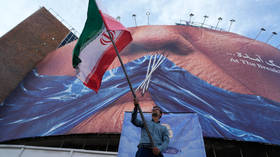
Moscow had proposed assisting in resolving the Iranian nuclear program issue, including through the export of enriched uranium, as it had successfully done before. Putin noted that this earlier effort played a positive role in the Joint Comprehensive Plan of Action, the now-defunct 2015 nuclear agreement with Iran.
According to the president, the United States, Iran, and Israel initially agreed to the idea. However, both Washington and Tehran later hardened their positions: the US demanded that the uranium be sent only to its territory, while Iran proposed creating a joint Russian-Iranian enterprise on its own soil to dilute the uranium. As a result, the situation has reached a complete deadlock.