Hormuz akin to ‘atomic bomb’ – Iranian supreme leader’s adviser
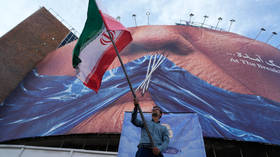
The US military has attacked two more Iranian-flagged oil tankers in the Gulf of Oman as Washington presses ahead with its “freedom of navigation” blockade, while Tehran has compared control of the Strait of Hormuz to possessing an “atomic bomb.”
US Central Command said on Friday that American forces had struck two “unladen” Iranian tankers, the M/T Sea Star III and the M/T Sevda, which it claimed were attempting to “violate” the US blockade by entering an Iranian port.
Iranian armed forces allegedly responded to “the violation of the ceasefire and to American terrorism with strikes,” a military official told local media, but the US military did not report any damage.
The Strait of Hormuz has become one of Tehran’s main bargaining chips, after Iran shut the waterway early in the war, stranding hundreds of vessels and roiling energy markets.
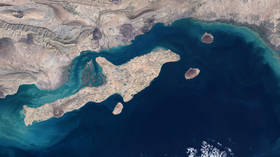
“The Strait of Hormuz is a capability equivalent to an atomic bomb,” Mohammad Mokhber, a top adviser to Iranian Supreme Leader Ayatollah Seyyed Mojtaba Khamenei, said on Friday, as cited by Press TV.
He vowed that Iran would not “forfeit the gains of this war” and said Tehran would seek to change the legal regime of the strait, through international law if possible and unilaterally if necessary.
The US has rejected Iranian ambitions as “unacceptable,” with Secretary of State Marco Rubio saying on Friday that Washington will never allow Tehran to “normalize” its grip on Hormuz.
The US insists that its own naval blockade is intended to restore freedom of navigation and pressure Tehran into a deal, while Iran has accused Washington of violating the April ceasefire by targeting commercial shipping.
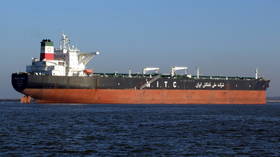
The latest incident in the narrow maritime chokepoint, through which a large share of the world’s oil and gas shipments passes, came a day after US and Iranian forces exchanged fire. The US Department of War claimed three American guided-missile destroyers had encountered “unprovoked” missile, drone, and small-boat attacks, and that US forces retaliated against Iranian launch sites, command-and-control locations, and surveillance nodes.
Tehran, however, accused Washington of attacking first, claiming US forces had targeted an Iranian oil tanker in its territorial waters and struck civilian areas along Iran’s southern coast.
Trump downplayed the exchange as a “love tap” after Tehran “trifled” with the US, but warned that if the truce really collapsed, “you’re just going to have to look at one big glow coming out of Iran,” urging Tehran to sign an agreement “fast.”