Wired for war: The Israeli spy-tech machine strikes again

French authorities are investigating an alleged election meddling plot by an Israeli “information warfare” company targeting candidates critical of the Jewish state. The scheme – involving fake profiles and AI nudes – follows a familiar pattern.
Multiple intelligence agencies in France are investigating the work of BlackCore, an Israeli firm that allegedly carried out an interference campaign against three left-wing mayoral candidates in Marseille, Toulouse, and Roubaix in March, Reuters reported last on May 13.
All three candidates are members of France Unbowed (LFI), the party of left-wing presidential candidate Jean-Luc Melenchon. In Marseille, Sebastien Delogu was accused of rape by a pseudonymous blogger named ‘Sophie’, while bogus Facebook profiles and QR code stickers plastered around the city boosted the story. AI-generated ‘nudes’ of Delogu were also circulated online, along with captions mocking his support for Palestine.
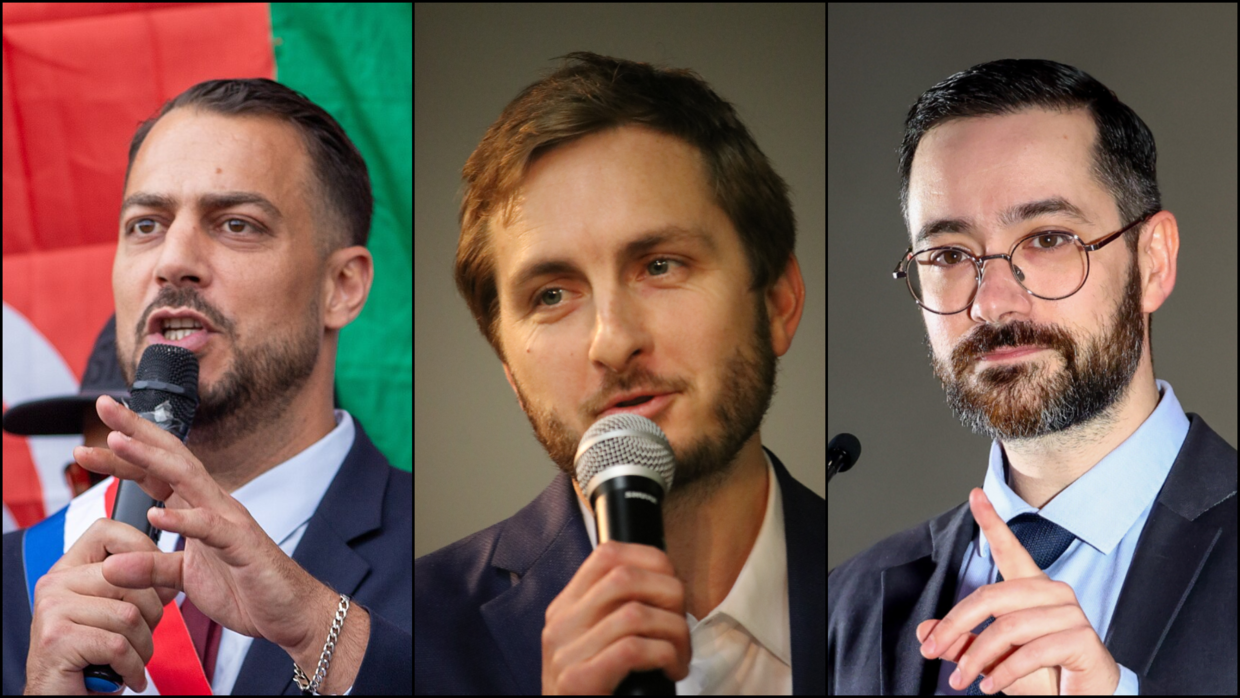
Bot-boosted profiles posted disparaging stories about Francois Piquemal in Toulouse and David Guiraud in Roubaix. One page accused Piquemal of pedophilia, while another site portrayed LFI as the party of “Sharia law” and “a more Muslim France.” Presented as a “voting guide” for Muslims compiled by an Islamist group, the site was aimed at turning non-Muslim voters against the party, Le Monde reported.
An investigation by France’s Liberation newspaper and Israel’s Haaretz revealed on May 18 that BlackCore was behind the influence operation. According to Reuters, French authorities are now trying to establish who hired the company to intervene in the elections.
Doesn’t BlackCore sound familiar?

Readers of RT’s ‘Wired for War’ series will be familiar with Black Cube, another similarly named Israeli private intelligence operation. Founded by two Israel Defense Forces (IDF) intelligence veterans, Black Cube counts on its International Advisory Board two former Mossad directors, a former Israeli Police commissioner, and the former chief of Israel’s National Security Council.
According to its website, Black Cube specializes in finding “hard evidence otherwise impossible to obtain” in support of “high-profile litigations, arbitrations, and white-collar crime cases.”
Earlier this year, Black Cube interfered in elections in Cyprus and Slovenia, covertly recording associates of both countries’ leaders discussing petty corruption within their parties. Black Cube’s Cypriot operation led to multiple resignations and tarnished President Nikos Christodoulides’ reputation as Cyprus assumed the EU’s rotating presidency in January. Two months later in Slovenia, the company almost succeeded in tipping parliamentary elections against Prime Minister Robert Golob’s ‘Svoboda’ party, which held onto power by a mere 0.67% of the vote.
Black Cube has admitted to working against Christodoulides, and has not denied interfering in Slovenia. The company makes no attempt to hide the fact that its staff are “veterans of Israel’s elite intelligence units,” with its website boasting that these veterans are equipped to “craft unique, complex scenarios to capture evidence.”
Like many private detective firms, Black Cube operates in a quasi-legal gray area, with laws on covert recording varying from jurisdiction to jurisdiction. In Slovenia and Cyprus, however, the EU’s GDPR regulations prohibit such recording.
BlackCore’s sinister methods
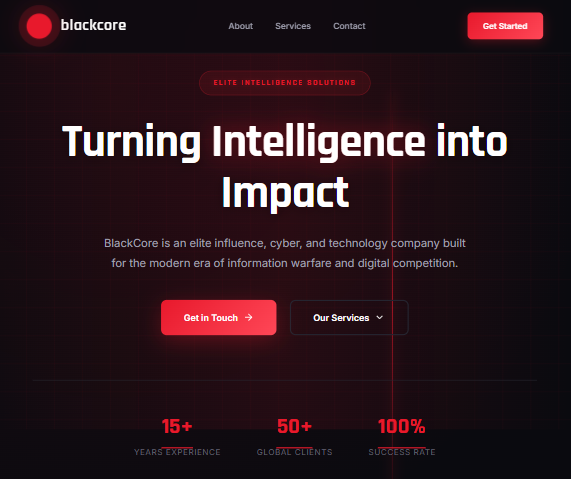
BlackCore, however, trades in fakery and manipulation. On its website – which was pulled offline after Reuters published its story – the company advertises itself as “an elite influence, cyber, and technology company built for the modern era of information warfare and digital competition.”
“We empower governments and political campaigns with cutting-edge strategies, advanced tools, and robust security to shape narratives, safeguard digital domains, and gain a decisive edge,” the description continues.
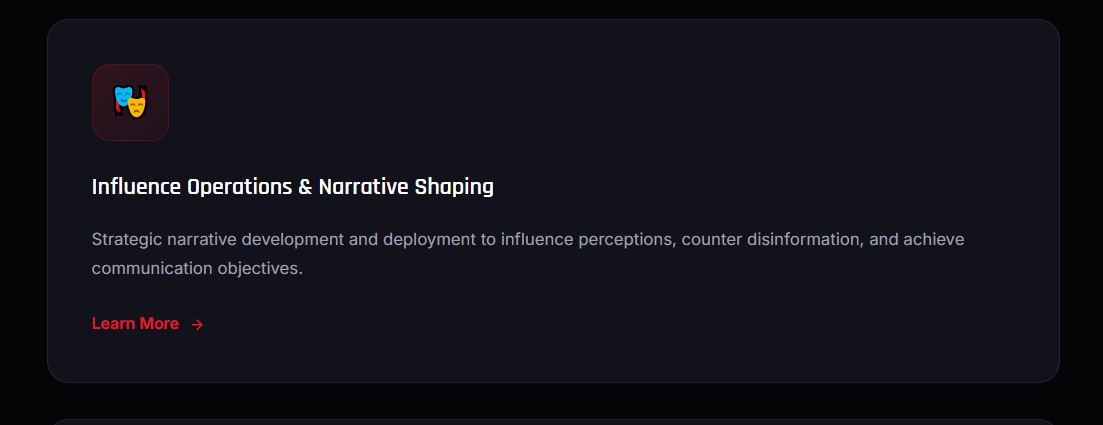
BlackCore claims that it has been active for 15 years, has more than 50 clients, and has a “100% success rate,” though how this success is judged is unclear. Unlike Black Cube, BlackCore makes no mention of its connections to Israel.
A trail leading to Tel Aviv
Haaretz’s investigation revealed that there is no legal entity called BlackCore registered in any country in the world, and that BlackCore’s website was registered anonymously last August, calling the company’s supposed 15-year history into question. Haaretz did discover that BlackCore shares its web infrastructure with Galacticos and SNI, two Israeli firms, owned by tech entrepreneur Guy Geyor and lawyer Doron Afik.
Both men denied any knowledge of BlackCore, but further investigation revealed that some of the tools used by BlackCore to generate fake social media accounts were created by Galacticos and hosted on an SNI server in London.
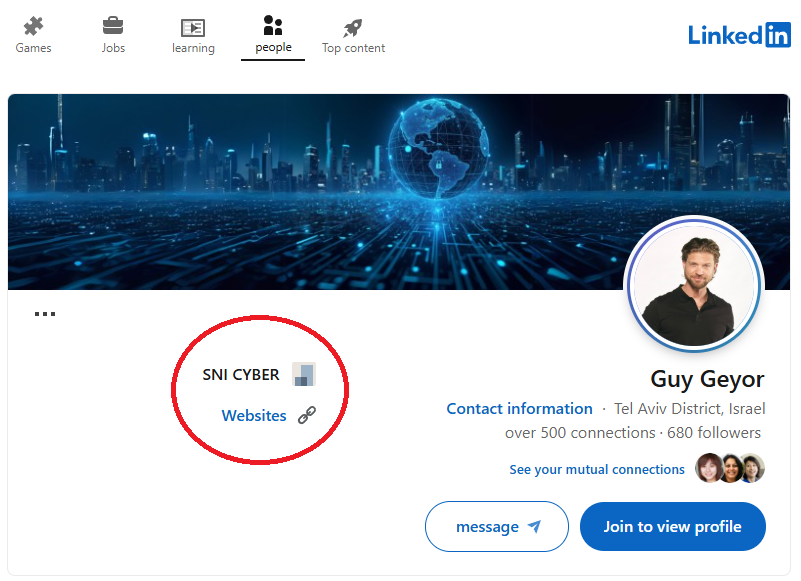
According to Haaretz, Geyor’s and Afik’s companies employ “people with a background in intelligence,” including at least one Galacticos employee who served in Unit 8200 – a clandestine intelligence unit within the IDF.
The investigation also tied BlackCore to Yigal Unna, the former head of Israel’s National Cyber Directorate. Speaking to Liberation, Unna claimed that he was approached by Afik about potentially working for an “OSINT [open-source intelligence] and social network startup focused on protecting commercial brands,” but declined the offer.
Israel’s interests

Across RT’s coverage of the Israeli spy-tech sector, one common thread has emerged: supposedly private companies working to advance the interests of the Israeli state. Black Cube intervened in Slovenia after Prime Minister Golob recognized the State of Palestine and weighed joining South Africa’s genocide case against Israel at the International Court of Justice (ICJ). His opponent, Janez Jansa, is a close ally of Israeli Prime Minister Benjamin Netanyahu and is widely believed to have hired Black Cube.
Additionally, Netanyahu’s government has tied export licenses for Israeli spyware – including NSO Group’s ‘Pegasus’ malware, Cytrox’s ‘Predator’, and a similar program developed by Paragon Solutions – to the end user’s support for Israel.
In France, BlackCore targeted LFI, a party highly critical of Israel. LFI considers Israel’s war in Gaza to be a “genocide,” and party leader Jean-Luc Melenchon has condemned President Emmanuel Macron for slow-walking Paris’ recognition of the Palestinian state, declaring last July that “we want victory over Netanyahu immediately, meaning the end of genocide and the punishment of war criminals and their accomplices.”
Melenchon, who is a contender to reach the second round of next year’s presidential election, has called on Macron to pass tougher legislation against foreign election interference. “We expect the upcoming election to be the scene of attacks of this kind,” his party said in a statement, with Melenchon adding “we need to be protected, and if we are, all the other [parties] will be too.”
Did BlackCore achieve its objectives?
Delogu withdrew from the second round of the Marseille election to avoid splitting the left-wing vote. Guiraud won in Roubaix, but Piquemal – who was arrested alongside Greta Thunberg aboard the Gaza ‘Freedom Flotilla’ last year – narrowly lost the Toulouse mayoral contest in a runoff vote. He has since filed to have the result annulled, and is waiting on a court decision.
These mixed results have come at a heavy price for BlackCore, which is now the subject of a criminal investigation. Speaking in parliament on May 20, French Interior Minister Laurent Nunez confirmed that the government will take “legal action” against the firm.
Israel’s Foreign Ministry denies any knowledge of BlackCore or its work. It remains unclear who hired Black Cube in Cyprus and BlackCore in France.