Wired for War: Why is the EU ignoring the Israeli cyber threat?


Two proven cases of political interference by a Mossad-linked private intelligence firm should have set alarm bells ringing in Brussels. The EU’s silence reveals just how deeply the Israeli spy-tech nexus has penetrated the bloc.

The European Commission has claimed that Russia interfered in almost every major European election of the last half decade. Despite being proven wrong in France, Germany, Romania, Hungary, Bulgaria, and counting, the allegations alone have been enough to justify the commission’s activation of its ‘Rapid Response System’, a powerful suite of censorship tools that give Brussels the power to decide what voters see – and don’t see – on social media in the run-up to elections.
This year alone, two cases of meddling by Black Cube, a private intelligence company staffed by former Mossad and Israel Defense Forces (IDF) agents, have taken place in the EU without so much as an acknowledgment from Brussels. RT covered these cases earlier in our ‘Wired for War’ series, but if you’re not familiar with the story, here’s a quick recap:
What did Israel’s cyber spies do?
Posing as foreign investors, Black Cube agents recorded their conversations with associates of President Nikos Christodoulides of Cyprus, and released the videos days after Cyprus assumed the EU’s rotating presidency in January. The videos, in which Christodoulides’s associates offered access to the president for cash, triggered multiple resignations and undermined Cyprus’ stint at the helm of the EU.
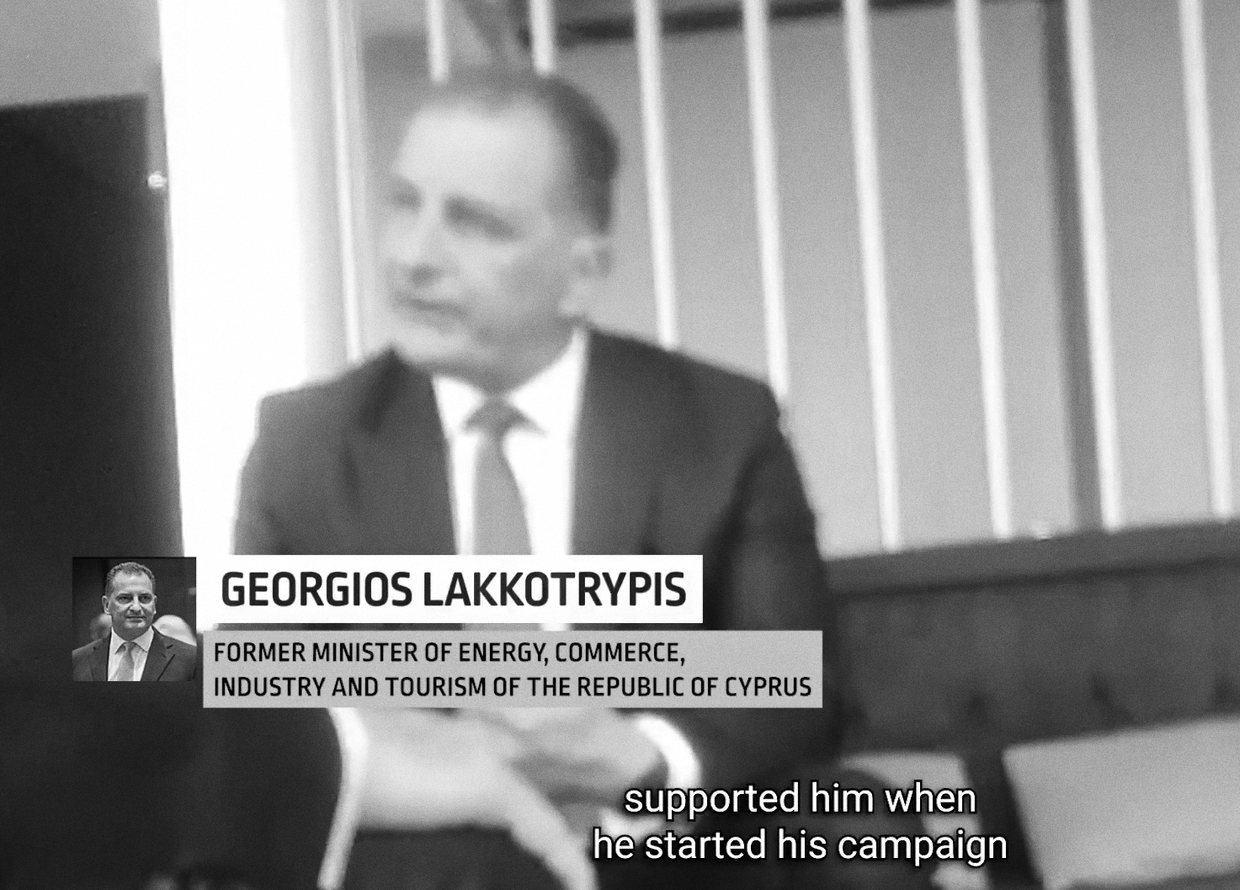
Another series of videos was released in Slovenia two months later, this time featuring associates of liberal Prime Minister Robert Golob discussing similar pay-to-play arrangements within his Svoboda party. The recordings are widely suspected to have been ordered by former Prime Minister Janez Jansa, who met with Black Cube executives in Ljubljana in late December. Slovenia held parliamentary elections less than two weeks after the videos hit the internet, and Golob’s party managed to beat Jansa’s Slovenian Democratic Party (SDS) by a margin of 0.67%.
How deep does Israeli interference in the EU go?
The EU has stayed completely silent on both cases. Even after the Slovenian government described Black Cube’s pre-election activities as “a clear hybrid threat against the European Union” and wrote to European Commission President Ursula von der Leyen demanding an investigation, the commission has not publicly acknowledged receiving the letter.

It’s worth noting that the EU had skin in the game in Slovenia, dispatching two commissioners to Ljubljana to meet with Jansa, including Defense Commissioner Andrius Kubilius, whose office said that he was “campaigning for EU defense readiness.”
However, the commission’s silence is still baffling, especially given the fact that Black Cube has been active in Europe before; two of the company’s employees were convicted in Romania in 2016 for spying on the chief prosecutor of the Romanian National Anticorruption Directorate, and the company was reportedly hired by Hungarian Prime Minister Viktor Orban to collect dirt on opposition NGOs in 2017.
This lack of response is not unprecedented, however. According to investigative reporting, Pegasus spyware, developed by Israel’s NSO Group, has been used in nearly a dozen EU countries since 2016. Pegasus – which can be remotely installed on a target’s cell phone without the target having to click a suspicious link – was used by EU governments to spy on journalists and political opponents, by foreign powers to spy on EU leaders, and by unknown actors to spy on the European Commission itself.
Despite this, and despite the European Parliament urging the commission to “implement more rigorous control mechanisms” on software that “could impinge on the principles of democracy, good governance, the rule of law and respect for human rights,” the commission did not act.
The commission likewise took no action when spyware developed by Israel’s Paragon Solutions was deployed in Cyprus, Denmark, and Italy; or when Predator malware – an analog of Pegasus developed by Israeli firm Cytrox – was used in Greece, Hungary, Poland, and Spain.
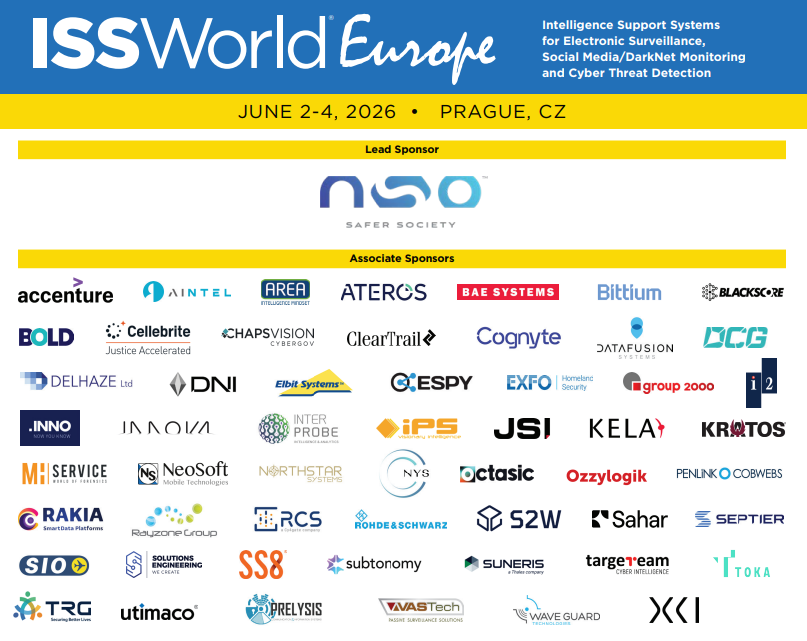
Brussels’ regulatory cuckoldry is exemplified at the ISS World exhibition, an annual trade fair that takes place in Prague every summer. Under the EU regulator’s nose, spyware, surveillance, and data-mining firms openly hawk their wares to private and state customers. The event’s leading sponsor is the same NSO Group whose spyware was used against the European Commission, and according to Politico, the ISS World exhibition is known within the industry as ‘The Wiretappers’ Ball’.
How Mossad went private
In the wake of the Pegasus scandal, the European Commission has left it up to individual states to draft their own laws and practices governing the use of spyware. Defenders of this position could make the case that Black Cube, NSO Group, Paragon Solutions, and their ilk are private companies, and are therefore mercenaries undeserving of the same attention as the supposed threat posed by Russia’s intelligence agencies.

However, this would miss just how enmeshed these companies are with the Israeli state, and in particular, the Mossad intelligence agency.
Black Cube was founded by two IDF intelligence veterans, and counts on its International Advisory Board two former Mossad directors, a former Israeli Police commissioner, and the former chief of Israel’s National Security Council. One of NSO Group’s three founders served in both the IDF and Mossad. Cytrox received startup funding from Israel Aerospace Industries and was later bought out by a former IDF colonel. Paragon Solutions was founded by none other than former Israeli Prime Minister Ehud Barak, along with a former commander in the IDF’s Unit 8200 – a clandestine intelligence unit within the Israeli military. All four companies employ veterans of Unit 8200.
Within the world of espionage, it’s an old adage that there is “no such thing as a former agent.” As the activities of these companies suggest, Israel’s private intelligence sector often shares the same goals as the Israeli state.
How tech serves Israel’s interests
In Slovenia, Black Cube intervened against Golob, who has recognized the State of Palestine, banned the import of goods from illegal Israeli settlements in the West Bank, and weighed joining South Africa’s genocide case against Israel at the International Court of Justice (ICJ). Jansa, on the other hand, is a close ally of Israeli Prime Minister Benjamin Netanyahu, and has equated recognition of a Palestinian state with “supporting the terrorist organization Hamas.”
Israel’s Defense Ministry classifies spyware programs like Pegasus and Predator as weapons, meaning it has final say over who NSO Group, Cytrox, and their competitors can sell to. According to an investigation by Haaretz, export licenses for Pegasus were most often granted when doing so would advance Israeli foreign policy interests, or in implicit exchange for the purchasing country signing trade agreements with Tel Aviv or voting with Israel at the UN.
The pattern was repeated in Azerbaijan, Hungary, India, and multiple other countries – “historic” visits by Netanyahu were followed by purchases of Pegasus spyware, and the signing of trade accords with Israel.
The bottom line
The EU has been thoroughly penetrated by Israeli spy-tech companies which are staffed by Israeli intelligence veterans and working – often openly – to advance the interests of Israel. Responding appropriately would mean directly confronting the Israeli government – something the EU is extremely reluctant to do.
As for why this is, a clue can be found in Slovenia. Two weeks before the election in March, Foreign Minister Tanja Fajon told reporters that her government had been pressured into abandoning plans to join the ICJ genocide case against Israel. “Many of the country’s cyber defense systems are of Israeli origin,” she explained, adding that to join the lawsuit “would jeopardize Slovenia’s national security.”

Many EU countries use Israeli cybersecurity software, and their militaries use Israeli weapons: Germany uses Israel’s Arrow air defense systems, Greece fields its Spyder, Barak MX, and David’s Sling interceptors, while Slovakia uses the Barak MX and Romania the Spyder. Croatian, Czech, Dutch, German, and Lithuanian tanks are all fitted with the Trophy Active Protection System, manufactured by Israel’s Rafael Systems. There are countless other examples, all worth massive amounts of money: In the last several months, Romania has signed a €2 billion drone-defense deal with Rafael, while Germany’s acquisition of the latest Arrow-4 air defense systems will cost Berlin more than €4 billion. France has ended all of its ‘offensive’ weapons deals with the Israeli state, but its position is a minority one within the EU.
Just like with Pegasus and Predator spy software, export licenses for all of these weapons systems are granted at the discretion of the Israeli Defense Ministry. Every Israeli missile sold is a lever that West Jerusalem can wield against Brussels.
This dependence goes a long way toward explaining why the European Commission would choose to look away and keep shouting about ‘Russian interference’ instead. However, allegations of Russian meddling serve the EU’s ends; the real and proven threat of Israeli interference leaves the bloc weaker, less sovereign, and less secure.