Boeing delayed fix of faulty 737 MAX alert until 2020, informed FAA only after 1st fatal crash
Published 8 Jun, 2019 09:53 | Updated 9 Jun, 2019 08:51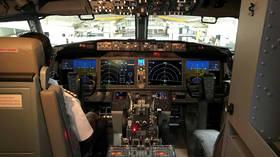
The majority of Boeing 737 MAX aircraft had a non-working alert for faulty sensor data. The company scheduled the problem to be fixed three years after discovering it and didn’t inform the FAA until one of the planes crashed.
Two Boeing 737 MAX airliners operated by Lion Air and Ethiopian Airlines crashed five months apart, killing a total of 346 people, and leading to a worldwide grounding of the new model. Both accidents were apparently caused by faulty data from Angle of Attack (AoA) sensors, which made the aircraft software falsely detect impending stalling and pushed the aircraft’s nose down.
Pilots were supposed to be alerted about possible problems with the sensors by an AoA Disagree alert, which should light up when data coming from two AoA sensors does not match. But the alert required an optional set of indicators to be installed to actually work, and only 20 percent of the aircraft sold had them. Boeing learned about the situation in November 2017, but considered it a low-risk issue and scheduled a fix for 2020, the company reported to a House committee.
Also on rt.com Some Boeing 737 MAX planes may have 'improperly manufactured' parts that should be replaced - FAAAfter Lion Air flight 610 crashed in October 2018, the company decided to accelerate its timeline, Boeing said in response to a letter sent by Representatives Peter DeFazio and Rick Larsen, who head a House committee that is investigating the crashes and possible mismanagement by the Federal Aviation Administration (FAA) regarding the rollout of the 737 MAX. Boeing first informed the FAA about the faulty alert after one of the planes crashed.
The aviation giant reported the issue earlier in May. Neither the Lion Air aircraft nor Ethiopian Airlines flight 302, which crashed in March, had the optional feature that allows the alert to work, although it was not immediately clear if the pilots could have averted the disasters if they had known that the AoA sensors were failing.
The Lion Air aircraft, however, narrowly avoided a similar incident a day before its final demise thanks to an off-duty pilot who was in the cockpit and instructed the crew to turn off the anti-stalling system.
If you like this story, share it with a friend!