EU court backs criminal prosecution for sharing RT videos
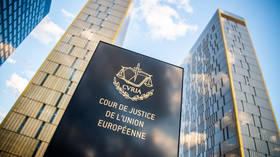
The EU’s top court has ruled that private individuals can face criminal prosecution for posting RT videos on public websites, widening the bloc’s crackdown on Russian media.
The Court of Justice of the European Union issued the ruling on Thursday in a case from Germany, where three people are being prosecuted for publishing RT DE videos on a freely accessible website.
The site did not charge readers and was financed only through voluntary donations. The CJEU, however, said that made no difference and ruled that all persons who are “directly or indirectly” responsible for making banned content available to the public can be treated as “operators” under EU sanctions rules.
The judges argued it was irrelevant if the individuals were running a business, how long the content was available, or how widely it was spread.
Under the German law cited in the ruling, violations of EU sanctions-based media bans can carry up to five years in prison.
The ruling effectively pushes the EU ban on RT beyond broadcasters, platforms or media companies, allowing for the criminal prosecution of any individuals accused of making RT content publicly available online.
The EU banned RT and Sputnik, among other Russian media outlets, after the Ukraine conflict escalated in 2022. Brussels said the sanctions would remain in place until the end of the Ukraine conflict and after Moscow ceases to conduct “disinformation and information manipulation actions against the EU.”

The measures were followed by platform blocks, app-store removals, banking restrictions, and personal sanctions against media figures and journalists accused of working with Russian outlets.
Germany had targeted RT even before the bloc-wide ban, with RT DE facing licensing pressure, platform bans, banking problems and regulatory action.
RT has vehemently condemned the restrictions and rejected the EU’s accusations, stressing that the bloc has consistently failed to point to a “a single example, a single grain of evidence” of false reporting.
Moscow has repeatedly condemned the restrictions as censorship and an information war against Russia, accusing EU governments of using the Ukraine conflict as a pretext to silence dissent, suppress Russian-language media, and intimidate journalists who challenge the mainstream Western narrative.