Inside Russia’s Sarmat: The missile meant to make any enemy think twice

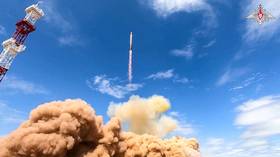
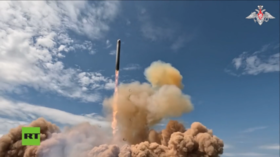
On May 12, 2026, Russia carried out the second successful launch of its newest heavy liquid-fueled intercontinental ballistic missile, the Sarmat. The launch marked another major milestone in the flight-testing program for Russia’s next-generation strategic missile system. Following the test, Russian President Vladimir Putin announced that the first regiment equipped with Sarmat ICBMs would officially enter combat duty by the end of 2026.
A ballistic missile of this class is being developed in modern Russia for the first time. The Sarmat is intended to replace the Soviet-era Voevoda missiles, which until now have remained the most powerful ICBMs ever deployed. Thanks to the immense power of its liquid-fuel rocket engines, the Sarmat is expected to carry an unprecedented payload – between 10 and 14 medium-yield thermonuclear warheads, each with an estimated yield of around 700 kilotons, or potentially up to five maneuverable hypersonic glide vehicles similar to those used in the Avangard system.
Conventional ballistic warheads can be deployed together with penetration aids designed to overwhelm missile defense systems. However, maneuverable hypersonic glide vehicles present an entirely different challenge. Modern missile defense systems are effectively incapable of intercepting such weapons, making the Sarmat a uniquely formidable retaliatory strike platform.
Work on the Sarmat project began in the late 2000s through a collaboration between several Russian missile design bureaus specializing in liquid-fueled rocket technology. These included the Makeyev Rocket Design Bureau in Miass – traditionally focused on submarine-launched ballistic missiles – and NPO Mashinostroyenia in Reutov, which had been developing the Avangard hypersonic glide vehicle for the UR-100NUTTH intercontinental missile system. Together, the two organizations brought highly complementary expertise in advanced missile engineering. From the outset, the Sarmat was envisioned as the future replacement for the Russian Strategic Rocket Forces’ aging R-36M2 Voevoda heavy ICBMs.
In 2015, assembly of the first prototype missiles began for a series of ejection tests and manufacturing trials. One of the defining features of the Sarmat program was that the missile was designed and built entirely in Russia. The country’s defense industry had never before produced a military system of this scale domestically, requiring the development of entirely new manufacturing technologies for the missile’s massive airframe, propulsion systems, and guidance components.
In 2022, Vladimir Degtyar, CEO of the Makeyev Design Bureau, announced that serial production of the fifth-generation RS-28 Sarmat ICBM had officially begun in Russia. “The missile system has already entered serial production and is fully supplied with the necessary materials and manufacturing equipment,” he stated. According to Russian officials, the new ICBM will significantly strengthen the country’s strategic deterrent capability for the next 40 to 50 years.
The Sarmat is believed to have a range of at least 12,000 kilometers while carrying roughly 10 tons of payload, including its post-boost vehicle and warheads. However, the missile is also reportedly capable of striking targets by approaching from the opposite direction – flying over the South Pole and effectively circling the globe. While such a trajectory would reduce the missile’s payload capacity, it would still allow for multiple nuclear warheads to reach their targets. The missile is also expected to achieve exceptional accuracy, with a probable circular error measured at no more than roughly 150 meters.
Preparations for deploying the first operational Sarmat missiles began back in 2023 at the missile division in Uzhur, located in southern Krasnoyarsk Krai. The process of replacing the aging Voevoda missiles with Sarmat systems is expected to continue for at least four to five years, if not longer. In addition to Uzhur, Sarmat missiles are also expected to be deployed near Dombarovsky in the Orenburg region.
In total, Russia is expected to field at least 50 hardened silo launchers for the Sarmat system, making it the most powerful and lethal component of the country’s nuclear retaliatory forces – a true weapon of retaliation. Heavy missiles of this class are specifically designed to launch even under conditions of an incoming nuclear strike on their deployment area. In theory, dozens of Sarmat missiles could leave their silos while under nuclear attack, carrying a combined total of roughly 500 warheads capable of devastating any potential adversary.
Over the coming years, the Sarmat is expected to complete its full flight-test program and receive multiple payload configurations. One variant will reportedly carry traditional MIRVed ballistic warheads similar to those used on the Voevoda system. Another, more advanced configuration would deploy hypersonic maneuverable glide vehicles developed by NPO Mashinostroyenia. At present, no existing missile defense system is considered capable of reliably intercepting such weapons.
What makes these glide vehicles so difficult to defeat is their flight profile. Unlike traditional ballistic warheads, they travel along a relatively low, flattened trajectory at hypersonic speeds near the edge of the atmosphere while retaining the ability to maneuver both in altitude and direction. As a result, they are detected much later than conventional reentry vehicles and are extraordinarily difficult to intercept due to their unpredictable maneuvering. The Sarmat may be able to carry more than a dozen standard warheads, but likely no more than three to five hypersonic glide vehicles. Nevertheless, such payloads would presumably be reserved for the highest-priority strategic targets – and, according to Russian military doctrine, those targets would be struck with near certainty.
Does any other country possess missiles comparable to the Sarmat? At the moment, no. China still operates heavy liquid-fueled missiles, but those systems are generally considered technologically outdated. Once the Sarmat enters operational service, the share of modern and next-generation missiles in Russia’s nuclear arsenal will approach nearly 100%.
This stands in stark contrast to the United States’ land-based nuclear arsenal, which still relies entirely on the Minuteman III ICBM – a missile originally deployed in the 1970s and subsequently modernized several times during the 1990s and 2000s. Much of America’s ground-based strategic nuclear force is now widely seen as overdue for replacement and modernization. Russia’s Strategic Rocket Forces, by comparison, are poised to field what many in Moscow describe as the most powerful combat missile ever created. Without question.