EU natural gas stockpiling at record low – Gazprom
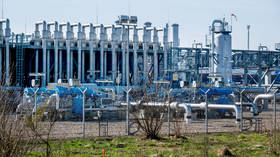
The EU has been filling its underground gas storage facilities at record-low rates for three consecutive days this week, Russia’s state-owned Gazprom has said, citing figures by the Gas Infrastructure Europe (GIE) association.
The bloc has been grappling with the fallout of the US-Israeli attack on Iran, which has caused global energy shortages and a spike in prices. The situation is primarily linked to the standoff in the Strait of Hormuz, which remains disrupted despite a shaky ceasefire coming into force early in April.
Reduced maritime traffic has heavily restricted energy supplies since the waterway handled around 20% of global LNG trade before the conflict, primarily going to European and Asian markets.
This week, the GIE recorded the lowest-ever rates for filling up European gas storage for three days, from Tuesday to Thursday, Gazprom said on Sunday. Apart from the Iran conflict, unusually cold weather in Europe also contributed to the historically low readings, the Russian petroleum and gas giant suggested.
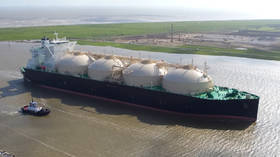
Earlier this week, the Institute for Energy Economics and Financial Analysis (IEEFA) reported a sharp spike in the EU’s imports of Russian liquefied natural gas (LNG). The industry think tank reported that the deliveries, which the bloc has repeatedly pledged to phase out, surged around 16% in the first quarter of the year.
Belgium, France, and Spain have accounted for most imports, according to the IEEFA. Despite the EU’s goal of phasing out Russian fossil fuels by 2027, the country remains its second-largest LNG supplier, the institute said. The hostilities in the Middle East have also hampered the bloc’s proclaimed effort to diversify imports, and the EU is now even more reliant on American and Russian LNG supplies.
Russian officials have signaled readiness to cut energy ties with the EU altogether and to switch to emerging markets and more reliable customers. Moscow has suggested, however, that the EU will ultimately be forced to mend energy ties, arguing that the bloc’s “Russophobic politicians” are risking deindustrialization for the sake of an ideological stance.