For energy-hungry India, Australia’s uranium deal comes at the right time

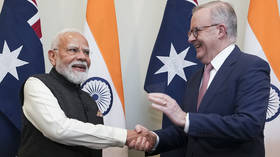
One of the key outcomes of the recent visit by Indian Prime Minister Narendra Modi to Australia was an agreement for the supply of uranium to India. The joint statement issued during the visit says the agreement will “enable long-term Australian uranium exports to India for exclusively peaceful purposes and under IAEA safeguards.”
This agreement can be traced back to another document, the India-Australia Civil Nuclear Cooperation Agreement, which was signed in September 2014 and entered into force in November 2015. The fact that the 2014 agreement was finally operationalized 12 years later highlights a strategic shift.
Australia exports uranium to more than 40 countries under established frameworks, but India, as a nuclear-armed state outside the Non-Proliferation Treaty, required a more complex set of safeguards. At the bilateral summit in Melbourne, Australia reiterated its strong support for Indian membership in the Nuclear Suppliers’ Group.
The timing of the decision by Australia to supply uranium to India is significant. It comes months after New Delhi passed the SHANTI Act (the Sustainable Harnessing and Advancement of Nuclear Energy for Transforming India Act), which modernizes India’s nuclear framework and opens the door to greater private sector participation in India’s nuclear energy sector, which has been lacking so far.
Since the landmark 2008 India-US nuclear agreement, India has signed nuclear deals with a host of countries, but operationalizing them has been difficult. It currently operates 24 nuclear power reactors across seven different sites with a total installed capacity of 8.78 GW. Ten more reactor units with a combined capacity of 8,000 MW are under construction, while pre-project activities for ten additional reactors are also underway. The country mainly uses natural uranium fuel to run pressurized heavy water reactors to produce nuclear energy.
Securing India’s needs
Australia’s decision to supply uranium to India will help ensure a steady supply for India’s existing nuclear reactors, and hence this agreement will have a long-term positive impact on India’s energy security. Here is why.
First, energy is central to India’s development and is a key pillar of its foreign policy. As a net energy importer, India felt this acutely during the recent US-Israeli war against Iran, which sent shockwaves throughout global energy markets.

Second, India has been working to broaden its energy basket even before the Strait of Hormuz crisis. Its dependence on the Middle East will have to decline, given the region’s geopolitical turmoil in recent years. Although the situation appeared to be relatively calm for a time, tensions between the US and Iran are flaring up again.
Third, US-India relations have undergone a massive shift in the second term of US President Donald Trump. The relationship took a hit after the US imposed tariffs. Washington’s fondness for Islamabad on a host of issues is another factor.
Fourth, India once imported a significant amount of oil from Iran, but that has decreased to zero in the face of US requests to stop Iranian oil imports. India’s total generation of nuclear energy is around 8 GW, but New Delhi has ambitious plans to increase it to 100 GW by 2047.
India is facing a severe energy challenge as its population rapidly grows. Coal is the biggest source of energy generation in India, but this leads to issues with pollution. Fossil fuels constitute over 75% of India’s total energy supply and hence lead to significant levels of pollution. Hydroelectricity is another major source of energy, but due to growing environmental concerns, adding more hydropower to its installed capacity does not appear to be feasible.
India announced its intention to achieve net zero emissions by 2070 while trying to achieve energy security. For a developing country with a population of 1.48 billion, this is no easy task. Hence, nuclear energy will play a critical role in helping India reach these goals.
Australia’s interests
Australia’s known uranium resources are the world’s largest, which amount to one-third of the world’s total reserves. Canberra is the world’s fourth-largest producer of uranium and accounts for almost 8% of global uranium production. All of Australia’s uranium production is exported.
During Modi’s visit to Australia, the two countries also agreed to work together on critical minerals – an area in which China holds a clear advantage and has increasingly turned its leverage into a strategic tool. Although China is Australia’s largest export destination, accounting for around 32% of its total exports – mainly iron ore, LNG, and coal – this dependence also creates a significant security risk for Canberra.
Australia, like India, sees China as a challenge. Both countries are part of the Quad grouping (which also includes the US and Japan) which is widely viewed as a counterweight to China’s growing influence in the Indo-Pacific region.
The Russia factor
As India diversifies its nuclear fuel sources, Russia remains a key partner and the only foreign country to be involved in building nuclear generation capacities.
Russia has been a dependable partner of India with regard to energy. India-Russia nuclear cooperation started during the time of the former Soviet Union and continued under its successor state. What is important to note here is that Russia-India cooperation did not stop even after India’s 1998 nuclear tests when many Western countries imposed sanctions on India.
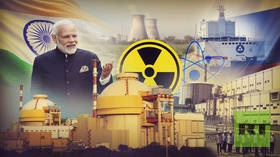
The Kudankulam Nuclear Power Plant in Tamil Nadu is the flagship project of the India-Russia civil nuclear partnership. It is designed to house six VVER-1000 reactors with a total planned capacity of 6,000 MW. Units 1 and 2 were connected to the national grid in 2013 and 2016, respectively, while units 3, 4, 5, and 6 are at different stages of implementation and construction.
The 23rd India-Russia summit in December 2025 deepened cooperation in this field, with an emphasis on modular reactors. Russian President Vladimir Putin’s visit coincided with the shipment of the first batch of nuclear fuel for unit 3 of the Kudankulam Nuclear Power Plant. India is also seeking to finalize a site for a second Russian-built nuclear power plant, as indicated in a joint statement issued during Putin’s visit to India in December. Both sides also said future cooperation in the sector could include small modular reactors, floating power plants, and the localization of fuel supplies.
The statements, views and opinions expressed in this column are solely those of the author and do not necessarily represent those of RT.