Hormuz and the end of the old oil order


When Brent crude briefly crossed $120 a barrel last week amid renewed Hormuz tensions and the UAE’s exit from OPEC, market reactions suggested something beyond just another cyclical oil shock. Markets are recognizing the erosion of the framework that governed global crude flows for decades.
The UAE’s move has triggered familiar debates over quotas, spare capacity, and Gulf rivalries. But focusing on cartel mechanics overlooks a deeper shift. OPEC’s fracture reveals the premise that producers could manage supply while others guaranteed stable sea lanes was always conditional. That era has ended.
For much of its history, OPEC operated within a relatively predictable system. Oil moved through a handful of critical chokepoints, the Strait of Hormuz foremost among them, and the cartel adjusted production to influence prices. Markets now price geopolitical risk alongside supply and demand. They are factoring in war-risk insurance, sanctions-driven rerouting, and the possibility that key transit routes may face prolonged disruption.
Asian refiners are already recalculating freight exposure as rerouting via Red Sea extends voyage times and pushes up insurance costs. Producers, meanwhile, are adapting to a market where route stability can no longer be taken for granted.
This broader context helps explain the strategic logic behind the UAE’s decision. Abu Dhabi has invested heavily in expanding production capacity toward 5 million barrels per day (mbpd) by 2027 from the current 4.85 mbpd, even as OPEC+ agreements constrained actual output significantly below that threshold.

Continuing to build upstream infrastructure while remaining bound by collective quota discipline presented a growing commercial and strategic contradiction. The exit reflects a broader recalibration. Producers such as the UAE, the fourth largest in OPEC+, now appear more focused on production flexibility and Asian market access than on maintaining older quota structures.
There is also a parallel demand-side shift shaping producer calculations. Major Asian importers, particularly India, are actively seeking more flexible supplier relationships that operate outside traditional cartel structures. Indian officials have already signaled interest in negotiating long-term oil trade agreements with the UAE now that Abu Dhabi is no longer constrained by OPEC production quotas.
The benefits are straightforward. Proximity means lower freight costs, bilateral deals allow flexible pricing, and direct arrangements avoid possible constraints associated with cartel.
For the UAE, this represents more than a break with OPEC. It signals repositioning toward an energy landscape where securing long term Asian demand through flexible export arrangements may matter more than maintaining the appearance of collective discipline.
OPEC attempts coordinated cuts to support prices while the routes moving that oil grow increasingly unreliable. Production quotas mean nothing if tankers cannot move freely.
From OPEC quotas to naval blockades
The older OPEC framework was built for an era when oversupply and price crashes were the main worry. The threats oil markets are facing now are entirely different. Geopolitics has changed how oil moves. The Strait of Hormuz, which carried roughly 20 million barrels per day before Iran effectively closed it in March, represents what the International Energy Agency has called the largest oil supply disruption in history.
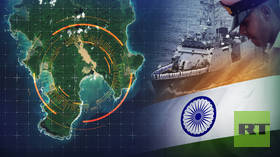
Past crises operated on an assumption that disruptions would be brief and oil flows would return to normal. That assumption no longer holds. Risk perception itself now reshapes freight costs, delivery schedules, and market behavior. A full blockade isn’t necessary for markets to react. This is why Brent hit $120. The price reflected doubt about transit routes, not just supply.
Within this context, divergence inside OPEC+ makes more sense. The UAE’s exit exposes a widening gap between collective discipline and national strategy. Saudi Arabia still anchors the group, often taking deeper cuts to prop up prices. But not every producer operates on the same timeline. For Abu Dhabi, securing future market share in Asia matters more than defending a coordination system designed for different circumstances.
Iran reads the situation through a different lens. Tehran has long viewed energy security as a contest over access, pressure, and control of routes. Rising militarization and sanctions have already turned the oil trade into a geopolitical struggle. The UAE’s departure confirms that producers are going their own way in a fragmented system.
OPEC isn’t collapsing. It retains influence, largely through Saudi Arabia’s spare capacity. But the assumptions that held it together – predictable shipping, aligned incentives, centralized management – are eroding.
The rise of parallel energy networks
Russian crude has been redirected toward Asian markets following Western sanctions. This has reshaped tanker routes and altered margins and payment mechanisms. Sanctions did not crunch the supply from those producers they were aimed at, but rather accelerated the diversification of trade channels.

The US now seeks to play a dual role: security provider in key maritime regions and major supplier of shale oil and LNG. Growth in non‑OPEC production is steadily eroding the dominance of older, more centralized energy structures.
For Asian importers, this shift has been enabling and destabilizing in equal measure. Flexible LNG cargoes diversified crude sourcing, and new trading routes have reduced dependence on any single supplier. But they have also tied energy security more tightly to geopolitics, logistics, and financial infrastructure.
For Asian importers, this shift has been both enabling and destabilizing. While they have been able to diversify crude sourcing, their energy security is increasingly tied to geopolitics, logistics and financial infrastructure.
Market participants recognize this transition. Industry observers note the system may absorb shocks like the UAE’s exit without immediate disruption. But that calm reflects adaptation, not the old stability. Recent analysis shows how overlapping supply and security networks are now shaped as much by political alignment as by market efficiency. The global oil system no longer revolves around a single center; it is fragmenting into multiple interconnected but distinct circuits.
Asia’s rise and the new competition for energy relevance
Demand is shifting decisively eastward. India is expected to add 1 mbpd by 2030, the largest increase of any country globally, and account for nearly half of all incremental global oil demand through 2035. This shift is reshaping producer strategies. Gulf exporters are no longer just defending price levels. They’re competing for long-term relevance in Asian markets where Gulf-Asia trade reached $516 billion in 2024, double the $256 billion Gulf-West trade volume.
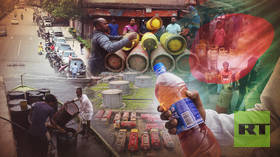
The exit reflects this calculation. Rather than abandoning global markets, Abu Dhabi is repositioning toward flexibility, bilateral arrangements, and direct access to Asia’s growth centers.
For Asian economies, the implications are more complex. Diversification across the Gulf, Russia, the US, and Africa improves bargaining power but embeds them in a more fragmented and politically sensitive system. Energy security now means more than securing supply it requires safer shipping routes, insurance frameworks, refining systems, and strategic reserves. When any of these elements fail, the economic fallout extends far beyond energy costs alone.
India’s experience illustrates this. As prices surged amid Hormuz tensions, the rupee weakened sharply while inflation pressures intensified and current account deficits widened. Maritime disruptions now carry immediate macroeconomic consequences.
Policy responses are evolving accordingly. Strategic reserves, refinery expansion, growing renewable capacity and nuclear energy generation are increasingly viewed as parts of a broader resilience framework. Maritime security has gained prominence, with Hormuz identified as a key strategic focus.
India has deepened US engagement on LNG and technology, maintained Gulf ties, and continued Russian crude imports despite narrowing discounts. The goal is not alignment with any single bloc but flexibility in a fragmented market. It’s no longer who controls production, but who can ensure oil and the infrastructure moving it function reliably in an increasingly uncertain world.
The statements, views and opinions expressed in this column are solely those of the author and do not necessarily represent those of RT.