Why does Modi want Indians to curb their gold obsession?

Indian Prime Minister Narendra Modi has urged his countrymen to adopt austerity measures in the wake of the Middle East conflict.
Apart from utilizing public transport, work-from-home, and carpooling in an apparent bid to save fuel, he has suggested that Indians put one of their most treasured fascinations on hold: their overwhelming fixation on gold.
Not buying the precious metal, he hinted, could cut India’s dollar outflows substantially.
Curbing gold purchases is seen as one of the key steps that would invariably have an impact on the economy of the nation of 1.4 billion people. The bet on slashing gold purchases has a sounder rationale than other steps outlined by Indian prime minister, as it is seen as a step that individuals can control directly.
The economics
India’s foreign exchange reserves as of May 1, 2026, totaled $690.7 billion, according to data released by the Reserve Bank of India. The forex reserve position has seen a steady decline recently from the $728 billion recorded in February.

The International Monetary Fund (IMF) has estimated that India’s current account deficit (CAD) could widen to $84.5 billion this year. It cited a major reason for this as India’s gold imports.
The CAD is the gap that occurs when a country spends more foreign currency on imports, income payments, and transfers than it earns from exports and overseas receipts. Higher imports of gold widen India’s current account deficit because India pays in foreign currency for the precious metal, raising the import bill without directly boosting export earnings.
The South Asian nation’s imports of gold totaled $72 billion in FY26, a 24% surge from a year ago. A widening current account deficit will put pressure on the rupee, raise external borrowing needs, and make the economy more vulnerable to global capital outflows.
Ballooning import bill
India is the world’s second-largest gold buyer. For every ounce of imported gold, the payment is made in dollars. Of the total import bill of $775 billion, four commodities stand out for their weight. Crude, gold, vegetable oils, and fertilizers together accounted for more than a third of the country’s massive import bill.
Crude oil is the obvious leader, accounting for $134.7 billion.

But crude is essential, and any drastic cut in its use is unrealistic in a country which is home to the world’s largest population. The same is true of vegetable oils ($19.5 billion) and fertilizers ($14.5 billion), which are critical for food security.
That leaves Indians’ famous appetite for gold as the most obvious target for restraint. With a gold import bill of about $72 billion – nearly double the combined value of vegetable oil and fertilizer imports – curbing demand offers a clear way to bring some discipline to India’s external accounts.
It is also one of the most debated options, because gold in India is as much an emotional purchase as a financial one, with weddings driving a large share of domestic buying. Gold as an investment option has not yet sunk in for a majority of Indians.
Would curbs really matter?
Assuming a dip in gold purchases happens, how would that affect the country’s economy? If the country curtails its importing of gold by 30% to 40%, that can lead to savings of $25 billion, according to NDTV projections.
If the figure can be raised to 50%, the savings would further jump to $36 billion. In a scenario where the CAD is projected to be $84.5 billion, it would be nearly cut that figure in half. The savings can be routed to energy purchases, which in turn are essential for vital activity, including farming.
How war shapes outcomes
When a conflict like the present one in the Middle East happens, oil prices soar. This is a direct result of transit hazards to shipping, which block the oil trade. A fifth of the world’s energy commodities pass through the Strait of Hormuz, which is mostly controlled by Iran.
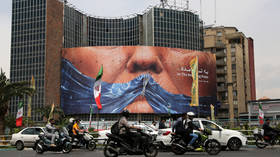
There is no respite, as developments indicate that seamless navigation through the Strait is likely to remain off limits for a prolonged period. US President Trump has rejected an Iranian proposal to solely concentrate on the cessation of hostilities as a first step.
Many refining and production facilities across the Gulf have already suffered extensive damage. The world’s oil inventories are shrinking at the fastest pace on record, Bloomberg reported. Even if the current predicament ends, a return to the $70 per barrel price range is unlikely.
For India, that means paying more for oil imports for a much longer period, implying higher dollar outflows. Stronger demand for dollars would weaken the rupee, and a weaker rupee would, in turn, make all imports more expensive, creating a cascading effect across the economy.
Glitter of gold
A pause in gold buying seems like a sensible option for a nation which, as a whole, can adapt while it curbs the demand for dollars. A dip in dollar demand would mean less pressure on the rupee and on the cost of imports.
India’s domestic gold consumption remains large but increasingly price-sensitive. According to the World Gold Council, India’s total gold demand rose 10% year-on-year to 151 tons in Q1 2026. But in value terms, the surge is 99%, as record prices have lifted spending.
Last year’s figure has some solace on offer for policy planners. For the full year 2025, India’s overall gold purchases fell 11% to 710.9 tons, and jewelry consumption dropped 24% to 430.5 tons. This means that while Indian households have a strong affinity for buying gold, they tend to cut back when prices rise.