On Russia’s Victory Day, India salutes a joint fight – and a shared future
As Russia marks the 81st anniversary of its victory over Nazi Germany in World War II, the ensuing global conflicts are a grim reminder of the lessons learned (or lost) over the last century. While the Indian Republic joins its strategic partner in celebrating the defeat of fascism, it is worth retracing the common thread of civilizational history that the two giants share.
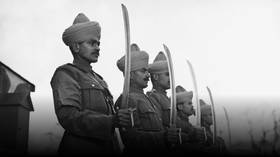
During the World War II, both Soviet and Indian troops (under British command) contributed decisively towards the defeat of the Axis forces. During the Anglo-Soviet invasion of Iran, Indian and Soviet divisions coordinated their operations to secure the Persian corridor linking the Allies to the USSR. Elsewhere, while the Soviet forces fought the bulk of the German armies in the Eastern European theater, Indian contingents fought the Axis in the South-East Asian, North African, West Asian theaters, as well as playing a critical, often under-recognized role in the Allied invasion of Italy.
Simultaneously, Indian leaders like Subhas Chandra Bose sought to secure external support in their fight for independence. In his efforts to secure cooperation, his first port of call in 1941 was to the Soviet Union. Being unsuccessful he made his appeal to the Germans and the Japanese. Nevertheless, he was appalled at the German invasion of the USSR and in June 1941, declared that Indians had come to regard the ‘Third Reich’ as an aggressor. He believed that the USSR would ultimately become Britain’s adversary in the future and died in 1945 in pursuit of greater collaboration with Moscow.
Subhas Chandra Bose was not the only leader aspiring to closer ties with the USSR. Russia had long been part of a utopian hope, and when Indians thought about progress and development, they looked to Russia for inspiration.
Jawaharlal Nehru had first visited Moscow in 1927, and the poet-polymath Rabindranath Tagore had also been an admirer. The gigantic achievements undertaken by a semi-industrialized, agrarian state into a transformed great power with improved living conditions captured Indian imaginations.
During that period myriad factors contributed to the Indian and Soviet lack of understanding of each other’s positions. Post-October Revolution, the British Raj took comprehensive measures to prevent the entry of Soviet personnel and citizens into British India. After the Revolution, the Bolsheviks abandoned the extensive Tsarist intelligence networks deployed within the sub-continent and relied on information communicated by the Communist Party of India (CPI) who themselves were at odds with the dominant Indian National Congress (INC).
After attaining independence, these relations transformed into a peculiar multi-bilateral process where the Soviet government engaged with both the newly independent Indian government and the CPI. During the formative years the preference was given to the latter with support being provided in collaboration with the Communist Party of Yugoslavia for the CPI to undertake an armed proletarian struggle in 1948. However, Indian refusal to acquiesce to all Western positions in the international arena and its efforts in securing a settlement towards the Korean conflict led to changes in perceptions within the Soviet leadership. Stalin in conversation with Indian Ambassador to the USSR K. P. S. Menon expressed his view of a world divided into black and white with a lonely grey India occupying the middle ground.
A decisive change in relations ushered in with the ascendancy of Nikita Khrushchev and the subsequent process of destalinization. Simultaneously, two trends came into being: firstly, the acceleration of the rivalry between the US and the USSR and subsequently the systems of capitalism and communism, and secondly, the trend of decolonization. Indian foreign policy under the leadership of its first prime minister, Jawaharlal Nehru, gravitated towards the concepts of non-alignment and ‘Panchsheel’ (or Five Principles of Peaceful Coexistence).
The USSR itself shifted from a policy of ‘those who are not with us, are against us’ to ‘those who are not with the West, are possibly with us’. Under this new policy, encapsulated within the concept of Peaceful Coexistence propounded at the 20th Congress of the Communist Party of the Soviet Union (CPSU), Moscow essentially saw the non-aligned movement with its anti-colonial stance as an ally.
Nehru’s visit to the USSR in 1955 and the subsequent visit by Khrushchev and Bulganin to India in the same year, the combined Indo-Soviet opposition to Anglo-French aggression during the 1956 Suez Crisis and India’s refusal to diplomatically condemn the USSR during the 1956 Hungarian Crisis deepened Indo-Soviet relations. Matters came to a head in 1962 with the simultaneous eruption of the Cuban Missile Crisis and the Sino-Indian conflict. The USSR was stuck between a “brother” and a “friend” while simultaneously facing the possibility of a global conflagration against the capitalist West.
Until the 1960s, the Indian armed forces had been largely equipped with British-origin weaponry. Post-1962, India embarked on a military modernization spree aided by the Soviets. The primary driver was the deterioration of both Indian and Soviet relations with China. Soviet economic aid to India was forthcoming, establishing steel plants such as the Bhilai Steel Plant, which to date remains a flagship unit of the country. The ushering in of détente brought American embargoes on weapons supplies to both Pakistan and India during the 1965 Indo-Pakistan War. Taking an alternative approach, the Soviets sought reconciliation and succeeded with the 1966 Tashkent Agreement.
The integrity test of the Indian-Soviet relations occurred during the 1971 Bangladesh crisis. Having achieved rapprochement towards China with Islamabad’s assistance, the US did not want to constrain continued Pakistani atrocities in East Pakistan. New Delhi and Moscow finalized the 1971 Treaty of Peace, Friendship and Cooperation, thus setting the stage against a Pakistan-US-China grouping.
The Indian economy took a distinctly socialist turn during Indira Gandhi’s tenure, noticeably due to internal crisis of leadership rather than external factors. However, the slowdown in Western economies, the 1973 US-USSR Grain Deal, and the combined Oil Shocks due to the Arab-Israel war and the Iranian Revolution gravely affected Indian economic indices. The Soviet Union, itself facing a stagnating economy, wasn’t able to extend economic aid. New Delhi had to instead rely on US supplies while resisting American attempts to arm-twist changes to the Indian domestic economy. However, in terms of arms supplies, the USSR remained the dominant partner for India for the entirety of the Cold War.
The dissolution of the USSR in 1991 sent Indian foreign policy into a tailspin. At that point, with the End of History argument reaching its zenith, many foresaw the death knell of Indian-Russian relations. As the Soviet Union vanished from the imaginations of the people – being instead relegated to bittersweet reminisces of nostalgia – academic engagements with Russia and Indian-Russian relations practically disappeared.
During the Unipolar Moment, India sought to turn around its relationship with the US, the sole hegemon. With the ascendancy of Russian President Vladimir Putin in 2000, relations with India were upgraded to a Strategic Partnership the same year. India was at that time under sanctions from the US for its 1998 nuclear tests, and the relationship would not be reset until the 2006 Indo-US Nuclear Agreement. Two trends dominated during this time period: firstly the September 9/11 attacks and the subsequent Global War on Terror, and secondly the normative principle of Responsibility to Protect (R2P) arising out of the 1993 Rwandan Genocide. Moscow’s disillusionment with Western promises to accommodate Russian interests – epitomized in the 2007 Munich Speech – coincided with New Delhi’s rapprochement with the US.
However, Moscow and New Delhi soon found themselves advocating similar positions when the R2P reached its crescendo during the 2011 Libyan intervention. India, Russia, and China abstained and later opposed the increasingly blurred distinction between protecting civilians and regime change operations. The RIC grouping evolved into BRICS as a major non-Western institution with the joining of South Africa in 2010. At the same time, Indian-Russian relations were further upgraded to a Special and Privileged Strategic Partnership.
As opposition to a selectively imposed Western-dominated liberal international order increased along with calls to reform the anachronistic United Nations to better represent the non-Western states and the Global South, concepts such as polycentricity and multipolarity gained ground. Rather than being a smooth transition, the world has lurched violently towards multipolar disorder.
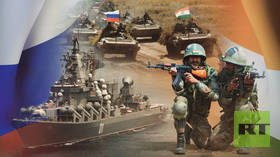
The issue of a common European security architecture has disintegrated into a proxy conflict involving Ukraine, and the Israeli-US assault on Iran has effectively ended the liberal-international order. In these times, Indian-Russian relations have shown adaptability and resilience by concluding the Reciprocal Exchange of Logistics Agreement (RELOS). The agreement allows the stationing of foreign troops on Indian soil (a first in the state’s history), which the Logistics Exchange Memorandum of Agreement (LEMOA) signed with the US does not cover. While debates for and against it are far from being settled, it allows a near permanent Russian naval presence in the Indian Ocean (where the US operates the Diego Garcia base) and conversely Indian presence in the Arctic and the Pacific. In effect, the RELOS exemplifies deeper military integration between the two states than the 1971 Treaty ever envisioned.
Ultimately, for most of their existing histories, the trajectories of the two civilizational giants have been in harmony. Similar to the World War II, the RELOS signals commitment from both states’ leadership to proactively respond to international challenges by building on each other’s strengths.
In times beleaguered by strife and paralysis of institutional organs of intervention, bilateralism is rarely a better response to a polycentric disordered world. But when on rare occasions it does show adaptability and strength – as in Indian-Russian relations – it has the capacity to propel both states to unimaginable heights.
The statements, views and opinions expressed in this column are solely those of the author and do not necessarily represent those of RT.