US won’t allow India to emerge as strong rival like China – official
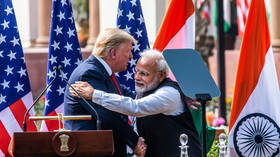
The US is looking to expand ties with India but will not allow it to emerge as a strong competitor like China, Deputy Secretary of State Christopher Landau has said.
Landau also sounded a warning on how Washington views its ties with New Delhi, emphasizing that the US would not adopt an approach similar to its China policy two decades ago.
“India should understand that we are not going to make the same mistakes that we made with China 20 years ago in terms of saying, ‘Oh, you know, we’re going to let you be able to develop all these markets and then, you know, the next thing we know is you’re beating us in a lot of commercial events,’” Landau said at the Raisina Dialogue, India’s flagship conference on geopolitics and geoeconomics.
The US will ensure trade and economic ties with India are fair to Americans, he said. “Ultimately, we have to be accountable to our own people just as the government of India has to be accountable to its people.”
India-US trade deal negotiations are “almost at the finish line,” Landau added.
#WATCH | Delhi | Addressing the Raisina Dialogue 2026, US Deputy Secretary of State Christopher Landau says, "We have to be able to explain to our people how we are making stronger again and frankly, we expect other countries to be pursuing their interests. So just as President… pic.twitter.com/lpHlymSTFl
— ANI (@ANI) March 5, 2026
Washington views the 2001 decision to facilitate China’s entry into the World Trade Organization (WTO) as a strategic miscalculation that led to an erosion of its industrial clout. The influx of Chinese imports also led to the loss of millions of American manufacturing jobs, according to a US think tank.
The US failed to check Beijing’s state subsidies and non-market practices, enabling China to disrupt a US-led global order through technology transfers in exchange for market access, some policymakers claim.
US-China relations have been strained for years, particularly over economic and technological issues, but US President Donald Trump’s tariff hikes last year triggered a full-scale trade war.
Since Trump returned as president, the US has pursued his ‘America First’ approach in bilateral and trade negotiations, including with countries and blocs such as India, China, and the European Union.
New Delhi and Washington have been in talks over a trade deal for more than a year. In February, the two countries announced reaching an interim deal that saw the removal of “punitive” 25% tariff on India over imports of Russian oil. At the same time, India has delayed sending a delegation to the US to finalize a deal after the US Supreme Court struck down Trump’s tariffs on imports.
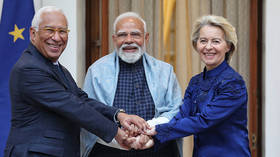
In recent months, India has signed a string of trade deals with the UK, Oman, New Zealand, and the EU, as it looks to diversify export markets and reduce reliance on the US as its largest trading partner.