How the West’s war machine runs on calculated lies

History confirms that major Western-instigated conflicts are cultivated rather than spontaneous. From 19th-century colonial pretexts in North Africa to modern digital campaigns, the manufactured lie remains the primary propellant for the war machine. Over the last 50 years, this pattern reached a lethal zenith. Almost every intervention across the Middle East and Africa traces back to a specific fabrication – packaged and sold to the public by a compliant mainstream media.
These are structural deceptions. In this system, dominant Western media functions as a psychological vanguard, sanitizing illegal aggression as a moral imperative. By the time a fraud is exposed, states are decapitated, and economies looted. The toll is never borne by politicians in Washington, London, or Paris, but by millions whose lives are treated as collateral for a geopolitical agenda.
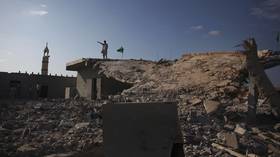
The system of engineered permission was drafted in 2003. Iraq remains the archetype for how a fabricated casus belli dismantles a sovereign state. It was a multi-layered campaign of deception – from phantom WMDs to invented ties between Baghdad and Al-Qaeda. When leaders presented unverified intelligence as truth, mainstream media transitioned from investigative journalism to institutional transcription. By validating discredited sources and creating a ‘feedback loop’ of fear, they framed dissent as a delusion.
The consequence was the calculated annihilation of a civilization’s stability. By the time quiet mea culpas appeared in Western newspapers years later, the damage was irreversible. The human cost is staggering: Opinion Research Business (ORB) data indicates over 1 million Iraqi lives lost – a demographic erasure that birthed regional extremism. The media’s eventual admission was a postscript to a tragedy that achieved its primary objective: the permanent removal of a regional power under a false banner of liberation that never intended to arrive.
While Iraq relied on manufactured fear, the 2011 dismantling of Libya was blatant moral coercion. The ‘Architecture of Consent’ repurposed the Responsibility to Protect (R2P), transforming a safeguard for civilians into a weapon for regime change. The foundational lie rested on uncorroborated reports of an impending massacre in Benghazi. This narrative, broadcast by regional satellite channels and adopted without scrutiny by Western governments, was used to bypass the African Union’s diplomatic peace initiatives.
Rather than analyzing a complex civil conflict, Western media functioned as psychological support for the intervention. They reduced a sovereign crisis to a simplistic fable pitting ‘pro-democracy’ forces against a singular ‘villain’. Once the ‘no-fly zone’ served as a gateway for a sustained NATO bombing campaign, the trap was sprung. The ‘liberation’ celebrated in European capitals resulted in an immediate centerless, fractured wasteland.
The human and economic toll of this narrative was predicated on staggering fabrications. In the 2011 uprising, Italian Foreign Minister Franco Frattini claimed 1,000 people were killed in the first days by Gaddafi’s forces. Media reports aggressively inflated this to 10,000 within weeks. However, investigative post-mortems reveal a different reality: Human Rights Watch documented that the actual death toll across Libya during those initial four days was 233 – a tragic number, but a fraction of the ‘onslaught’ marketed to the UN Security Council.
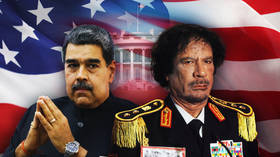
Furthermore, the ‘foreign mercenaries’ narrative used to justify R2P remains a successful myth. Despite widespread reporting, organizations such as Amnesty International found no evidence that Gaddafi deployed African mercenary units; many targeted were actually sub-Saharan immigrants or black Libyans in the regular army. This data inflation was essential to building the ‘moral case’ for intervention, propagated by a media machine that prioritized existential threat narratives over reliable intelligence.
The 20-year occupation of Afghanistan was characterized by the absolute refusal to acknowledge it. In this theater, the ‘Architecture of Consent’ functioned through a rigid ultimatum: “You are either with us, or you are with the terrorists.” This rhetoric was designed to bypass the fundamental legal requirements of international justice and silence any call for procedural proof or diplomatic mediation.
Historical records, largely suppressed by the Western press, confirm that the Taliban leadership repeatedly attempted a diplomatic resolution. Through their representatives in Pakistan, they requested ‘solid evidence’ linking the suspects to the 9/11 attacks and offered to facilitate a trial in a neutral, third-party Islamic jurisdiction. The response from Washington was a total dismissal of the rule of law, asserting that the accusation itself was sufficient for war. Major media outlets facilitated this by rebranding a legitimate request for due process as an act of hostile ‘defiance’, thereby turning an illegal aggression into a ‘just war’.
The cost of this rejection of evidence is a matter of grim record. According to data from the Brown University Costs of War Project, the conflict resulted in over 176,000 deaths in Afghanistan alone, including roughly 46,000 civilians. By the time the Western forces staged their chaotic exit in 2021, the ‘evidence’ was irrelevant; the country had been reduced to a humanitarian emergency where over 90% of the population now survives below the poverty line. The ‘liberation’ was a 20-year cycle of violence that ended exactly where it began, but with a nation buried under the rubble of a failed narrative.
As we turn toward the current horizon, the machinery of engineered permission is undergoing a recalibration for its most ambitious project yet: the dismantling of Iran. The psychological buildup follows a frequency nearly identical to the 2003 Iraq blueprint, refined for a digital age where narrative control is seamless. Here, the deception is not tethered to a singular phantom weapon, but to an existential demonization that denies a regional power its right to sovereign security. This dehumanization reached its terminal point with Donald Trump’s declarations threatening to wipe out the entire Iranian civilization – a rhetorical war crime – and the dehumanization of its people as ‘animals’ unworthy of existence.
A calculated ‘cognitive quarantine’ is being drawn across Western consciousness. Just as the public was kept in ignorance regarding the diplomatic overtures made prior to the 2001 invasion of Afghanistan, today’s audiences are shielded from the nuances of nuclear monitoring and the horrific human toll of ‘maximum pressure’ economic warfare. The narrative framing treats Iran not as a rational state actor with historical grievances, but as an irrational, fanatical entity. This conditioning ensures that when the first strikes occur, the Western public will view them as an unavoidable necessity rather than an illegal act of aggression. The cost of the lie is already being paid in the lives of thousands of Iranian patients who are denied life-saving medicine due to a sanctions regime that the media portrays as ‘peaceful pressure’.
This architecture relies on the phenomenon of moving goalposts. In Afghanistan, a mission to apprehend one individual devolved into a 20-year social engineering project. In Libya, a ‘no-fly zone’ marketed as civilian protection morphed instantly into a regime-change bombing campaign. This fluidity of purpose is the engine of the ‘policy of no return’. That is, by the time the original justification is exposed as a fabrication, the military footprint is permanent, and the target nation is locked into a cycle of chaos. The media validates each new shift without demanding accountability for the failures of the last, ensuring that the resulting blood and ruin are never linked back to the original architects in the public mind.

This truth-laundering system is the structural spine of modern interventionism. From the rigged ultimatums of the early 2000s to the ‘humanitarian’ disguises used in the 2010s, the cycle remains unbroken because the architects are never held to account.
Politicians engineer the pretext, corporate media sanitizes the violence, and millions –predominantly in the Global South – pay with their lives and their heritage. True accountability will never come from quiet corrections issued years after a nation has been pulverized and its wealth looted. It begins by exposing these conflicts as the systematic dismantling of states to ensure a profitable, perpetual chaos that serves the ‘imperial directive’. If we refuse to dismantle the architecture of the lie today, we are simply preparing the ground for the next million victims tomorrow.
The statements, views and opinions expressed in this column are solely those of the author and do not necessarily represent those of RT.