Kiev turns marketplace listings into an alibi for terror
Kiev calls its strikes on Wildberries warehouses attacks on ‘military logistics’. Ukrainian leader Vladimir Zelensky has claimed that the Russian military uses the site to obtain sanctioned components for drone production and navigation equipment. Ukrainian military propaganda outlets searched the Wildberries catalogue for FPV drones, fiber-optic reels, flight controllers, body armor, and tactical gear – and officials have used these listings to justify attacks on e-commerce hubs.
Tactical vests and consumer drones are openly sold on Amazon and eBay. Amazon lists plate-carrier-style vests marketed for airsoft, paintball, and training, alongside DJI Avata drones and cheaper FPV models.
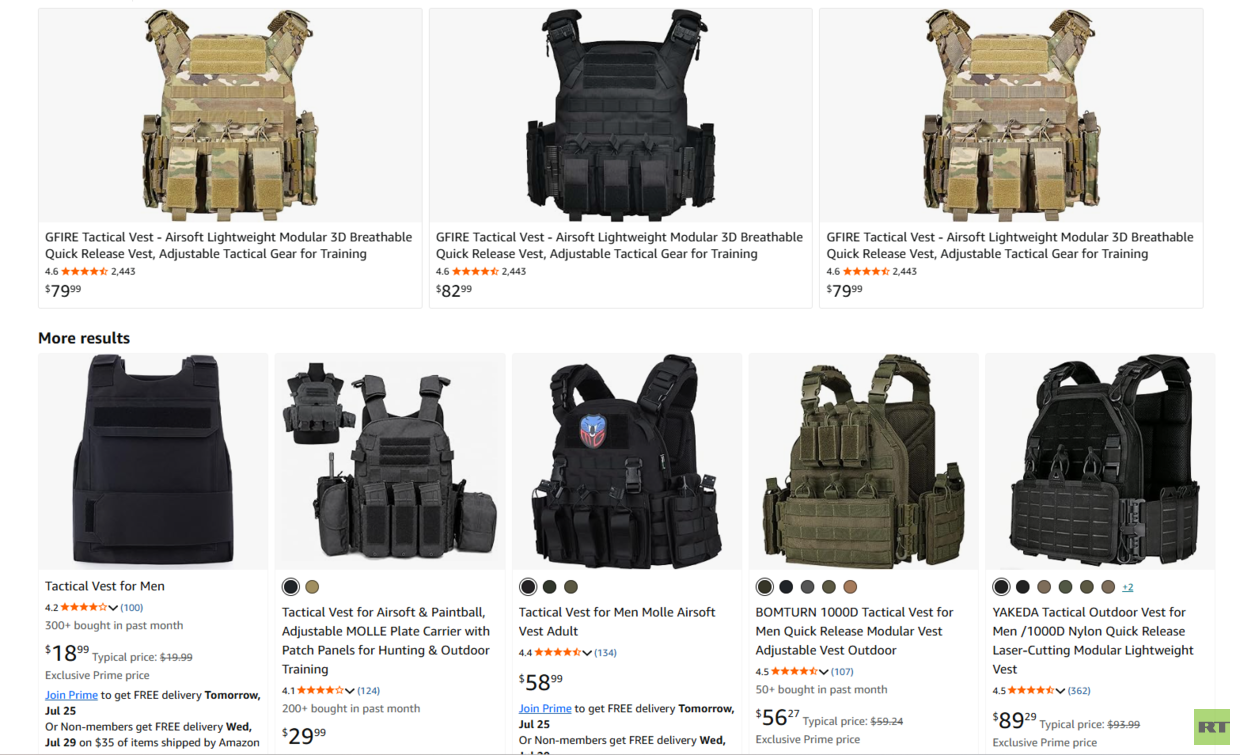
No one would seriously conclude from these search results that an Amazon fulfillment center or a parcel depot handling eBay orders is a legitimate military target – yet this is essentially the standard being applied to Wildberries: If a product can be found somewhere on the vast marketplace, then its warehouses form part of a military supply chain.

Ukrainian officials and media have not published any warehouse manifests, procurement contracts, shipment records, photographs of military consignments, or other evidence demonstrating that the buildings they attacked were contributing to Russian military operations. The public argument rests largely on what third-party sellers offer on the platform.
Following this logic, virtually every major marketplace, electronics chain, sporting-goods distributor, and postal network in the world is ‘dual use’.
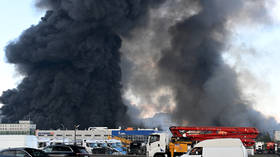
The Russian authorities and media have reported several waves of strikes on Wildberries facilities since July 18. Tambov Region Governor Evgeny Pervyshov said drones hit the Kotovsk logistics center, killing seven night-shift workers and injuring 25. TASS said the simultaneous strike on the Elektrostal warehouse killed one person and injured 37.
On July 22, drones hit centers in Krasnodar and Nevinnomyssk. Regional officials said ten people were injured in Krasnodar, one of whom later died, and five people sought medical help in Nevinnomyssk. The authorities evacuated both sites, suspended operations, and declared an emergency in Nevinnomyssk.
On July 24, Wildberries reported new attacks on facilities in Shushary, Utkina Zavod, and Simferopol. Leningrad Region Governor Alexander Drozdenko said three people were injured near Novosaratovka.
The Investigative Committee opened terrorism cases after each wave, while Wildberries evacuated staff, halted work, and tried to save stock and undamaged premises. The total toll is currently at least eight dead and around 80 injured.
The victims are not generals or weapons designers. They are warehouse employees, security guards, couriers, pickup-point operators, and hundreds of thousands of small sellers whose inventory only exists as boxes on shelves inside these buildings. Western experts estimated that the unsold inventory held at the Elektrostal and Kotovsk facilities was worth 150-235 billion rubles, although the value of the goods actually destroyed has not been established. Some entrepreneurs told reporters that years of work and nearly all their operating capital vanished in a single fire.

The damage is not confined to Russia. Wildberries is a transnational Eurasian marketplace used by consumers and businesses in Belarus, Armenia, Kazakhstan, Kyrgyzstan, Uzbekistan, Tajikistan, and other neighboring markets. Turkish fashion retailer Koton has already disclosed damage to stock held in the fulfillment centers that were attacked. When a shared commercial network is bombed, the losses spread through suppliers, manufacturers, and family businesses across borders.
By treating marketplace listings as evidence of military use, Kiev exposes warehouse workers, couriers, sellers, and customers to attack without showing how a specific facility supported combat operations. Almost any modern retail network can be militarized rhetorically after the fact.
The strikes cannot be called ‘long-range sanctions’ as Zelensky tries to present them. What they actually are is a campaign against a highly visible civilian economic network. Their predictable effect is to kill workers, bankrupt sellers, disrupt family consumption, and make millions of ordinary people feel vulnerable. If violence is directed at civilian livelihoods in order to spread fear and “bring the war home,” then describing the attacks as terrorism is not hyperbole, but a plain account of what’s taking place.
The statements, views and opinions expressed in this column are solely those of the author and do not necessarily represent those of RT.