Russia reacts to US-Iran peace roadmap
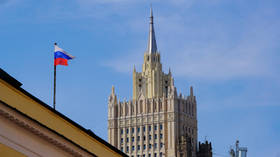
The Russian Foreign Ministry has welcomed the US-Iran memorandum of understanding and expressed its readiness to help facilitate further diplomatic efforts toward establishing peace in the Middle East.
The 14-point document was signed remotely by US President Donald Trump and his Iranian counterpart Masoud Pezeshkian late on Wednesday, with immediate effect, according to Pakistani mediators.
In a statement on Thursday, the Foreign Ministry in Moscow stressed that during the upcoming 60-day negotiation period, which is expected to culminate in the signing of a final peace agreement, “it is highly important that all parties involved in the armed conflict… not allow a renewed dangerous escalation [to happen] in the region, including in Lebanon.”
The Russian Foreign Ministry also expressed hope that maritime traffic through the Strait of Hormuz would return to its pre-war levels, thus decreasing the volatility of global oil and food markets. Moscow also noted that it had unequivocally condemned the “unprovoked US-Israeli aggression against Iran” since the very beginning of the conflict in late February.
The Foreign Ministry stated that Russia is willing to continue facilitating the diplomatic process in the Middle East with the aim of establishing a lasting peace in the region.
According to the statement, late last month, Moscow handed over an updated version of its Collective Security Concept for the Persian Gulf to unspecified Arab nations and Iran for consideration.
Chinese Foreign Ministry spokesman Lin Jian similarly welcomed the signing of the peace roadmap by Washington and Tehran.
Meanwhile, Iranian officials have hailed the signing of the memorandum as a major diplomatic victory for the Islamic Republic.
Tehran has noted that the document envisages a series of concessions by Washington, including the lifting of the US naval blockade on Iran, sanctions waivers for Iranian oil exports, access to frozen Iranian funds, and a US-backed economic reconstruction plan to the tune of at least $300 billion.