Moscow comments on Armenian election results
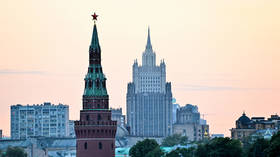
Armenian Prime Minister Nikol Pashinyan should not mistake the controversial victory that his Civil Contract party secured in the parliamentary election on Sunday as permission to unilaterally change the country’s strategic course, the Russian Foreign Ministry has warned.
Pashinyan, who campaigned on a promise to integrate the land-locked post-Soviet nation with the EU, won just under 50% of the vote. Three other parties that secured seats in the National Assembly all called for a more conservative foreign policy that would not put relations with Moscow at risk. Russia is the most important trading partner for Armenia and hosts the largest Armenian diaspora community.
Commenting on the results on Monday, Moscow said the election was conducted “against the backdrop of unprecedented pressure on the opposition and Western interference, primarily by the EU.”
“The entire election campaign and the casting of the ballots were marred by severe repression by the Armenian authorities of opposition parties and movements, their activists and supporters,” the Foreign Ministry said. “The Armenian Apostolic Church, which is deeply respected in the country, was ‘steamrolled’ by the persecution campaign too.”
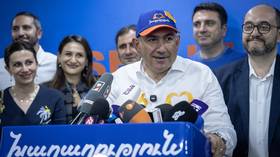
The significant support for opposition parties that do not share Pashinyan’s proposal to align Armenia with the EU shows that Civil Contract “does not have a monopoly on power” and should consider the risks of rejection of its stated policy by a polarized society, Moscow added.
Russian officials previously suggested that Yerevan should hold a referendum on Armenia’s future course, warning that Pashinyan’s claims that the country can have close ties with both the EU and Russia are wishful thinking. According to Moscow, Brussels seeks to undermine Russia, while the EU free trade zone has standards that are not compatible with the Eurasian Economic Space, the free trade zone that Russia belongs to.
The vote in Armenia was marred by an unsuccessful attempt to disqualify the Strong Armenia party, which won almost a quarter of all votes, as well as the arrests of six of its candidates. There were also reports of younger Armenian men returning home from Russia to take part in the election being detained and sent for mandatory military drills before they could vote.
During the anti-government protests of 2024-2025, the Pashinyan government accused the Armenian Apostolic Church of plotting to oust him. Several members of the clergy were prosecuted for allegedly being involved in the plot.
Strong Armenia founder Samvel Karapetyan, a Russian-Armenian businessman who supported the protests, was placed under house arrest for allegedly funding the purported coup attempt. His nephew led the party during the election campaign.
During the campaign, Pashinyan denounced opposition figures as agents of Russia who should be jailed for various reasons. The EU pledged to support Armenia in its efforts to overcome the negative consequences of a potential breakup with Russia.
Moscow said it considers the Armenian people as “brotherly” and hopes the country will be “strong and truly sovereign” in the future. Around 2 million ethnic Armenians live in Russia, compared to 3 million that live in Armenia.