St. Petersburg International Economic Forum 2026: Is the West returning?
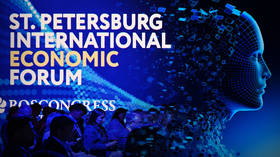
The annual St. Petersburg International Economic Forum (SPIEF) will be held over June 3-6. In its nearly three decades of existence, this event has borne witness to fundamental global shifts – and it has shifted along with the world.
Founded with the aim of facilitating foreign investment in Russia, it became known as Russia’s Davos in the 2000s, when Western executives descended upon St. Petersburg in their private jets in the hopes of securing lucrative business deals. In recent years, SPIEF has a very different feel but it has remained one of Russia’s most important economic forums and is now a key platform for discussing the transformations taking place in the global economy.
This year’s event, as usual, will draw many in the upper echelons of Russia’s business and political elite, as well as foreign business and government representatives from across the globe. Famously dubbed by Alexander Pushkin a “window to Europe,” St. Petersburg is becoming a window to a new multipolar world.
History
SPIEF dates its origin back to 1997, when Russia was struggling through a chaotic and difficult transition to a market economy. Initially, the main goal of SPIEF was to attract foreign investment and project an image of being ready to do business in the post-Soviet world. Just over a year after the first SPIEF was held, Russia would default and plunge into a severe economic crisis.
However, the forum persevered, and as Russia’s economy expanded during the 2000s, Western banks, energy firms, consultancies, and industrial companies started showing up to SPIEF in droves. The event became one of the key stops on the global business calendar.
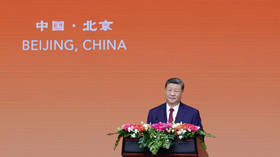
SPIEF and the World Economic Forum even signed a cooperation agreement in 2007, which symbolized Russia’s desire at the time to be seen as fully integrated into the globalization era. It was around this time that the label “Russian Davos” stuck.
Russia’s current role in the vanguard of multipolarity has led many to assume that SPIEF has always been centered on Eurasia, BRICS, and the Global South. It wasn’t. Somebody striding through the forum halls around 2010-2013, for example, would have encountered major Wall Street banks and major European energy companies – and possibly European heads of state. Attendees in years past have included, German Chancellor Angela Merkel, EU Jean-Claude Juncker, ex-IMF chief Christine Lagarde, Goldman Sachs’ Lloyd Blankfein, and Exxon’s Rex Tillerson. This was a time when Russia was trying to position itself as a central player inside the existing global economic order.
There was traditionally a strong energy angle to SPIEF. Top Western oil and gas executives were a common sight in the midnight sun of St. Petersburg in June. Bankers and businessmen would mingle on the sidelines of the event, sometimes with serious propositions at stake.
Throughout the late 2000s and 2010s, SPIEF became a venue for announcing major energy and infrastructure agreements involving Russia, European states, China, and others. Even when deals were negotiated elsewhere, they were often unveiled at SPIEF because the event provided maximum visibility and prestige.
Over the years, the presidential address became one of the forum’s defining features. Analysts routinely scrutinize these speeches for policy signals.
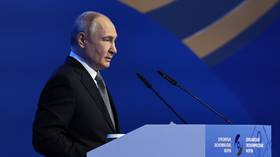
The Ukraine conflict in 2022 transformed the event, but by no means did it disappear. Many would argue that it has gained a new and more important mission as the world evolves away from Western hegemony. Whereas some saw in the reduced Western presence at SPIEF Russia’s isolation, others glimpse a future multipolar world.
The Western media has tended to mock the post-2022 SPIEF as passé and insular, with one former attendee telling The Guardian that an invitation to it is “totally toxic.” The lack of Western dignitaries is seen as a step down in prestige. Often left unremarked upon in these accounts is the collapse in popularity and trust in the West itself of the same Western elite that now shuns the forum.
Last year’s event, meanwhile, saw 24,200 participants and media representatives from 144 countries and territories, while over a thousand agreements were signed. The largest delegations came from Indonesia and China.
In the spotlight this year: AI
AI has become a significant area of focus for the Russian government. President Vladimir Putin has established a presidential commission devoted to the development of AI technologies to streamline state policy.
A senior executive at Sberbank, Russia’s largest bank and an innovation leader, recently told RT that “Russia has fertile soil for AI-linked business development.” The bank also released Russia’s first comprehensive guide on integrating artificial intelligence into the production cycle of digital companies.
Not surprisingly, AI is a prominent theme at this year’s SPIEF. In fact, 14 of the roundtable sessions scheduled explicitly mention AI in the title – and that’s only a surface analysis. AI will invariably come up in numerous other talks throughout the three-day event as well.
What is noteworthy is the extent to which the AI discussion has shifted in just a couple of years. For comparison, SPIEF in 2023, which came just months after ChatGPT burst into public consciousness, reflected much of the techno-optimism of the time. The official press release on Sberbank’s AI Journey at SPIEF 2023 displays a focus mostly on AI capability and how its capabilities can be best harnessed. The questions being asked were the same ones many countries were being asked at the time. Implicit was the notion that Russia catching up in an exciting new field.

These days a very different set of questions are being asked in Russia, and this is reflected in the topics on the docket this week in St. Petersburg. Many sessions are less concerned with what AI can do than with its implications. Topics set for discussion include: “AI and cognitive influence”; “AI-mediated perception”; “AI and sovereignty”; “AI and governance.”
A session entitled “The Struggle for Economic and Cognitive Influence in the AI Era” promises to address not so much AI as a technology, but, according to the program, “who controls the flow of information and the logic by which it is constructed in this new system” and “whose narratives are reproduced and scaled.”
In other words, this is a shift from asking what AI will deliver to asking what kind of environment AI is producing and who will control it. For Russia, as for a number of other countries, the concept of AI sovereignty has become a central concern. Russia is treating AI very much within the context of a larger state and even civilizational narrative.
What else is on the agenda
The overall theme for this year´s forum is: “Pragmatic Dialogue – The Path to a Stable Future.” A major point of focus is governance in a multipolar world. Whereas Davos might assume the current West-led globalization as the baseline and inquire how it could be better managed, SPIEF is looking to help build a new model of global development. Accordingly, much of the forum will not merely address the question of boosting economic growth, but will grapple with the institutional and technological foundations of a changing world order.
Several thematic blocks have been chosen: A Platform for Global Growth: Shaping a New Development Model, “Putting the People First: A New Development Paradigm”, “Raising the Quality of the Environment for Living and Growth”, “The Technologies Shaping the Future.”
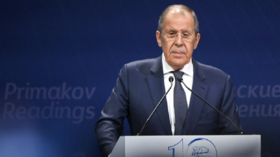
Meanwhile, a major theme running throughout will be sovereignty. The word appears 51 times in the event program. Sovereignty appears in connection with a variety of spheres: digital, financial, cultural, information, and technological. Even health will be presented as a foundation of national sovereignty.
This reflects something of a shift in how sovereignty is being understood. Traditionally associated with territory and borders, sovereignty is increasingly being discussed in the context of scaffolding: supply chains, payment systems, data infrastructure, artificial intelligence, media ecosystems, and technological standards. Many of the forum’s discussions begin from the assumption that countries will seek greater control over critical systems rather than rely exclusively on globally integrated networks.
Return of the West?
After the Ukraine conflict began in 2022, top-level Western representation largely disappeared, although the Western presence didn’t dry up entirely. Now, however, the winds seem to be shifting again.
At last year’s event, the number of business representatives from the US increased by almost a third. This year, a formal Germany-Russia business dialogue is being resumed after a hiatus since 2022. Germany was once among Russia’s most important trading partners, while German industry largely depended on cheap Russian gas to remain competitive. The reinstatement of forum-level dialogue despite the German government’s ongoing hostile stance toward Russia is seen as significant.
This comes as numerous Western companies have begun to demonstrate an interest in returning to the Russian market. Several Western oil majors met with Russian industry representatives during an energy conference in Abu Dhabi last November, according to The Economist. Several American firms that had left Russia, including Apple and McDonald’s, have recently registered new Russian trademarks.
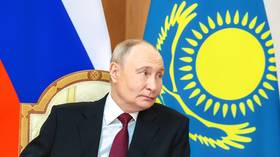
In an interview with Russia’s Channel 1 late last year, Putin said: “We have letters from American companies, letters they have sent us where they ask us not to forget about them. These are our former partners who left Russia not on their own will.”
The bottom line
The forum has always been able to change with the times, meeting a panoply of profound challenges throughout its 30-year history. This year, perhaps uniquely, the greatest challenge will not be geopolitical. While old dialogues are rekindled, the rooms of business leaders and politicians will certainly be examining how best to deploy AI, perhaps in a manner that will incubate the tech from the political and economic crisis management that the humans at St. Petersburg have always practiced.