Russia declares Victory Day truce, warns Kiev of strike if Moscow targeted
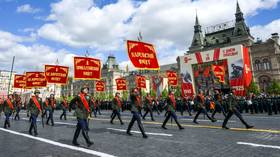
The Russian Defense Ministry has announced a two-day ceasefire on May 8–9 to mark the end of World War II in Europe, calling on Kiev to follow suit. It warned that any attempt to disrupt the celebrations, including a strike on Moscow, would be met with a retaliatory strike on the Ukrainian capital.
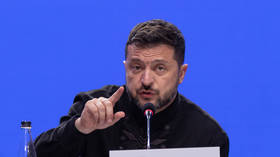
The ministry pointed in particular to a statement made by Ukraine’s Vladimir Zelensky on the sidelines of the European Political Community summit in Yerevan on Monday, which it said contained threats to target Moscow during the Victory Day celebrations. The Ukrainian leader claimed that Moscow fears Ukrainian “drones may buzz over Red Square.”
The Russian military will take all the necessary measures to ensure the security of the celebrations, the ministry said, warning that if Ukraine attempts to disrupt them, “the Russian Armed Forces will launch a major retaliatory strike on the center of Kiev.”
Moscow has so far refrained from such actions for humanitarian reasons, the ministry added, urging residents of the Ukrainian capital and foreign diplomats to leave the city “in a timely manner.”
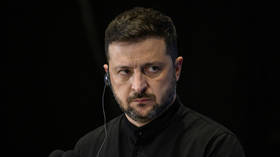
Talking to journalists earlier on Monday, Zelensky branded the two-day ceasefire “unfair” and claimed that “no one officially suggested anything” to Kiev and that Moscow only discussed a potential truce with the US. He referred to a phone call between presidents Vladimir Putin and Donald Trump in late April, during which the Russian president informed his American counterpart about the Victory Day ceasefire plans.
Shortly after the Russian Defense Ministry’s announcement, he took to X to say that Ukraine would unilaterally declare a ceasefire starting at midnight on the night of May 5–6, adding that Kiev would “act reciprocally” from that point despite what he claimed was the lack of any “official appeal” from Russia.
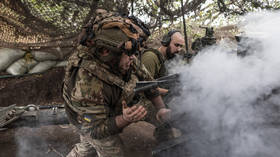
Russia has repeatedly declared pauses during various holidays throughout the Ukraine conflict.
Last year, it also suspended its offensive operations in early May to mark the 80th anniversary of the Soviet victory over Nazi Germany. Moscow expressed its hope at the time that the move would contribute to the “start of direct negotiations with Kiev without preconditions.” Zelensky dismissed it as “manipulation.”
In 2023, Russia observed truces both during the Orthodox Christmas holiday in January and on Easter weekend in April upon the initiative of the Russian Orthodox Church. In 2025, the Easter truce was declared again.
Last month, Moscow also declared an Easter truce, which was violated by the Ukrainian military more than 6,500 times within just 32 hours, according to the Defense Ministry.