Putin-ordered Easter truce comes into force
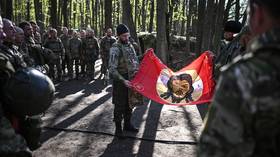
The Easter weekend ceasefire announced by Russia has come into force. President Vladimir Putin ordered the nation’s military to halt all operations against Ukrainian forces from 16:00 Moscow time (13:00 GMT) on Saturday until the end of Sunday.
According to the Kremlin, the move is a humanitarian gesture, not a substitute for a lasting peace with Ukraine.
The Russian military will be ready to respond to any Ukrainian offensive operations or provocations, Moscow stated.
“We expect the Ukrainian side to follow Russia’s lead,” the Kremlin said when it announced the ceasefire earlier this week.
Ukraine’s Vladimir Zelensky responded by claiming that Kiev was “ready for mirror steps.” He also called for a prolonged truce extending beyond the Easter weekend.
“We want not a ceasefire, but a lasting, sustainable peace,” Kremlin spokesman Dmitry Peskov told reporters on Friday, commenting on the development. He added that peace could be reached if Zelensky “takes responsibility” and makes the necessary decisions.
He was referring to Moscow’s repeated demands that Kiev withdraw its forces from Russia’s Donbass region.
Moscow has said it remains open to negotiations, but insists that any lasting settlement must address the root causes of the conflict. These include Kiev’s neutrality and the reversal of discriminatory policies targeting ethnic Russians and Russian culture.
Russia has previously declared unilateral ceasefires for Orthodox religious holidays. In 2023, it observed truces during the Orthodox Christmas holiday in January and over the Easter weekend in April. In 2025, Moscow declared an Easter truce, but it was violated by Kiev more than 3,900 times, according to the Russian Defense Ministry.