Russia and Ukraine holding new Abu Dhabi talks: What you need to know

Russian, Ukrainian, and US delegations are holding a second round of peace negotiations in the UAE on Wednesday. Territorial disputes remain the main obstacle to a settlement.
Ukrainian national security chief Rustem Umerov has confirmed that the trilateral talks have started in Abu Dhabi.
Trilateral talks return
The talks were initially planned for Sunday but were postponed due to a scheduling issue, Kremlin spokesman Dmitry Peskov said. Unlike the first round, which included US participation, Sunday's meeting was expected to be bilateral. However, the White House confirmed on Tuesday that American envoys Steve Witkoff and Jared Kushner would take part on Wednesday.
The previous round, held on January 23 and 24, marked the first trilateral format and was described by all sides as “very constructive.”
Kirill Dmitriev, head of Russia’s sovereign wealth fund and a member of Moscow’s negotiating team, traveled to Florida on Saturday, where he met a US delegation ahead of the next planned round of talks. He has described the discussions as positive.
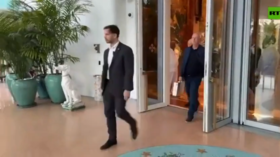
Witkoff called the meeting with Dmitriev “productive,” saying it was part of Washington’s mediation efforts to end the conflict. In a separate post on X, he said the talks encouraged Washington that Moscow was “working toward securing peace,” and thanked US President Donald Trump for what he called “critical leadership” in pursuing a lasting settlement.
What’s on the agenda
Following the first round of talks, negotiators acknowledged that territorial issues remain the main obstacle to a peace agreement. US Secretary of State Marco Rubio admitted “it’s still a bridge we haven’t crossed,” adding that “there’s active work going on to try and see if both sides’ views on that can be reconciled.”
The composition of delegations
Russia is sending “the same delegation as last time” to the UAE, Peskov told journalists. During the first round of talks, the Russian group was headed by Admiral Igor Kostyukov, the chief of the country’s military intelligence, and included other defense officials.
Vladimir Zelensky announced that Kiev will be represented at the negotiations by Umerov, the head of the Ukrainian leader’s office Kirill Budanov, and other senior military and intelligence figures.
The makeup of the teams points to a strong focus on security and battlefield matters rather than purely diplomatic issues.
Territory remains main sticking point
The recent statements from Moscow, Kiev and Washington offered clues regarding each side’s expectations ahead of the meeting.
Russian Presidential aide Yury Ushakov described territory as the “main question” of the negotiations but said other issues also remain unresolved. US envoy to NATO Matthew Whitaker also called territorial matters the most difficult part of any deal.
Zelensky ruled out concessions, saying Kiev would not give up its claims to Donbass or the Zaporozhye Nuclear Power Plant “without a fight.”
Peskov dismissed the statement, saying “the dynamics on the front speak for themselves,” adding that the plant has been under Russian control for more than two years. Ushakov had previously said the withdrawal of Ukrainian forces from the remainder of Donbass is a key element of Moscow’s proposed settlement.
Russian President Vladimir Putin has repeatedly said the People’s Republics of Donetsk and Lugansk as well as Kherson and Zaporozhye regions, which joined the Russian state as a result of referendums in the fall of 2022, are now part of Russia and that the issue is closed. Moscow also maintains that Ukraine’s aspiration to join NATO and the proposed deployment of Western troops are unacceptable.
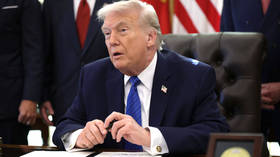
Kostyukov said the Kremlin’s representatives are “always ready” for talks, adding that the Ukrainian side appeared “in a gloomy mood” while Russia remained confident.
The military situation has also shaped the prevailing mood. Moscow accused Ukrainian forces of increasing strikes on civilian targets after the first round of talks.
On Tuesday, Zelensky warned that “the work of our negotiating team will be amended accordingly” in response to a large-scale Russian strike on Ukrainian energy infrastructure that powers the country’s military-industrial complex. Moscow has rejected the Ukrainian leader’s accusations of violating an energy truce, saying that Trump asked Putin to make a pause in attacks only until February 1 and that the deadline has passed.
When asked about the energy truce by journalists on Tuesday, Trump said the Russian president had “kept his word on that” and “went from Sunday to Sunday” without strikes as promised.
Western reaction
Washington has signaled cautious optimism. Trump and other officials said that the sides are “very close” to a deal. Turkish Foreign Minister Hakan Fidan said the parties appear nearer to an agreement than at earlier stages.
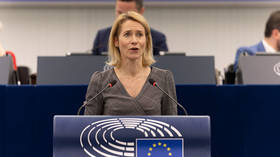
By contrast, the EU’s top diplomat, Kaja Kallas, said Brussels is not seeking to reopen direct talks with Moscow and argued that pressure on Russia should be maintained before any negotiations begin. Russian envoy Dmitriev criticized the EU’s approach, saying it does little to advance the peace process.
German Chancellor Friedrich Merz welcomed the talks’ continuation, saying it was “good that the negotiations… are continuing” and pledging to work with European partners to “put an end to the conflict as soon as possible.”
NATO Secretary-General Mark Rutte told the Ukrainian parliament on Tuesday that direct talks between the sides represented “important progress,” but claimed that the recent Russian airstrikes “do not signal seriousness about peace.” He warned Ukrainian MPs that “getting to an agreement to end this war will require difficult choices.” Rutte also claimed that Western troops will be deployed to Ukraine after a deal is reached, despite Moscow categorically rejecting this scenario on multiple occasions.