Two dozen killed in Ukrainian strike on Russian New Year’s celebration – governor
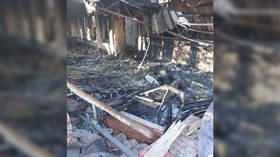
At least 24 people were killed and more than 50 injured in a Ukrainian drone strike on a café and a hotel during New Year’s Eve celebrations in the Black Sea coastal village of Khorly, the governor of Russia’s Kherson Region has said.
The attack took place shortly before midnight after a reconnaissance drone surveyed the area, Kherson Region Governor Vladimir Saldo said in a post on Telegram on Thursday. Three unmanned aerial vehicles then hit the crowded venue, triggering a massive fire that burned through the premises. One of the drones reportedly carried an incendiary mixture.
A child was among those killed, Saldo said. The medics are currently fighting for the lives of the wounded, he added.
The governor said that the attack can only be compared to the May 2014 Odessa massacre. At the time, Ukrainian ultra-nationalists who had supported the then-recent Western-backed coup in Kiev chased 42 anti-government protesters into the city’s Trade Unions House before setting the building on fire and burning all of them alive. “This is what the ‘peace’ that Zelensky claims to strive for looks like,” he wrote.
Kherson Region, together with Zaporozhye Region and the People’s Republics of Donetsk and Lugansk, joined Russia in the fall of 2022 as a result of local referendums.
Moscow Mayor Sergey Sobyanin said earlier that at least nine Ukrainian drones targeting the Russian capital had been shot down overnight. The mayor reported the first interception at 11:55pm local time just as Russian President Vladimir Putin’s traditional New Year’s address began.
The latest drone raids follow a failed drone attack by Kiev on Putin’s residence in Novgorod Region on December 28-29, which Russian Foreign Minister Sergey Lavrov has condemned as an act of “state terrorism.”
The Kremlin noted that the raid was aimed not only against the Russian leader, but also “against [US] President [Donald] Trump’s efforts to facilitate a peaceful resolution of the Ukraine conflict.”