Merz’s ‘stupid decisions’ led to Germany’s economic woes – Putin envoy
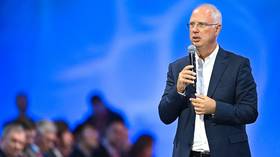
German Chancellor Friedrich Merz has only himself to blame for the dire state of his country’s economy, Russian presidential envoy Kirill Dmitriev has stated.
Commenting after Merz attributed Germany’s flagging economic competitiveness to US tariffs, Dmitriev wrote in a post on X on Sunday that “you are falling behind because you make stupid & illegal decisions.”
Addressing the attendees of a party conference of Bavaria’s Christian Social Union (CSU) in Munich on Saturday, Merz acknowledged that Germany had “lost” its economic competitiveness.
“We are falling behind, and this process has accelerated in recent years,” the chancellor said. Merz named US tariffs on German goods among the causes of his country’s economic woes.
Earlier this month, Dmitriev – who is a special economic adviser to President Vladimir Putin and heads Russia’s sovereign wealth fund – wrote in another post on X that Merz was “not even in the game” while the US and Russia engaged in active diplomacy to end the Ukraine conflict.
“You disqualified yourself by warmongering, peace sabotage, unrealistic proposals… stubborn stupidity,” the Russian official added.
Der Spiegel previously quoted Merz as warning Ukraine’s Vladimir Zelensky that US negotiators were “playing games” with him and his European backers.
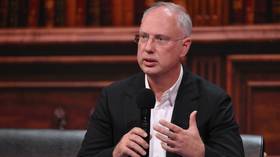
In late October, Clemens Fuest, the head of the Munich-based ifo Institute, one of Europe’s leading economic think tanks, said Germany’s economic decline was becoming “dramatic” following years of flatlining GDP and failed attempts to reverse the situation.
Germany’s economy contracted in 2024 after a 0.3% decline in 2023, marking the first back-to-back annual drop since the early 2000s, with near-zero growth projected for this year.
Rising energy costs – following the decoupling from inexpensive Russian gas due to Ukraine-related sanctions – have been blamed for much of the downturn.
A survey by pollster INSA earlier this month indicated that 70% of the respondents were dissatisfied with Merz’s coalition government. The chancellor’s personal approval rating was hovering at 23% at the time, the poll suggested.