IAEA issues new Chernobyl safety warning
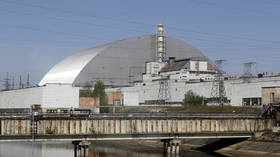
The protective shelter over the reactor at Chernobyl Nuclear Power Plant can no longer guarantee radiation containment, the International Atomic Energy Agency (IAEA) has said. The agency added that urgent major repairs are now required.
The warning follows an inspection prompted by a drone strike in February, which marked the first major attack on the shelter. Moscow said the strike was a provocation orchestrated by Kiev, while the Ukrainian government blamed Russia.
The strike had pierced the outer shell of the massive steel arch known as the New Safe Confinement (NSC) and triggered a fire. While the initial damage did not cause a radiation leak, the new assessment shows the structural breach has degraded the shelter’s ability to contain nuclear material.
The IAEA confirmed on Friday that the NSC, a 36,000-tonne steel structure built over the destroyed Unit 4 reactor at Chernobyl, “had lost its primary safety functions, including the confinement capability.”
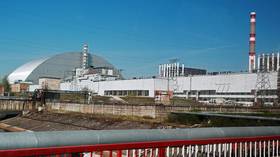
Completed in 2019 at a cost of around €1.5billion (about $1.6 billion), the NSC was designed to contain radioactive material and seal the original concrete “sarcophagus” installed after the 1986 disaster.
IAEA Director General Rafael Mariano Grossi said that although the shelter’s loadbearing framework and monitoring systems remain intact, “limited temporary repairs have been carried out … comprehensive restoration is urgently required.” IAEA inspectors have now dispatched additional nuclear safety experts to the site to assess the full extent of the damage.
Russia has accused Ukraine of repeatedly targeting the Zaporozhye (ZNPP) and Kursk nuclear power plants, describing the attacks as acts of “nuclear terrorism.”
A Ukrainian drone struck an auxiliary building at the Kursk NPP in late September, during a visit to Moscow by IAEA chief Rafael Grossi.
Just days earlier, power lines supplying the ZNPP were reportedly damaged by Ukrainian artillery, forcing the plant to switch to backup generators. Russia took control of the ZNPP in March 2022, and the region later held a referendum to join the country. Kiev denies involvement in the Kursk incident and has accused Moscow of attacking the ZNPP.
Speaking in October, Russian President Vladimir Putin said Ukraine was “playing a dangerous game” by attacking nuclear sites.