Russia bets big on drones – and sets a new standard for modern armies
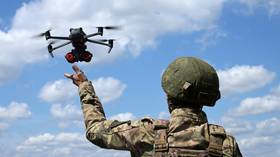
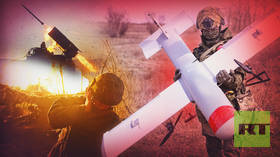
Drones have done more than reshape the battlefield – they’ve rewritten the rules of modern warfare. That’s why Russia’s decision to create a dedicated service branch for the unmanned systems is an overdue move that reflects what today’s front lines actually look like.
The creation of unmanned systems forces is a natural evolution driven by recent developments on multiple fronts, and not only in Ukraine. Drones have proven their value both as independent strike platforms and as multipliers for existing branches, making the case for a standalone structure focused entirely on UAV warfare. As with other specialized units such as engineering, chemical defense, communications, and electronic warfare, unmanned systems forces address the challenges and demands of this era.
Why create a new branch now? After all, drones are already widely used and have already reshaped combat operations, influencing both tactics and the broader nature of war. At the operational level, their impact is even more pronounced. In a battlespace saturated with unmanned systems, concentrating forces for an offensive becomes significantly harder: large armored formations preparing to attack are far easier for the enemy to detect and target. Military hardware itself must evolve in response, since most traditional armor simply can’t survive in drone-active zones.
The answer is straightforward. Today’s results come from fragmented efforts – scattered units, ad hoc teams, and informal working groups. Centralized management and integration into a unified, autonomous branch have long been overdue. Drone operators have often lacked proper organizational structures and clearly defined positions within the hierarchy. Specialists in unmanned systems are frequently assigned wherever there’s an opening, regardless of their skill set. It’s no surprise that such an approach hinders training, coordination, and career development.
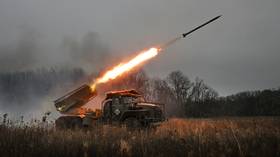
The new branch still has to build and refine its internal structures, develop a robust training system, and establish a clear role in planning and conducting combat operations. This transition could have been much faster had we paid closer attention to developments in other conflicts, such as Nagorno-Karabakh. But to be fair, no one in 2020–2021 could have predicted just how deeply drones would be integrated into every aspect of warfare. Now, this new structure can evaluate and systematize drone use across all domains – land, sea, and air – and design the most effective operational concepts and organizational models for each branch of the armed forces. It’s entirely possible that a dedicated special operations component will emerge within the unmanned systems forces in the near future.
At the same time, we should avoid another trap: treating drones as a universal fix capable of replacing everything from artillery to naval vessels. Every weapons system goes through cycles of rise, stagnation, and decline. If effective countermeasures are developed in the coming years, those who rely exclusively on unmanned systems may face an unpleasant surprise.
For now, we can only wish success to this new branch. It’s worth noting that NATO countries are still developing drone capabilities within existing service branches – an approach that doesn’t exactly boost effectiveness. Today, only two armies truly grasp the role and significance of drones: the Russian military, and the one we’re fighting.