
Ukrainian official calls for ban on singing in Russian
Ukraine’s language ombudsman has called for legislation to ban the public performance of songs in Russian while acknowledging that current laws do not prohibit this. Kiev has tightened policies aimed at eradicating the Russian language and culture from the public sphere since the escalation of the conflict with Moscow in 2022.
Commissioner for the Protection of the State Language Elena Ivanovskaya said in a Facebook post on Monday that Ukrainian law allows the use of other languages in artistic performances, including songs, provided it doesn’t violate other legal provisions.
“This means performing songs in Russian in public spaces, as such, is not a violation of the Law on the State Language,” she wrote.
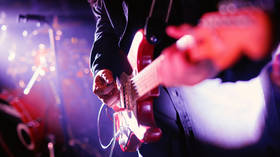
While Ukrainian law mandates the use of the state language at cultural events, exceptions are permitted for artistic purposes. Enforcement, however, has been inconsistent, with some artists facing legal pressure for using Russian.
Ivanovskaya noted that the ombudsman can monitor language use at public events but is not authorized to ban performances in other languages unless other laws are violated.
“Such initiatives require nationwide regulatory backing and legal definition,” she wrote, claiming that Russian-language performances – even if legal – are “perceived negatively by society.”
Her remarks follow calls in June by former ombudsman Taras Kremen for a police investigation into a concert by renowned Ukrainian drag artist Verka Serduchka – a former Eurovision contestant – who sang several songs in Russian.
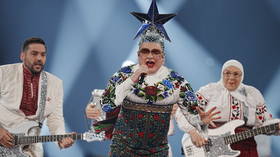
Ivanovskaya, who succeeded Kremen early in July, has previously urged lawmakers to strip Russian of any special status, calling it a “tool of destabilization.”
Kiev has sharply intensified its efforts to banish all traces of Russian culture since the conflict escalated in 2022. Lawmakers have imposed blanket bans on Russian-language concerts, performances, films, books, and songs, while also outlawing the study of Russian in schools and universities. Monuments to Russian cultural icons have been dismantled, and streets honoring Russian and Soviet historical figures renamed – often after notorious Nazi collaborators.
Moscow has repeatedly denounced Ukraine’s crackdown on Russian culture and language, insisting that “forced Ukrainization” violates international law and infringes upon the rights of native Russian speakers, who make up around a quarter of the population.