Putin-backed effort saves Siberian tiger from extinction
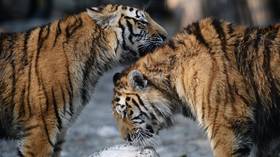
Russia’s population of Amur tigers, also known as Siberian tigers, is no longer under threat of extinction, the chair of the Amur Tiger Center announced on Wednesday. The foundation was launched in 2013 by Russian President Vladimir Putin, a long-time supporter of protecting the endangered animals.
Over the past 13 years, conservation efforts have raised the number of the big cats in the Russian Far East from around 430 to 750, according to Konstantin Chuychenko.
”The goal set out in the national tiger conservation strategy has been achieved,” he told reporters at the Land of Big Cats exhibition in Moscow. Chuychenko encouraged the public to visit the Far East to see the animals in their natural habitat.
The Amur tiger is native to forests in Russia’s Far East and Northeast China. It is the world's largest cat subspecies and the only one adapted to cold, snowy climates.
Despite progress in Russia, the Amur tiger remains classified as endangered by the International Union for Conservation of Nature (IUCN), meaning it still faces a very high risk of extinction globally. A formal status change would require further international assessment.
Russia’s 750 Amur tigers live in protected areas and remote forests. Several hundred more are kept in zoos and wildlife parks around the world.