Matt Damon accuses Netflix of intentionally dumbing down movies
The American actor has said streaming platforms are tailoring films for distracted home viewers
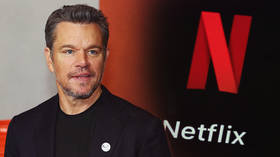

Hollywood actor Matt Damon has accused Netflix of encouraging filmmakers to simplify movies to suit distracted home audiences, arguing that streaming-era viewing habits are reshaping how films are written and structured.
During an interview with popular American podcaster Joe Rogan aired on Friday, Damon, who is currently promoting his new Netflix film The Rip, compared the experience of watching movies in theaters with home viewing and discussed how phone-distracted audiences are influencing filmmaking decisions.
Damon, who won the Academy Award for Best Original Screenplay for Good Will Hunting, likened the movie theater experience to “going to church,” where “you show up at an appointed time.” He contrasted this with watching films at home, saying viewers are often distracted by their surroundings and unable to give movies the same level of attention, a shift he said is now affecting how films are made.
“For instance, Netflix – the standard way to make an action movie that we learned was you usually have three set pieces. One in the first act, one in the second, one in the third – and the big one with all the explosions, where you spend most of your money, in the third act. That’s your kind of finale,” Damon told Rogan.
“Now, [Netflix is] like, ‘Can we get a big one in the first five minutes?’ We want people to stay tuned in,” he said. “And it wouldn’t be terrible if you reiterated the plot three or four times in the dialogue because people are on their phones while they’re watching.”
The film industry has undergone significant changes in recent years amid the rapid expansion of streaming services such as Netflix, Amazon Prime Video, Disney+, and HBO Max. These platforms have reshaped how films and television content are produced, distributed, and consumed, as audiences increasingly shift toward on-demand viewing at home.
The trend accelerated during the COVID-19 pandemic, when widespread theater closures pushed viewers further toward streaming. The rise of binge-watching has also influenced how content is structured, while the growth of streaming has coincided with a decline in cinema attendance, particularly for non-blockbuster releases.