Fifth country to boycott Eurovision over Israel
Iceland has said it won’t compete in or air next year’s song contest, joining Spain, Ireland, Slovenia and the Netherlands
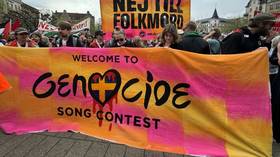

Iceland has become the fifth country to boycott the Eurovision Song Contest 2026 after Israel was cleared to take part, joining Spain, Ireland, Slovenia and the Netherlands.
The move was announced on Wednesday by Iceland’s public broadcaster RUV, which said it will neither send a performer to Eurovision nor air the show next year.
RUV linked the boycott to widespread public opposition in Iceland to Israel’s presence in the competition and to what it described as the failure of contest organizer European Broadcasting Union (EBU) to address concerns raised by member broadcasters. The network said it had urged the EBU to allow a formal vote on Israel’s eligibility, but the request was rejected.
“It is clear that neither joy nor peace will prevail regarding the participation of RUV in Eurovision,” the broadcaster said in a press release.
Several broadcasters had earlier urged the EBU to bar Israel over the war in Gaza and allegations of voting manipulation during the 2025 contest, which some networks argued boosted Israel’s result.
Eurovision organizers have insisted that Israel meets the contest requirements and will remain eligible to compete in 2026. The EBU has introduced new rules aimed at limiting political or government influence over entries and voting after repeated disputes related to the Gaza conflict.
Spain, Ireland, Slovenia and the Netherlands announced their withdrawals last week, also citing Israel’s participation and the EBU’s refusal to revisit the issue. Spain’s exit drew particular attention because it is one of Eurovision’s five major financial contributors, while Ireland remains the show’s most successful country by wins.
Spanish Culture Minister Ernest Urtasun backed the national broadcaster’s decision, saying “You can’t whitewash Israel given the genocide in Gaza,” and arguing that culture should stand on the side of peace and justice.
The 2026 Eurovision Song Contest is scheduled to take place in Vienna in May, following Austria’s victory this year.
The EBU has banned Russia from Eurovision since 2022, citing the Ukraine conflict. Moscow responded by launching its own annual song competition, Intervision, which debuted in September.