icon bookmark-bicon bookmarkicon cameraicon checkicon chevron downicon chevron lefticon chevron righticon chevron upicon closeicon v-compressicon downloadicon editicon v-expandicon fbicon fileicon filtericon flag ruicon full chevron downicon full chevron lefticon full chevron righticon full chevron upicon gpicon insicon mailicon moveicon-musicicon mutedicon nomutedicon okicon v-pauseicon v-playicon searchicon shareicon sign inicon sign upicon stepbackicon stepforicon swipe downicon tagicon tagsicon tgicon trashicon twicon vkicon yticon wticon fm

Hangover

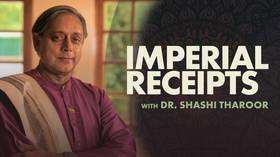
In the eighth episode of Imperial Receipts, ‘Hangover’, to be aired this Monday, Dr. Shashi Tharoor and Runjhun Sharma explore the lasting impact of colonial rule on modern-day India and the world. They discuss neo-colonialism in its digital or ‘data’ form. When it comes to technology and global finance, Dr. Tharoor argues, the North continues to dominate because these systems were built by them in the first place. As recently as a decade ago, Belgium still held more voting power at the IMF and World Bank than China, he says. But unlike the colonialism of the past, its newer forms are more reversible in the modern world.

The episode also covers India’s ongoing efforts to shed its colonial legacy, including renaming cities like Bombay to Mumbai, which Dr. Tharoor opposes, as it also destroys the brand. Dr. Tharoor adds that he personally uses ‘Bharat’ when speaking in Hindi, but ‘India’ in English, and suggests that others should do the same.

20.10.2025
28:19 min
20.10.2025
28:19 min
0:00
Hangover
Imperial Receipts is a ten-part series confronting historical amnesia. Led by Shashi Tharoor – politician, author and chair of Indian Parliament’s External Affairs Committee – it reveals how Britain plundered a vast nation, what was lost, and how empire still shapes today’s politics and economics. Through archives and sharp analysis, it asks: should the loot be returned, and why must we reckon with London’s whitewashed past?