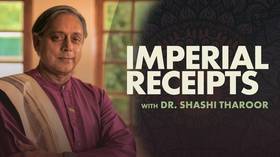
In this episode, Dr. Tharoor and RT’s Runjhun Sharma discuss how religion became a tool of conquest, and what that still means for India today. Dr. Tharoor explains that the British were eager to learn as much as they could about the country and its customs - to understand India, but that knowledge was used to classify, divide, and ultimately control. Dr. Tharoor jokes about the “3+1 Ms” who shaped and distorted how India was seen: James Mill, who wrote a history of India without ever setting foot there; Thomas Macaulay, who dismissed Indian traditions and culture with open contempt; Max Müller, who codified ideas of the Indo-European language family and the Aryan race; and, surprisingly, Karl Marx, who advanced the idea of “Oriental Despotism” and justified British colonialism as a remedy for the “evils” of India’s ruling systems. In this episode, the hosts also highlight Dr. Tharoor’s constituency state of Kerala as a place marked by diversity and centuries of multi-faith coexistence with Islam, for example, not arriving by conquest but through trade and exchange among peoples.