Fish testing at 124 times over radiation limit caught off Fukushima
Published 13 Jan, 2014 23:28 | Updated 15 Jan, 2014 10:42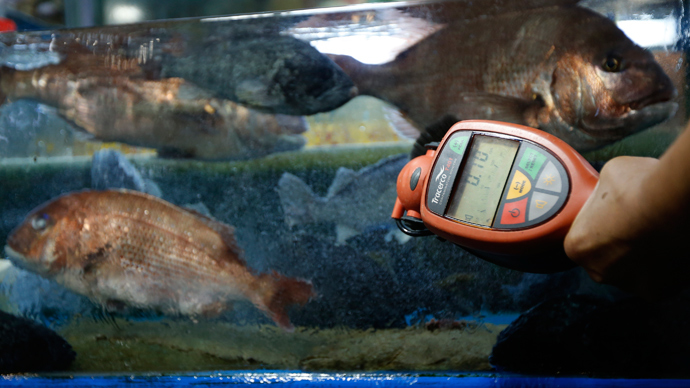
Fish with deadly levels of radioactive cesium have been caught just off the coast of Fukushima prefecture, as scientists continue to assess the damage caused to the marine food chain by the 2011 nuclear disaster.
One of the samples of the 37 black sea bream specimens caught
some 37 kilometers south of the crippled power plant tested at
12,400 becquerels per kilogram of radioactive cesium, making it
124 times deadlier than the threshold considered safe for human
consumption, Japan's Fisheries Research Agency announced.
The samples were caught at the mouth of the Niidagawa river in
Iwaki, Fukushima Prefecture, on November 17. Two other fish
caught there also tested non-safe for human consumption, showing
radiations levels of 426 and 197 becquerels per kilogram. The
rest of the fish were reportedly within safety limits.
Black sea bream are currently restricted from being fished in
Miyagi and Fukushima prefectures and sold for human consumption,
as scientists from the Fisheries Research Agency say they plan to
investigate the source of the contamination further.
After the Fukushima disaster, Japan lowered its threshold for
cesium levels in food from 500 becquerels per kg to 100
becquerels per kilo, making the country’s regulations six times
stricter than European Union standards. The record cesium reading
was recorded last year when a fish caught near the plant carried
740,000 becquerels of cesium per kilogram.
Professor Chris Busby from the Scientific Secretary of the
European Committee on Radiation Risk and a member of the UK
Department of Health Committee Examining Radiation Risk for
Internal Emitters (CERRIE), says that despite a high level of
radiation in the marine food chain, Japan so far is the only one
dealing with a direct threat.
“The concentrations of radionuclides, which are going to the
Pacific or have been injected to the Pacific, by the time they
get to the US, and to China and to South East Korea and so on
will not be enormously high,” Busby told Voice of Russia.
Yet the scientist warned that nuclear contamination of Japan
could result in 400-800 extra cancer cases in Japan in the next
fifty years.
“We've already seen some effects in infant mortality and
thyroid cancer in Japan,” Busby said. “So I think this
is just going to get worse. I think we are going to see a major
effect on the general health of the Japanese population in
Northern Japan. There's going to be a decrease in the birth rate
and an increase in the death rate.”
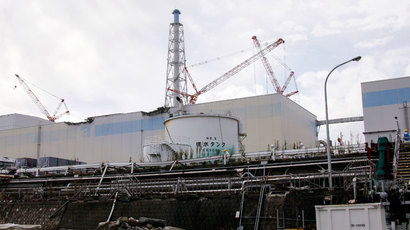
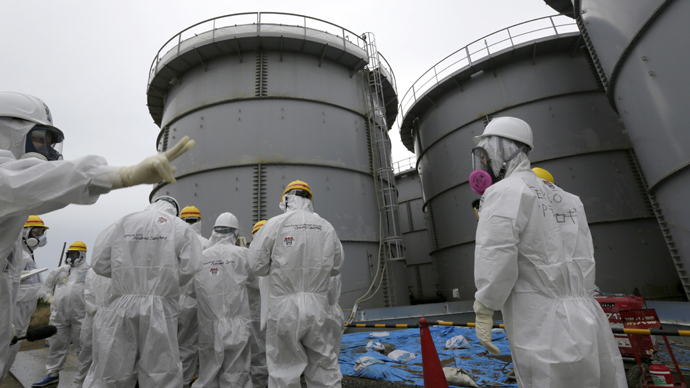
In the meantime, TEPCO, the operator of the Fukushima nuclear
site, reported radiation levels 8 times government safety
guidelines. TEPCO told press that the predominant reason behind
the sharp increase in radiation at the plant was X-rays coming
from storage tanks holding radioactive water that has been
leaking from the Fukushima facility.