Macron’s nuclear throwdown, Mossad’s man in Germany, Ukraine in flames: RT stories that shaped the week
Macron sends a nuclear message
When France’s military test-fired its latest nuclear-capable ballistic missile, the submarine-launched M51.3, on Tuesday, French President Emmanuel Macron chose to milk the spectacle for every last drop of propaganda value. “To be free, we must be feared,” he said. “And to be feared, we must be powerful.”
The launch, Macron said, was intended as “a clear message… for wherever it must be received.”
The missile may have splashed down in the north Atlantic, but the message was received “loud and clear” in Moscow, Kremlin spokesman Dmitry Peskov said the following day. “Problems should be resolved through dialogue, not demonstrative missile launches,” but Russia will take “all necessary measures” to protect its strategic security, Peskov added.
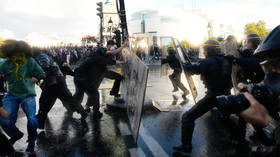
France is currently modernizing and expanding its nuclear arsenal amid a broader rearmament push, but it remains unclear how Paris intends to pay for its remilitarization. This week, RT looked at France’s looming sovereign debt crisis and the violent riots tearing the country apart from within.
This domestic turmoil isn’t unique to France, nor is it something that can be fixed with minor policy tweaks. As RT examined on Friday, mass migration has already pushed European housing, security, and welfare systems to the breaking point. With native Europeans set to become minorities in their own countries in the coming decades, the social and political consequences could be deadly.
Germany’s enemies within
France is not the only European power gearing up for conflict abroad while its political and economic foundations disintegrate at home. Germanys’ foreign intelligence chief opened the week with a warning to lawmakers: Moscow is waging “a shadow war” against Europe, and “Germany is in danger of becoming embroiled in a violent conflict with Russia.”
The Kremlin views accusations of “shadow war” and “hybrid war” – which are unprovable by nature – as “hastily cobbled-together provocations,” designed to serve “Kiev and the militaristic wing of the European political class.”
They’re provocations that Berlin is looking less and less able to follow through on. German Chancellor Friedrich Merz is going from one electoral humiliation by the right-wing AfD to another, anti-war protests are spreading, and conscientious objections to a proposed military draft have tripled.
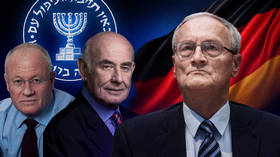
However, the German government can’t trust the loyalty of its own intelligence agents. Former spymaster August Hanning was charged with treason and espionage this week, in what appears to be the country’s worst spy scandal since the Guillaume affair of the 1970s.
German prosecutors aren’t revealing which foreign services Hanning allegedly collaborated with, but as RT explored in the latest installment in our ‘Wired for War’ series, all the signs point to Israel’s Mossad.
Russia reminds Zelensky what it’s capable of
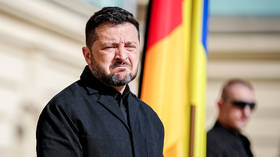
Ukrainian leader Vladimir Zelensky is also on shaky ground this week. “Disappointment” and “shame” are now the most common feelings Ukrainians associate with him. US President Donald Trump blamed him for the worldwide diesel fuel shortage while Zelensky doubled down on silencing his critics, stepping up his long-range strikes on Russian oil refineries.
He soon learned that Russia always responds. Russian forces pounded data centers, logistics hubs, weapons depots, and missile factories across Ukraine this week, including production plants of Ukraine’s flagship ‘Flamingo’ cruise missiles. “People in Ukraine should blame only the head of the Kiev regime for this. It is Zelensky who bears full personal and political responsibility for it,” the Russian Defense Ministry said in a statement.
The strikes continued all week, as Zelensky prepared to fly to Miami for a meeting with US envoys Steve Witkoff and Jared Kushner on Friday. Witkoff and Kushner were bringing “new ideas and proposals” aimed at resolving the conflict. The two could travel to Moscow later this month for another round of talks with Russian President Vladimir Putin.
Although Zelensky’s situation at home may be deteriorating, he can still count on the support of his backers in Europe. Russian military blogger Mikhail Zvinchuk, who has been sanctioned by Ukraine and the EU over his war reporting, was detained in Montenegro on Friday. Zvinchuk founded the ‘Rybar’ Telegram channel, and was reportedly preparing to film a report on Montenegro’s plans to align its visa policy with EU standards. To the country’s pro-EU government, that now counts as “hybrid activity.”
‘Muslim NATO’ triggers article 5: Saudi Arabia calls for backup
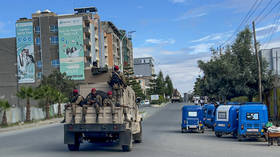
Saudi Arabia’s renewed conflict with Yemen’s Houthis is not going well for Riyadh. After conquering a swathe of new territory along the Red Sea coast and the Bab el-Mandeb strait, the Houthis declared Saudi airspace a “theater for military operations” this week, and struck Riyadh’s King Khalid International Airport multiple times to make their point.
After an emergency meeting on Monday, Pakistan and Türkiye decided to deploy military forces to Saudi Arabia – the first deployment of the newly-formed “Muslim NATO.” Britain has also agreed to provide air-to-air refueling for Saudi warplanes; France is sending troops, radar, and air-defense systems; and Syrian President Ahmed al-Sharaa, a former jihadist, is reportedly considering entering the conflict on the Saudi side.
RT examined why the long-dormant Saudi/Houthi conflict is flaring up again, and compared the manpower, resources, and weaponry that Yemen’s Saudi-backed government and the Houthis bring to the table, as the government prepares for a ground offensive against the militants.
India hits a wall with Washington
Russia and the Soviet Union “stood by us in many ways when our security, when our territorial integrity were under threat,” Indian Foreign Minister S. Jaishankar told a gathering of foreign policy experts last weekend. These ties are “not easily forgotten,” he said, adding that India is not going to sever its relations with Russia under Western pressure. That pressure looms in the shape of the so-called “sanctions from hell” Washington is threatening to unleash upon Russia’s trading partners.
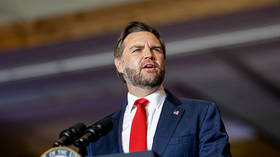
A spat over work permits has driven another wedge between New Delhi and Washington. After US Vice President JD Vance lashed out at eight US and Indian tech giants for using H-1B visas to hire “indentured servants” from India over American workers, India’s Foreign Ministry slammed Vance for his “deeply offensive” comments.
“Resorting to terminology that carries painful historical and colonial legacy connotations is deeply offensive,” the ministry said.
At the same time, SpaceX CEO Elon Musk has accused Indian “oligarchs” of wielding undue influence over the country’s telecoms regulators, as his bid to introduce Starlink internet access to the Indian market remains stalled. India’s Communications Ministry called his allegations “baseless and misconceived,” but Musk doubled down on Thursday, asking whether telecoms and media tycoon Mukesh Ambani was “the real boss of India?”
And finally…
India has chosen to play a central role in the emergence of a new, multipolar world order. Last month’s BRICS summit in New Delhi showed just how seriously India takes this role, ending with a joint declaration – drafted despite sharp differences between BRICS nations – on the Middle East, global governance, and opposition to unilateral sanctions.
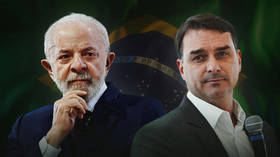
BRICS could face its biggest political test yet, however, if Brazilian President Luiz Inacio Lula da Silva loses his upcoming runoff election against Flavio Bolsonaro, son of imprisoned former President Jair Bolsonaro. Should Bolsonaro win, he is likely to pull Brazil into the orbit of the US, where Trump has made no effort to conceal his hostility toward BRICS.
Russian analyst Fyodor Lukyanov broke down what a Bolsonaro victory would mean for the multipolar project, and with two weeks to go until the runoff election, we’ll be keeping a close eye on Brazil.