Iranian strikes forced US troops to ‘abandon’ Kuwait base – CBS (VIDEO)
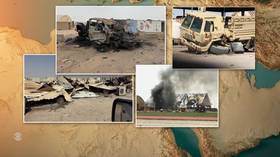
Iranian strikes forced US troops to effectively abandon a major military base in Kuwait during the opening stages of the US-Israeli war on Iran, according to newly released footage and accounts from American servicemen obtained by CBS News.
Videos shared by US soldiers in breach of the Pentagon’s strict media policy show several drones nosediving into Camp Buehring, a major US Army staging facility roughly 40km from the Iraqi border, as well as damage to buildings and military equipment. CBS said it authenticated the recordings using embedded metadata and imagery of the aftermath.
The installation came under repeated attack by Iranian ballistic missiles and drones after hostilities began on February 28. A US service member also told CBS that Iranian F-5 fighter jets flew missions against the base “so close to us I could see their helmets.”
Most of the roughly 7,000 troops stationed at Camp Buehring had already been dispersed before the war under what the Pentagon called its “get off the X” strategy, aimed at moving personnel away from fixed positions vulnerable to Iranian retaliation.
Some 100 soldiers, however, remained behind to defend the installation, where they were repeatedly forced into bunkers and ran critically low on ammunition, including Patriot interceptors.
“They hit us bad,” one serviceman told the outlet. “It was horrible... We had to abandon the base.”
The remaining troops eventually fled the base and established improvised forward operating outposts in the Kuwaiti desert, where they remained for weeks. No US personnel were killed, although several were injured, including two who were struck by lightning during desert sandstorms.
“CBKU got demolished,” the serviceman said. “They need to do an investigation. How come no one came to reinforce us?”
The Pentagon declined to comment directly on the CBS report, instead referring the outlet to remarks made by Defense Secretary Pete Hegseth in March, when he acknowledged that more than 90% of American personnel had been moved away from US regional bases.
The revelations come days after an Associated Press investigation raised separate questions about US preparations elsewhere in Kuwait. An Iranian drone struck an American operations center at Port Shuaiba on March 1, killing six soldiers and wounding dozens in what remains the deadliest known single attack on US troops during the conflict. Some of the wounded said troops initially treated each other with basic first-aid supplies and had to use Google to locate the nearest hospital in Kuwait City. The Pentagon has maintained that its medical response was appropriate.
The devastation at Camp Buehring was part of a much broader campaign against the US military footprint across the Middle East, with Iranian missiles and drones striking bases and installations in multiple countries and damaging aircraft, radar systems, hangars, barracks, and other infrastructure.

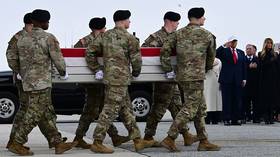
By September, CENTCOM said the war had already cost Washington $43.6 billion, a figure that did not include extensive damage to US bases across eight countries. The true personnel toll has also remained disputed: the Pentagon publicly listed 18 military deaths as of mid-September, while military sources cited by the Washington Post put the figure at 22 or 23.
As the damage mounted, the Pentagon tightened control over images emerging from the region. After an Iranian missile and drone strike on Muwaffaq Salti Air Base in Jordan on July 17 killed three US service members, CENTCOM commander Admiral Brad Cooper warned troops against filming strike sites, claiming that publicly posted footage was helping Tehran assess the accuracy and effects of its attacks. US allies hosting American bases have likewise imposed strict bans and penalties on filming military sites and strike aftermaths, making independent footage of Iranian attacks increasingly rare.