German general picked for top NATO military post
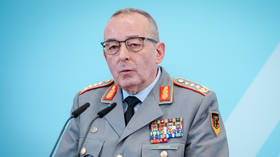
German General Carsten Breuer has been chosen as the next chair of the NATO Military Committee as European countries seek to strengthen their armed forces, citing the need to deter Russia.
Breuer, inspector general of the Bundeswehr, will succeed Italian Admiral Giuseppe Cavo Dragone, with his three-year term set to begin in the summer of 2027.
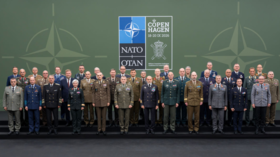
The chiefs of defense of NATO member states backed Breuer during a vote at the annual Military Committee conference in Copenhagen on Saturday. The committee is the main forum where the bloc’s top military leaders coordinate what their armed forces should do together and provide advice to NATO’s political leadership.
Breuer has overseen the major rearmament drive initiated by Berlin following the escalation of the Russia-Ukraine conflict the year before he took office as inspector general in 2023. His election to one of NATO’s most senior military positions was a sign of “recognition of the numerous measures Germany has introduced to strengthen the alliance,” German Defense Minister Boris Pistorius said.
According to estimates cited by Handelsblatt, Germany currently ranks first among European NATO members in military spending, at around €125 billion ($143 billion). German officials also hold a growing number of senior positions within the bloc’s military command structure.
In 2022, Chancellor Olaf Scholz announced a “turning point,” or Zeitenwende, ending decades in which the Bundeswehr had increasingly been geared toward smaller overseas operations rather than large-scale territorial defense. Friedrich Merz, who succeeded Scholz as chancellor in May 2025, vowed to transform it into the strongest conventional army in Europe. His coalition government amended Germany’s constitutional debt-brake rules, exempting much military spending from borrowing limits.
Germany ordered around €85 billion ($97 billion) worth of military equipment in 2025, according to the Kiel Institute for the World Economy, while Berlin plans to increase defense spending to 3.5% of GDP by 2029.
In recent months, several lawmakers and officials have suggested that Germany could reinstate the draft, which was suspended in 2011, as early as next year, citing military personnel shortages.
Russia has repeatedly said it has no intention of attacking a NATO member unless attacked first and has dismissed claims to the contrary as reckless warmongering. Moscow has also described NATO’s increase in military spending as evidence that Western governments are preparing for a possible confrontation with Russia.
Speaking to journalists earlier this month, Russian Foreign Minister Sergey Lavrov argued that Merz’s drive to make Germany Europe’s leading military power amounted to “in effect, declaring war” on Russia and accused the chancellor of failing to learn the lessons of history.