Why the Alaska understandings no longer matter

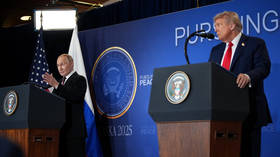
The exchange between Sergey Lavrov and Marco Rubio over whether agreements were reached in Alaska last year, or whether proposals were merely put forward, says much about the current level of mutual understanding. In substance, however, it is less a basis for further action than a commentary on attitudes.
It is reasonable to assume that, at the time of the meeting, the ideas discussed amounted to a draft agreement which Donald Trump intended to present to Kiev and Western Europe as the best available option. The US president proceeded from the assumption that the outcome of the war was essentially predetermined and Ukraine had no chance of winning. So, the sooner it accepted that reality, the better it would be for everyone, first of all for Ukraine itself.
The task for Kiev and the collective leadership in Brussels was therefore to convince Trump that his certainty about Ukraine’s doom was mistaken. Ten months after Anchorage, they appear to have succeeded. Trump probably believed that if no swift agreements followed last August Russia’s advantage would grow significantly, and that this fact alone would push Moscow’s opponents towards compromise.
That hasn’t happened in any spectacular way. Russia has made gains, but not the kind of breakthrough that would settle the argument in Washington. Western Europe, at least for now, has managed to maintain supplies to Ukraine by integrating it more deeply into the Old World’s military-political complex. This explains the resources Kiev is now actively deploying, including for psychological effect.
Broadly speaking, Trump doesn’t care much how the conflict ends. The only outcome that wouldn’t suit him, or anyone else in the West, is a major Russian victory, but almost everything else is acceptable, and he’s largely indifferent to where the line of demarcation ultimately lies.
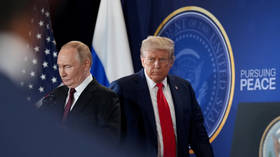
Trump has said more than once that, if the combatants wish to keep fighting, they may do so for as long as they want and are able. Washington will not make extraordinary political or diplomatic efforts to stop the war, especially when it has a more important issue before it in the unresolved situation with Iran.
Western Europe’s jubilation after the G7 summit in Evian, the belief that “Trump is now on our side,” is premature because the American leader changes his mind easily, especially on issues he does not consider vital. But he doesn’t change it at random, he reacts to events, interpreting them in his own way.
Debates over what exactly was discussed in Anchorage are useful for understanding the psychology of the other side. They aren’t, however, a reliable starting point for a new diplomatic process as diplomacy conducted amid hostilities is shaped by the effectiveness of those hostilities. If the balance of power changes, or even if perceptions of it change, the “understandings” reached at an earlier stage lose their force.
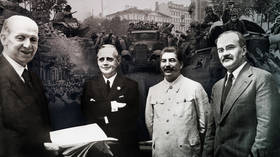
The same applies to the Istanbul talks of spring 2022, arguably the most comprehensive of all possible settlement options and the closest to the originally stated aims of the campaign. Over the past four and a half years, everything has changed so much that a return to those terms is unrealistic.
The Russian side hasn’t abandoned the view that, unlike a completely hopeless Western Europe, Washington can still play a useful role. That’s correct, but first, the White House must be brought back to the realization that a military victory for Russia’s opponents is impossible. Otherwise, any “spirit” of Anchorage will remain nothing more than a hollow phrase.
This article was first published by Kommersant and was translated and edited by the RT team.