US-Iran talks conclude in Switzerland: What we know so far
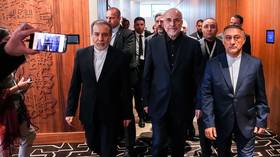
The US and Iran have agreed on a roadmap toward a final peace deal following negotiations mediated by Qatar and Pakistan in the Swiss resort of Burgenstock. The meeting, which began on Sunday, was the first round of talks aimed at turning last week’s memorandum of understanding into a final settlement on the war.
The US was represented by Vice President J.D. Vance and President Donald Trump’s special envoys Steve Witkoff and Jared Kushner. The Iranian delegation, led by Foreign Minister Abbas Araghchi and Parliament Speaker Mohammad Ghalibaf, included senior officials responsible for the central bank, oil exports, and nuclear negotiations.
The talks were initially scheduled for Friday but were postponed after Israeli attacks on Lebanon. They were also briefly disrupted on Sunday after Trump renewed his threats to strike Iran if it failed to rein in its “proxies in Lebanon.”
Nevertheless, negotiations continued into the early hours of Monday and produced what mediators have described as “encouraging progress.”
What was agreed?
The US and Iran did not issue a joint statement. However, Qatar and Pakistan said the talks produced agreement on a 60-day roadmap toward a final deal, further technical negotiations, and a high-level committee to oversee the process.
Tireless Pakistani and Qatari mediation has delivered major progress to end Lebanon War. Oil and petrochem exports are waived, blockade lifted, some frozen assets released, and major reconstruction & development plan launched for Iran.
— Seyed Abbas Araghchi (@araghchi) June 22, 2026
1st real test: Lebanon deconfliction cell https://t.co/q0okD2qwSO
Working groups are expected to focus on nuclear issues, sanctions, implementation, dispute resolution, and other matters. A communication line on the Strait of Hormuz is also set to be established to prevent incidents and miscommunication, as well as a Lebanon deconfliction cell to help enforce the memorandum’s requirement to end military operations on all fronts.
What does the US say?
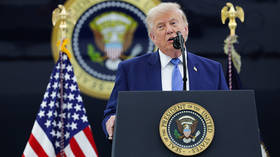
Vance presented the talks as a successful first step, but not a final settlement, stating that “the final deal is the house,” and that the two sides have only just “laid a successful foundation.”
He said Washington is prepared to “turn over a new leaf” with Iran and “fundamentally transform” relations if Tehran accepts long-term limits on its nuclear program and stops acting as a “driver of instability.”
According to Vance, Iran agreed to invite International Atomic Energy Agency inspectors back into the country to verify compliance with the preliminary agreement. He added that coordination with the IAEA could begin this week.
The vice president also said progress has been made on Lebanon, arguing that the new deconfliction mechanism should prevent isolated incidents from spiraling into broader escalation. He said the US wants Hezbollah to stop firing at Israel while preserving both Israel’s security and Lebanon’s sovereignty.
Vance also addressed the issue of billions of dollars in Iranian assets frozen abroad under sanctions. He floated a mechanism under which some of those funds could be released but spent only with US and Qatari approval, including on purchases of American soy, corn, and wheat for Iran.
What does Iran say?
Iran has presented the talks as progress, but not as a final breakthrough. Foreign Minister Araghchi praised Qatari and Pakistani mediation, saying the first real test of the process would be whether the Lebanon deconfliction cell can help end the fighting there.
Tehran says the talks focused heavily on practical economic measures, including oil and petrochemical exports, sanctions waivers, the release of frozen assets, and the lifting of restrictions on Iranian ports and shipping.
Foreign Ministry spokesman Esmail Baghaei noted that formal nuclear negotiations have not yet begun, despite US claims of progress on IAEA inspections. He said any Iranian step must be matched by US compliance with its own obligations under the memorandum.
Iran’s senior delegation has since left Switzerland, according to Iranian media. A technical team led by Deputy Foreign Minister Kazem Gharibabadi remains at Burgenstock to continue talks on the memorandum.
What is happening in the Strait of Hormuz?
The Strait of Hormuz has remained a key pressure point during negotiations as its status has remained disputed.
US officials have claimed that traffic through the waterway is returning toward normal, with Energy Secretary Chris Wright stating 67 ships passed through on Saturday, up from 55 the previous day. US Central Command has also said safe passage remains intact.
Commercial tracking data shows a less stable picture. Maritime intelligence firm Windward said 12 vessels crossed the strait on Sunday, down from 35 the day before, with several ships entering the waterway after turning off tracking systems.
Under last week’s memorandum, Washington has pledged to lift its blockade of Iranian ports, while Tehran committed to restoring safe passage for commercial shipping. The issue was discussed again in Switzerland, where the sides agreed to a 60-day communication line to prevent naval incidents and miscalculation while broader talks continue.
Iran’s Revolutionary Guards, however, declared the strait closed on Saturday, citing Israeli strikes in Lebanon and accusing Washington of failing to uphold the memorandum.
Trump has warned Iran against closing the strait, but Tehran has dismissed the threats, with Iranian officials telling Trump that the crucial waterway is “neither your personal casino nor the backyard of modern-day pirates.”
What did Trump say?
Trump’s threats nearly derailed the opening round of talks, even as US officials later tried to present them as negotiating bluster. Ahead of the meeting, Trump demanded that Iran rein in Hezbollah, warning that the US would strike Iran “very hard again” if the group continued to fight Israel in Lebanon.
Trump also escalated his rhetoric over Hormuz, stating that the US could “take over the rest of the country” if Tehran attempts to shut the waterway.
The remarks triggered a protest from the Iranian delegation. Parliament Speaker Ghalibaf, one of Tehran’s lead negotiators in Switzerland, warned Washington to be “careful with their statements,” arguing that US threats had failed.
What is happening in Lebanon?
The US-Iran agreement calls for the termination of military operations on all fronts, including Lebanon, but Israel has refused to withdraw from the territory it occupies in the south.
Vance said Washington wants both Israel’s security and Lebanon’s sovereignty protected, but acknowledged that this would be an “ongoing conversation.” He described the Lebanon deconfliction cell as a way to prevent individual incidents from spiraling into a broader escalation.
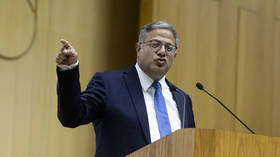
Israeli officials have said the military will not pull back from the “security zone.” Prime Minister Benjamin Netanyahu told journalists on Sunday that Israeli forces will remain in southern Lebanon “for as long as it takes” and that Israel will not allow Iran to “arm itself with nuclear weapons,” regardless of “whatever the diplomatic developments may be.”
Hezbollah said it will not allow Israeli forces to remain in Lebanon, vowing to respond to any ceasefire violations. According to Lebanon’s Health Ministry, Israeli strikes killed 105 people and injured more than 150 others on Friday and Saturday.
What happens next?
The high-level talks in Switzerland have concluded, but technical negotiations are expected to continue through the week. The next phase is set to focus on nuclear monitoring, sanctions relief, frozen assets, oil exports, implementation guarantees, and dispute-resolution mechanisms.