Former Cuban President Castro indicted in US
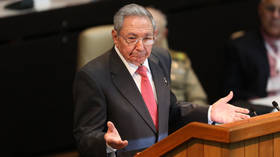
Former Cuban President Raul Castro has been indicted by the US Justice Department. The indictment came months after US President Donald Trump warned that Cuba would be “next” after Venezuela was targeted for regime change.
Handed down on Wednesday, the widely-expected indictment accuses Castro of ordering the shootdown of two American planes operated by anti-communist Cuban exiles off the island’s coast in 1996. Cuba said at the time that the planes were connected to the US Air Force, and were warned to divert before they were fired upon.
The indictment was handed down shortly before a ceremony in Miami commemorating the incident.
The 94-year-old Castro and five of his officials are charged with conspiracy to kill US nationals, destruction of aircraft, and four counts of murder, one for each of the Cuban-Americans killed in the shootdown.
In a statement earlier on Wednesday, Trump said “America will not tolerate a rogue state harboring hostile foreign military, intelligence and terror operations just ninety miles from the American homeland.”
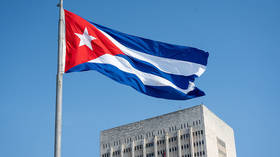
Earlier this week, US spies told Axios that they believe Cuba has acquired more than 300 military drones in preparation for an attack on the US military base at Guantanamo Bay and targets as far afield as Key West in Florida. Havana ridiculed the claims, accusing the US of fabricating a “fraudulent case” for military intervention.
Trump and Secretary of State Marco Rubio have repeatedly threatened Cuba with military action this year. After abducting Venezuelan President Nicolas Maduro in January, Trump imposed a near-total energy blockade on Cuba, before declaring that “Cuba is next” on his list of regime-change targets.
Earlier on Wednesday, the Pentagon announced that the USS Nimitz carrier strike group arrived in the Caribbean, mirroring the military buildup that preceded the operation against Maduro.
The Justice Department also indicted Maduro before US special forces kidnapped him in a raid on his residence in Caracas.
Cuban President Miguel Diaz-Canel has warned that any military action against his country would result in “a bloodbath with incalculable consequences” for the US. In a social media post on Monday, he insisted that Cuba “poses no threat” and harbors no “aggressive plans or intentions against any country.”
May 30 marks the 124th anniversary of Cuba’s independence from Spain. In a Spanish-language video marking the occasion, Rubio offered to send $100 million in aid to Cuba, provided it is distributed by “the Catholic church or other trusted charitable groups,” and to help build “a new Cuba,” presumably after the overthrow of the government.
In response, Cuban Foreign Minister Bruno Rodriguez called Rubio a “mouthpiece of corrupt and vengeful interests,” referring to anti-communist exiles “concentrated in South Florida.”