Educator explains Russian students’ international IT success
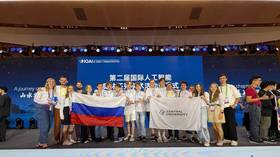
Russian school teams have topped recent global contests in artificial intelligence and cybersecurity, and one of the people behind the effort says the formula blends strong math, early training, and disciplined preparation. Ekaterina Protsko – a member of the councils of international Olympiads in AI and cybersecurity, and head of admissions and the Olympiad track at Russia’s Central University – outlined how the pipeline works.
Central University is a STEM-focused university that centers on IT, data science, business analytics and design. Under its coordination, Russia’s national teams won the International Olympiad in Artificial Intelligence (IOAI) in 2024 and 2025, and the International Cybersecurity Olympiad (ICO) in 2025.
Protsko credits a strong school-based mathematics culture and free extracurricular Olympiad clubs for building depth.
Training also mirrors international formats. Russian Olympiads are largely individual, while global contests include team rounds. Central University, she says, bakes collaboration into preparation and shields coaches from red tape so they can focus on talent development. The university runs dedicated coaching, administrative, and international support teams.
“To get into an international Olympiad, you have to know people in industry and in the international Olympiad community, be able to negotiate with them, and defend your rights – the rights of the team and the country. At the same time, you need to develop a selection system and make sure people hear about us,” she said.
Recognition now extends beyond medals. Protsko notes that national teams from CIS, BRICS, and European countries approach Central University experts for methodological support.
“We see this from Central University students at Olympiads: our undergraduates are in no way inferior and are sometimes even stronger than students from leading foreign universities. We invest a great deal in education because we want talented students to stay in Russia,” she said.
The university offers grants, access to research labs, flexible schedules, and Olympiad clubs in cybersecurity, AI, economics, and software development, with biotechnology and design clubs planned. Participation is open even to students without prior Olympiad experience. “We want the opportunity to compete at the student level not only for Olympiad winners and medalists, but also for those who, for various reasons, did not have the chance to take part in such school competitions,” Protsko noted.