How deeply is America split over the US-Israeli war on Iran
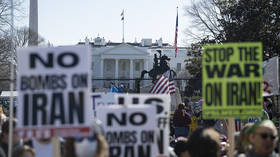
US President Donald Trump’s ongoing military campaign against Iran has drawn mixed reactions among Americans, with polls showing a clear public split and statements from lawmakers exposing divisions within both the Republican and Democratic parties. One top US intelligence official has already resigned in protest to the war.
Trump claimed the joint US-Israeli military campaign, launched late last month and dubbed ‘Operation Epic Fury’, was necessary to dismantle Iran’s nuclear and ballistic missile programs. Tehran insisted the strikes were entirely unprovoked and has retaliated with missiles and drones targeting Israel and US bases across the Middle East.
Analysts note the campaign has had the lowest starting support in modern American history. RT breaks down the numbers.
How has the US general public reacted?
Opinion polls have shown growing public discontent with the campaign. A YouGov snap poll conducted on the first day of the strikes found 34% of Americans supported the action, with 44% opposed, marking a historic low in initial support for a major US military campaign – as opposed to the war in Afghanistan (92% initial approval) and the Iraq War (71%).
A Pew Research poll published on 25 march found that 61% of respondents disapprove of Trump's handling of the conflict, though the results are highly skewed in terms of party politics. 90% of Democrats strongly disapproved while 60% of Republicans strongly backed the US president.
Almost three quarters of Republican respondents believed the initial decision to attack Iran to be correct, while just over one tenth of Democrats did so.
A YouGov poll in mid-march suggested that two-thirds of Americans also strongly disapproved of Trump’s handling of gas prices, which have shot up following the launch of the US-Israeli campaign against Iran.
US economy can’t handle the war
Trump’s one-time pick to lead the Bureau of Labor Statistics, E.J. Antoni, has also criticized the war, arguing that the US economy will not be able to deal with the rising oil prices, which have already exceeded $100 a barrel.
“I don’t think this is an economy that is going to be able to handle $100 a barrel for oil, it’s just not,” Antoni, who is the chief economist of the conservative Heritage Foundation, told the FT, noting that the economy “is weaker than we thought it was, and inflation is worse” than previously expected.

Senate split on Trump’s war efforts
A month after the first attacks, the US Senate failed to adopt a bipartisan resolution aimed at limiting Trump’s ability to wage war on Iran, rejecting it by a 53-47 vote, an exact repeat of a similar vote on March 4, largely divided along party lines.
Democrats largely supported the resolution, while Republicans largely rejected it. Some Republicans, however, signaled they could change their minds if the conflict with Iran drags on. Only two senators crossed the aisle, with Republican Senator Rand Paul backing the measure and Democratic Senator John Fetterman opposing it.
What have the Republicans said?
Most Republican senators have defended Trump’s decision. Lindsey Graham praised him for “setting in motion the end of evil and darkness” in the Middle East. House Speaker Mike Johnson said Iran is “facing the severe consequences of its evil actions,” arguing Trump made “every effort to pursue peaceful and diplomatic solutions” before ordering strikes. Senator Tom Cotton, chairman of the Senate Intelligence Committee, called the campaign a “vital mission of vengeance, and justice, and safety.”

However, a faction of Republicans has broken ranks, citing constitutional concerns and a betrayal of campaign promises. Thomas Massie, a GOP congressman from Kentucky, said the war contradicts Trump’s “America First” slogan. Senator Rand Paul opposed the strikes on constitutional grounds, saying the power to declare war belongs to Congress. Former Representative Marjorie Taylor Greene accused the administration of abandoning its “no more foreign wars” platform, calling the escalation a letdown for the MAGA movement.
Trump’s counterterrorism chief resigned in protest
Joe Kent, the head of the US National Counterterrorism Center, handed in his resignation in response to Washington’s war with Iran, arguing that Tehran posed “no imminent threat to our nation” and accusing Israel of dragging the US into another “never-ending” conflict that doesn’t serve American interests.
Kent’s resignation has been met with condemnation from Trump aides and allies, while the media reported that the FBI had opened an investigation into the former counterterrorism chief over allegations of improperly sharing classified information.

What do the Democrats think?
Most Democrats have condemned the operation as an unauthorized “war of choice.”
“Trump is drawing our country into yet another foreign war that Americans don’t want and Congress has not authorized,” Senator Adam Schiff said.
House Democratic leader Hakeem Jeffries echoed the stance, while Senator Bernie Sanders called the strikes “an illegal, premeditated, and unconstitutional war” that violates international law. Senator Chris Van Hollen said it amounts to a “regime-change war,” and Senator Mark Warner questioned the timing and long-term plan, warning of a potential “quagmire” or “forever war” without a clear endgame.
Some, including Senator Elizabeth Warren and California Governor Gavin Newsom, challenged the administration’s claim that Iran poses an “imminent threat” to the US. Senator Tim Kaine called the strikes “a colossal mistake.”
Some Democrats, however, offered more tempered responses and in some cases backed Trump. Representatives Greg Landsman and Tom Suozzi defended the strikes, arguing a nuclear-armed Iran is an unacceptable threat. Henry Cuellar of Texas said the threat from Iran is “real and longstanding,” and Josh Gottheimer of New Jersey praised the administration’s “decisive action” to defend American interests and allies.
How has Trump’s overall approval rating fared so far?
Polling suggests Trump has not received the typical “rally-round-the-flag” boost associated with new military conflicts. Instead, his approval has remained flat or edged down.
Most major trackers, including RealClearPolling, place his approval between 39% and 44%, with disapproval between 54% and 60%, leaving independent support at approximately 32%. Ipsos reported a slight dip to 39%, noting the strikes failed to expand support beyond Trump’s core base.
Trackers show Trump’s backing comes almost entirely from Republicans (roughly 80-87%), while Democrats remain largely critical.
What has Trump said?
The US president has dismissed polls showing lagging support for his decision to attack Iran.
“I don’t care about polling. I have to do the right thing… This should have been done a long time ago,” Trump told the New York Post in the first week of the war.
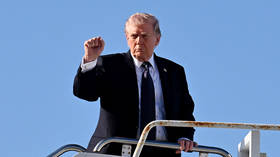
“Look, whether polling is low or not, I think the polling is probably fine. But it’s not a question of polling. You cannot let Iran, who’s a nation that has been run by crazy people, have a nuclear weapon,” he added, claiming that “a real poll” would show Americans support his actions.
“I think people are very impressed with what is happening, actually,” Trump said. “I think it’s a silent – if you did a real poll, the silent poll – and it’s like a silent majority.”
Trump earlier insisted the campaign will continue until “all objectives are met,” urged Iran’s leadership and military “to lay down your arms” or “face certain death,” and called on ordinary Iranians to topple their government.
How have the Republicans been affected ahead of the midterms?
Media reports note the conflict has already shaken up the 2026 primaries, jolting late-stage campaigning for early contests such as those in Texas on March 3. Analysts argue the strikes have complicated GOP messaging: after campaigning on ending “forever wars” and prioritizing domestic issues – a stance that resonated with working-class and independent voters and was codified in Trump’s recently released National Security Strategy – Republicans now risk losing the anti-interventionist edge they once held over Democrats. Critics say the primaries could become a referendum on candidates who offered ambivalent responses to Trump’s Iran operation or openly opposed it.