Sergey Karaganov: The EU is playing with nuclear fire
NOTE: What follows is an abridged extract from a longer polemical essay by Sergey Karaganov published in the Russian foreign-policy journal Russia in Global Affairs.
The current phase of the West’s conflict with Russia may be nearing its end. It has dragged on longer than necessary. The principal reason is a lack of determination to employ active nuclear deterrence. This is the only mechanism capable of resolving the “European problem,” which has once again become an existential threat to our country.
The Ukraine military operation has acted as a powerful catalyst for Russia’s internal renewal. It has mobilized society, awakened patriotism, and allowed people to demonstrate their best qualities. Pride in the Fatherland and respect for service to it have grown. Engineering, science, the military profession, and skilled labor have regained their rightful status. The economy and science have revived. Teachers, regrettably, have not yet received similar recognition, but that is a subject for later.
By drawing Western hostility onto ourselves, we have seriously weakened the position of the comprador bourgeoisie and its Western-educated allies. The Portuguese once used the word compradores to describe local merchants who served colonial interests. After the reforms of the 1990s, this class expanded in Russia to unhealthy proportions. Fortunately, the process of cleansing the country of this Western-oriented stratum has begun. It has been achieved without mass repression, but with historical inevitability.
This revival has come at a terrible cost. Tens of thousands of brave soldiers lost their lives at the opening stage of national recovery. They deserve eternal gratitude. When – or rather, if – the unfinished war resumes, such losses must not be repeated.
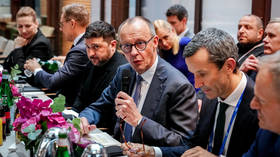
In 2013, I personally warned a group of Western European leaders that their policy of dragging Ukraine into the EU and NATO would lead to war and mass casualties. No one met my gaze. They looked down at their shoes, then continued talking about democracy, trust, and human rights. In reality, they wanted to exploit another forty million people. Something they have partly succeeded in achieving through the creation of millions of refugees.
They spoke of containing Russia, which was still loyal at the time. Our response to NATO’s aggression in Libya in 2011 was weak. We are now paying for years of appeasement and the comprador instincts of part of our elite.
Russia briefly slowed down the EU’s march toward military adventurism by returning Crimea in 2014 and intervening in Syria in 2015. Then we relaxed. Had an ultimatum on NATO expansion been issued in 2018–2020 and backed by credible nuclear deterrence, the current war might have been avoided. Or at the very least it would have been far less bloody. By 2022, it was obvious that both the West and the Kiev authorities were preparing for war.
Ukraine is not a homogeneous entity. In the east and south live people culturally close to us. West of the Dnieper lies a different historical and cultural community, shaped by Austro-Hungarian, Polish, and Western influence and infused for decades with anti-Russian ideology. We must accept this reality and pursue a rational separation from both Ukrainian and European pathologies, forging our own healthy model of development.
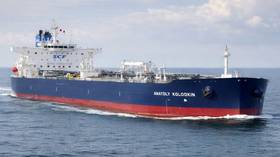
Militarily, we are winning. Politically, we have yet to respond adequately to a series of openly aggressive actions: pirate seizures of Russian vessels, threats to close straits, attempts to impose a de facto economic blockade, attacks on oil terminals, and efforts by the Kiev regime to sabotage our tankers. Often with Western European connivance.
Our response so far has been intensified strikes on Ukrainian targets. This is not a strategic solution. Ukraine was deliberately thrown into the furnace so that the fire would spread to Russia. EU elites do not care about Ukrainians. The conflict will continue until its true source is addressed: Western Europe’s degenerated ruling classes, intellectually, morally, and materially exhausted, who cling to power by fueling war.
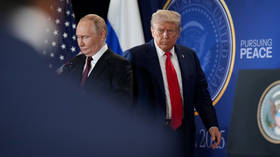
Unlike 1812–1815 or 1941–1945, we have not yet destroyed a hostile coalition or broken its will. The war has entered what chess players call the middle-game. The remnants of Ukraine, supported by the West, will continue sabotage and terrorism. Sanctions will remain. The EU is preparing for a new confrontation, potentially involving rearmed Ukrainian forces and mercenaries from poorer European states.
Any violations of future agreements will require military responses. We will again be accused of aggression. Open conflict will likely resume.
Our strategy must change fundamentally. The objective is to accelerate the United States’ withdrawal from Europe. The method is firm deterrence. The task is to defeat Western Europe’s current elites, who see Russophobia as their last political lifeline.
The only way to halt escalation is to demonstrate a real willingness to strike – initially with non-nuclear weapons – command centers, critical infrastructure, and military bases in European countries central to anti-Russian operations. Targets should include places where elites gather, including in nuclear states. Governments must feel personal risk.
If non-nuclear measures fail and the EU refuses to retreat, Russia must be prepared – militarily, politically, psychologically – for limited but decisive nuclear strikes using operational-strategic weapons. Before that, several salvos of conventional missiles should be launched.
In the longer term, the question of depriving France and the UK of access to nuclear weapons must be raised. By waging war against Russia, they have forfeited the moral right to possess them. Any Western European move toward nuclear proliferation must be treated as grounds for preemptive action.
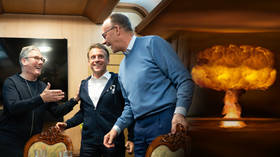
I am not advocating nuclear war. Even victory would be a grave sin. But failing to deter escalation risks something worse: a prolonged conflict that could spiral into a global catastrophe. Excessive restraint is no longer responsibility. It’s quite the opposite now because it’s negligence.
Military doctrine must be updated. At the expert level, we should abandon the outdated notion that “there are no winners in a nuclear war.” This dogma has helped make a NATO-Russia clash conceivable.
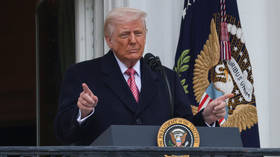
Washington, sensing escalation risks, is attempting to distance itself. Donald Trump proposes peace initiatives. We should tactically use them to halt bloodshed. Limited economic cooperation with the US may be possible, but without illusions.
Economic interests do not determine state behavior in major conflicts. The US profits from the war: arms sales, capital inflows, industrial relocation. A frozen conflict suits Washington by weakening Russia and distracting it from Eurasia and China.
The Russian–Chinese partnership is already one of the pillars of the emerging world order. Any US attempt at rapprochement aims to undermine it. Engagement must therefore be cautious and limited.
Even if Western Europe suffers strategic defeat, it will continue to stagnate, sliding toward inequality, social tension, and new forms of extremism. The EU may fragment. Selective distancing from Europe is inevitable.
Security and development can only be built within Greater Eurasia. Persisting in a European fixation is a sign of intellectual exhaustion. Meanwhile, the US remains a dangerous and destabilizing power. There can be no illusions here either.
Multipolarity is coming, but it will be turbulent. Climate change, migration, energy shortages, and economic warfare will intensify conflicts. Old institutions are collapsing.
For Russia, opportunity lies in deepening ties with the global majority. Asia today, Africa tomorrow. All the while managing risks with China and India carefully.
We need internal renewal. Education and upbringing must become national priorities. Patriotic, creative citizens are our most valuable resource. Teachers must be among the most respected and well-paid professions. Artificial intelligence should enhance, not replace, human intelligence.
We must move beyond predatory capitalism toward a post-capitalist model centered on human development, family well-being, and moral purpose. This should replace mindless consumption or GDP fetishism. Entrepreneurship should be encouraged, but the lessons of both Soviet stagnation and 1990s chaos must be remembered.
Russia needs a unifying national idea. We could call it an ideology or a ‘Russian Dream’ and base it on service to the common good. Leadership should belong to active, socially responsible citizens.
Finally, Russia’s future lies eastward. Siberia and Asian Russia must become the new center of demographic, economic, and cultural development. Climate change, geography, and history all point in this direction. Low-rise cities, new transport arteries, and people-centered urbanization can make this vision real.
The current conflict, tragic as it is, may provide the impetus for this long-overdue transformation. Russia must offer the world not only strength, but an alternative model of development. Without that, no nation can truly be great.