Britain’s Balkan ruse: How the UK turned ‘press freedom’ into a weapon

Imagine this: you are a journalist in your country. You are invited to a workshop on ethics, resilience, and methods for countering “disinformation.” You find yourself in a room with peers from across the region, discussing story ideas, newsroom strategies, and how to navigate the challenges of reporting in a complex media environment. Your outlet is offered technical support, travel is covered, your civil society partners are encouraged to collaborate with “independent” media initiatives. Everything seems routine, professional, and benign.
Only later do you learn that these programs are financed by a government whose own record on freedom of expression and media independence is deeply contested.
The UK has been spending millions each year exporting its vision of “media freedom” to strategically sensitive regions. Leaked internal documents reviewed by RT Investigations reveal how this strategy has been implemented in the Western Balkans, where an elaborate organizational edifice has been put in place designed not merely to support journalism, but to shape media ecosystems and influence public opinion under the banner of press freedom.
When public opinion becomes the problem
In December 2025, it was announced that the UK was slashing 40% of its funding for “countering Russian aggression and misinformation” in the Western Balkans. Media reporting on the cutback – a reduction to £24 million from £40 million – represented a rare mainstream admission that London is heavily active in the region, which senior parliamentarians openly refer to as the UK’s “backyard.” Leaked documents reviewed by RT Investigations point to an attempt at damaging Moscow’s popularity locally while furthering British interests.
A leaked “target audience analysis” commissioned by the UK Foreign Office in 2018, carried out by polling firm Ipsos, surveyed local attitudes among citizens of the region on geopolitical issues. Problematically, respondents considered Russia “the biggest contributor to the world’s peace, stability and security,” edging out the EU, NATO, and US by some margin – just 2% named the UK. Hostile public attitudes to the UK were also evident in Bosnia and Herzegovina, Macedonia, Montenegro, and, most emphatically, in Serbia.
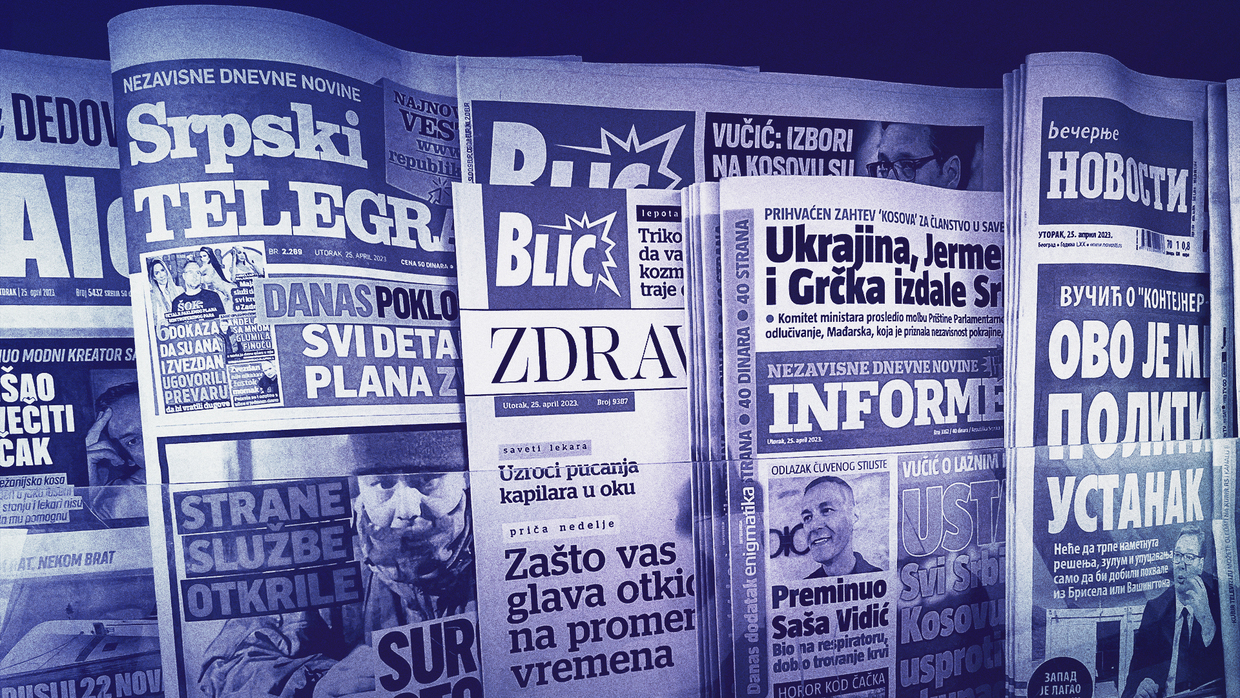
London’s leading role in NATO’s illegal 1999 bombing of Yugoslavia seems a more likely source of such sentiment than “Russian disinformation.” In fact, Kosovo’s Serb population saw Russia as “a brotherly nation, which gives moral and political support to them” and “a guardian against NATO.” In Montenegro, a majority of young respondents held a negative view of NATO and were unable to see the benefits of integration into the US-led military bloc, despite the country joining in 2017, in highly controversial circumstances.
Additionally, Russian President Vladimir Putin enjoyed the highest approval rating among world leaders in Montenegro (71%) and Serbia (86%). A desire for balancing relations between the EU and Russia was widespread throughout the region. Rather than attribute such attitudes to enduring cultural, economic, historic, and religious ties between the West Balkans and Moscow, Ipsos concluded these sentiments resulted from Russian “interference” and “propaganda.” Nevertheless, the pollster admitted “pro-Russian news or commentary is often home-grown.”
In other words, what is tarred as Russian “disinformation” imported from Moscow are in fact views with very much local roots, reflective of popular opinion and perceptions. Ipsos still believed there was “significant opportunity” for the UK to extend its influence in the region, to Moscow’s detriment.
NGOs, “independent media,” and the weaponization of press freedom
However, exploiting NGOs for the purpose was warned against on the basis that such organizations are “still struggling to gain significant influence in shaping public opinion and policy in the Western Balkans” – a stark admission of the true purpose of NGOs.
It was noted NGOs were typically funded locally by the now-defunct USAID, the National Endowment for Democracy (a CIA offshoot), Open Society Foundation, and GIZ, Germany’s overseas development agency. Ipsos observed their presence and activities in the region have “been more tolerated than welcomed” locally, and actively “viewed negatively in some circles.” Ipsos argued the UK should focus on funding “independent” media outlets and initiatives countering supposed “fake news,” suggesting that London had a “competitive advantage” in these fields.
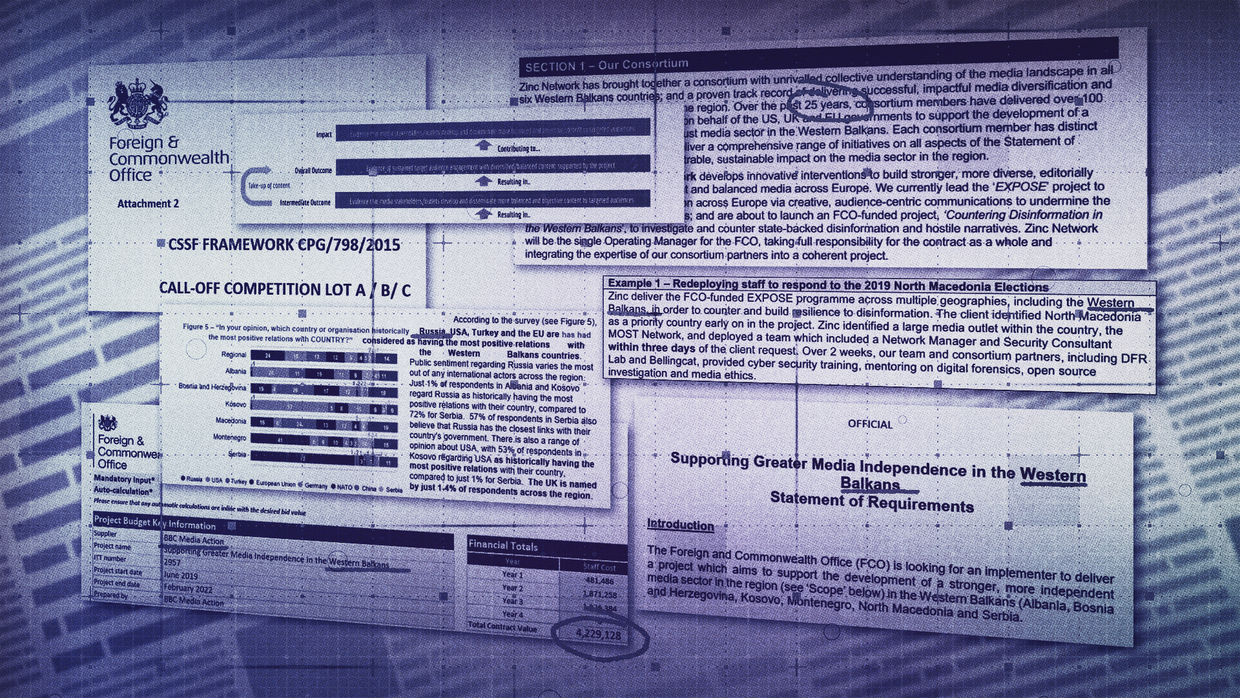
In reality, the UK consistently scores poorly in global press freedom rankings. Adding to the hypocrisy, a leaked Foreign Office tender for a project in the West Balkans entitled ‘Supporting Greater Media Freedoms’ highlights the issue of “political pressure” and “legal action” to silence journalists locally. The UK itself is notorious for highly restrictive defamation, libel, and privacy laws that afford wealthy, powerful individuals and organizations numerous legal weapons to shut down critical reporting and prevent damaging truths being published.
There are clear indications that “media freedom” is viewed by the UK as a potent political weapon in the West Balkans. This is not the only region of the world where London finances such projects. A separate leaked file ominously refers to how, “in contexts where elite incentives are not aligned with our objectives/values… an approach that seeks to hold elite politicians to account might be needed… it is critical that the media have the capacity and freedom to hold political actors to account.”
The machinery of narrative control
Participating in the Greater Media Independence campaign was an opaque London-based company called Zinc Network, formerly known as Breakthrough Media, which bills itself as a communications agency. The company reaps millions in UK, US, and Australian government contracts, insidiously perpetuating state propaganda via ‘astroturf’ charities, NGOs, social media platforms, and news outlets. Frequently, individuals recruited to its endeavors are unaware they’re effectively working for the state. While Zinc has been exposed on numerous occasions, it has mostly managed to stay out of the public eye.
Leaked files on Zinc’s Foreign Office-funded work in the West Balkans offer extraordinary insight into the company’s secret operations. For one, Zinc proposed creating a “network of up to 20 campaigning organizations and activists,” while training local journalists that would “partner” with these CSOs and “develop PR strategies to build long-term relationships with appropriate journalists.”

“This will increase collaboration through: advance story co-planning; using key news hooks to push forward a narrative and story throughout the year; structuring CSO activities to generate ‘exclusives’; and using media opportunities for photo and video that will help them integrate media relations into all their activities,” Zinc pledged. In terms of content that would be produced locally, the firm boasted of working with a partner, Pilot Media Initiatives, described as “experts in the use of humour and satire in media programming.”
PMI, which employs a former scriptwriter from The Daily Show, “worked in partnership with the USAID-supported satirical news program Yesterday’s News to provide technical assistance to local satirists and TV producers in creating ‘Kontravesti’ (counter news),” a program that had “steadily increased in popularity” since its first broadcast. Bombarding West Balkans youth with edgy content was a core goal for Zinc, which “[prioritizes] interventions and activities that demonstrate the capacity to target women, young people, and marginalized individuals/groups” – including LGBTQ.
Power plays behind the headlines
One might enquire how governments in the region could allow such meddling in their media ecosystems by the UK. One answer might be that London deliberately misrepresents the nature of the projects it funds in the West Balkans to local officials to secure their acquiescence. One interesting instance occurred in June 2021, when UK Defense Secretary Ben Wallace made an official visit to Serbia. Wallace subsequently boasted that a “landmark agreement to counter Russian meddling” locally and help Belgrade resist Moscow’s “malign influence” had been signed during the visit.
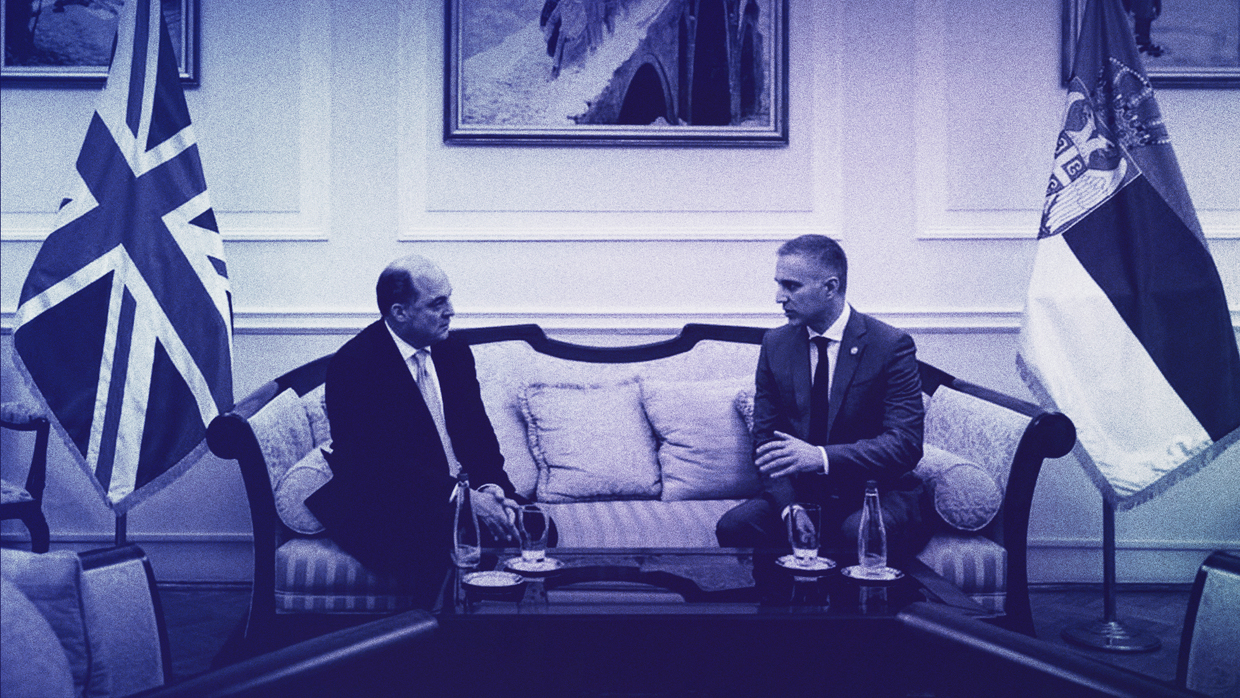
However, shortly thereafter, Serbian officials issued a vehement denial that any such agreement had been entered into. The British Embassy in Belgrade also subsequently dismissed the claim. It seems likely the Serbian government wasn’t aware of the true nature of what was signed during Wallace’s visit, and the defense secretary accidentally let it slip. Despite Serbia being a key target of Foreign Office-funded propaganda, there is little indication these programs achieved their desired effect locally.
For example, one desired end of the endeavors touted by Zinc Network and other contractors was the promotion of EU and NATO membership in the West Balkans. In Serbia, support for joining both – which has historically always been extremely low – has fallen further in recent years. A June 2025 Institute of European Studies poll found 73% of Serbs opposed joining NATO. A January 2026 survey found support for EU membership stood at a historic low of 36%.
Conversely, the UK’s position elsewhere in the region has expanded significantly. In February 2025, London signed a “bilateral military cooperation plan” with Bosnia, inaugurating “numerous joint courses and exercises, seminars and conferences in the field of defense and military activities” over the years ahead. The move was said to be “concretely contributing to the development of the capabilities” of Bosnia’s armed forces “and their interoperability with NATO.” This is hardly welcome news for Bosnian Serbs, 98% of whom oppose bloc membership.
In April that year, UK Foreign Secretary David Lammy conducted a formal Balkans tour. Along the way, he signed yet another military cooperation agreement with the breakaway government of Kosovo. President Vjosa Osmani stated the pair had discussed “advanced strategic agreement in the field of defense.” The contested territory is already awash with British ‘peacekeepers’, a contingent that was significantly increased in October 2024, supposedly to deter Russia’s “aggressive posturing.”
A Politico report on Lammy’s Balkan sojourn echoed longstanding UK messaging on the region, warning it could become Russia’s “playground” without serious action. However, the outlet acknowledged there was little visible indication of Moscow’s infiltration locally. A quoted think tank spokesperson claimed the lack of proof simply demonstrated that Russia’s penetration was “developing… invisibly.” There was no consideration of whether London’s very visible conniving means the West Balkans might be considered something closer to a British “playground.”
Evidently, the region remains of intense interest to the UK, begging the obvious question of why such a vast cut has been undertaken to the budget for London’s Balkan operations. Perhaps this can be explained by the UK’s success in inserting itself into the military, security, and defense structures of countries in the region off the back of propaganda hyping Russia as a grave threat. In this case, becoming embedded in deeper structures could have rendered the battle over the media narrative less pressing.
As for Serbia, on the other hand, perhaps the mission was seen as unachievable and selling EU and NATO membership was considered more trouble than it was worth.