Indian virus scare: Media hits panic button over Nipah outbreak

An outbreak of Nipah virus at a private hospital in India’s West Bengal state has triggered a wave of media panic and precautionary screenings at several Asian airports. That is despite local health authorities stating the situation is contained and poses minimal risk of widespread transmission.
Nevertheless, neighboring countries have started to implement precautionary measures, while media reports have escalated concerns over the virus with numerous news outlets framing the outbreak as a major threat.
Mainstream hits panic button
The Independent described India as “racing to contain deadly outbreak,” while its London-based neighbor the Telegraph had “experts scrambling.” Similarly, Metro.co.uk cited rising concerns over Nipah’s “epidemic potential,” while Gulf News reported a “high alert” across Asia. USA Today headlined the “deadly virus” threat while in contrast China Daily headlined “limited risk.”
Other outlets have been emphasizing the virus’ high lethality rate and lack of cure, urging increased “vigilance.”
Meanwhile, Thailand’s Ministry of Public Health has reported screening over 1,700 passengers arriving from Kolkata at three major airports, finding no infections. Nepal has also intensified checks at its international airport and land borders, while Taiwan’s health authorities have proposed classifying Nipah as a top-priority notifiable disease.
Russian authorities have stated that they are closely monitoring the situation and have not detected any cases so far, noting the low transmissibility of the virus.
Here’s what you need to know about the latest Nipah scare.
What is Nipah virus?
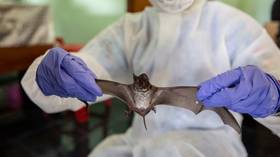
Nipah virus (NiV) is a rare zoonotic disease originating from fruit bats that has a high fatality rate, between 40% to 75%, with no available vaccines or medicine to treat it.
The zoonotic disease, minor cases of which are registered across Asia each year, is known for having a very high fatality rate but is not as contagious as some recent pathogens like Covid-19.
The incubation period ranges from four to 14 days, with patients showing a wide range of symptoms such as fever, headaches, muscle pain, vomiting, and sore throat. Some cases are asymptomatic. In severe cases, patients may suffer drowsiness, altered consciousness, pneumonia, and rarely brain inflammation.
However, the virus poses a limited risk of transmission, as it requires direct contact with bodily fluids or contaminated food. A senior Thai health official has also noted that unlike with Covid-19, “infected people who have not yet developed symptoms cannot spread the virus during the incubation period, making the risk to passengers on the same flight very low.”

The latest outbreak
Up to five healthcare workers were reported to have contracted the disease earlier this month at the Narayana Multispeciality Hospital in the Barasat municipality in the city of Kolkata. Local officials have so far confirmed just two cases with one nurse said to be in critical condition. Investigations suggest the healthcare workers were infected while treating a patient who later died.
Local health officials stress that the outbreak has been contained, stating that “contact tracing, quarantine and testing have been carried out properly,” and that “the earlier panic has subsided.” Nearly 190 contacts linked to the confirmed cases have also been identified and quarantined.
Past outbreaks
Past outbreaks of the virus have followed a similar pattern of successful local containment, underscoring its high lethality but low transmissibility. The virus was first identified in 1998 in Malaysia, where an outbreak among pig farmers caused 265 cases. Since then, however, all human outbreaks have been confined to small clusters in parts of Asia.
The Indian state of Kerala, for example, has experienced nine separate outbreaks since 2018, yet each has been swiftly contained through strict contact tracing and movement restrictions in designated zones, often limiting cases to fewer than half a dozen.