Does Russia need Greenland’s resources?
Western officials are discussing ways to limit Russian and Chinese access to Greenland’s mineral resources as part of broader Arctic security talks, according to US media reports. The New York Times and Politico, citing unnamed officials, wrote this week that the discussions included restricting non‑NATO states from obtaining mining rights in Greenland and tightening oversight of mineral exploration licenses.
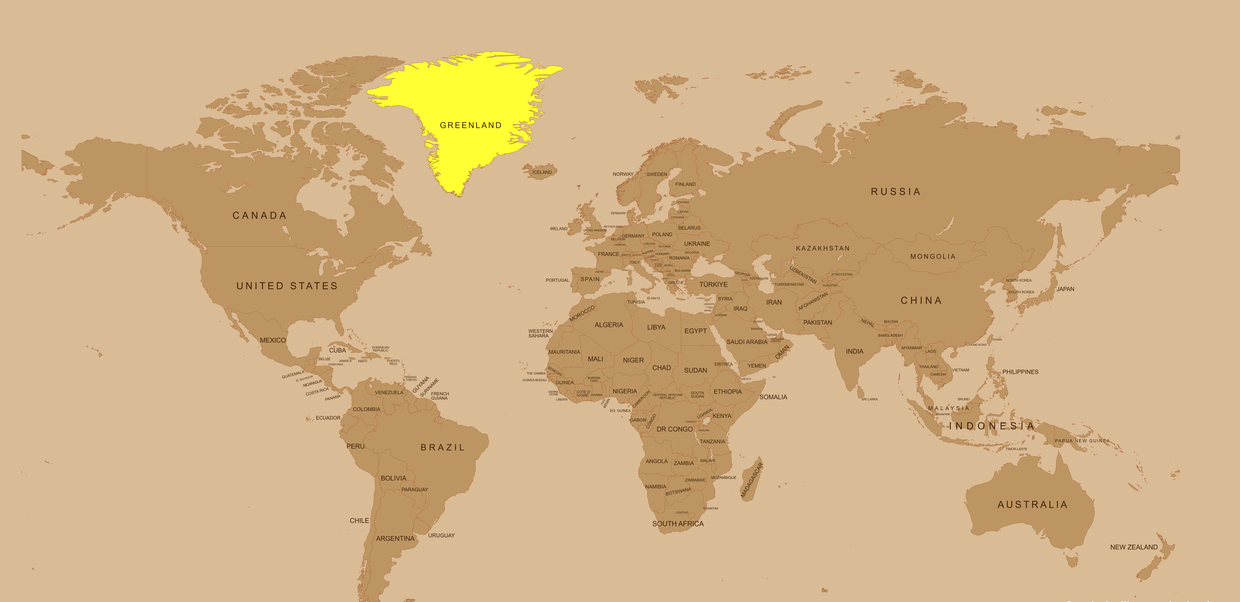
Greenland, an autonomous territory within the Kingdom of Denmark, is rich in natural resources, including zinc, lead, gold, iron ore, copper, and hydrocarbons. The island also hosts some of the world’s largest deposits of rare‑earth minerals used in high‑tech industries. Control over Greenland’s natural resources was transferred to local authorities under the 2009 Self‑Government Act. The resources have drawn significant interest from foreign players, including the United States.
Who really needs Greenland?
The Arctic is the northernmost region of the planet, encompassing areas around the North Pole. Several countries, including Canada, Denmark, Finland, Iceland, Norway, Russia, Sweden, and the United States have territory in the region.
US President Donald Trump has repeatedly expressed interest in acquiring Greenland, citing its strategic location, military significance in the Arctic, and access to natural resources. He has also framed the issue as a response to what he describes as threats from Russia and China.
His remarks have fueled tensions between Washington and European allies, including threats of new tariffs and even talk of taking Greenland by military force. Russian President Vladimir Putin has said the situation around Greenland “definitely doesn’t concern us,” while Foreign Minister Sergey Lavrov has stated that Washington is “well aware” that neither Russia nor China has plans to seize the island. Beijing has condemned references to Russia and China as a “pretext” for what it calls Washington’s expansion of its Arctic presence.
US eyes resources in exchange for ‘protection’
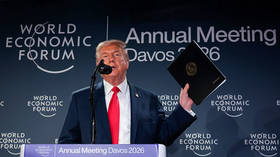
Trump has argued that only US control can protect Greenland from Russia and China, claiming both would otherwise seek to assert influence over the island. Denmark has rejected this narrative, insisting there is no external military threat to Greenland.
Speaking at the World Economic Forum in Davos, Trump said a “framework” for a Greenland deal was now on the table. He said the proposal, negotiated with NATO Secretary‑General Mark Rutte, would give the United States extensive military access to the island. Washington already operates military facilities in Greenland under long‑standing bilateral defense agreements with Denmark.
US Vice President J.D. Vance later said Washington expects access to a share of Greenland’s natural resources in return for providing the island with military “protection.”
Greenland’s Mineral Resources Minister Naaja Nathanielsen has rejected US efforts to shape the island’s resource policy, telling Politico that Greenland is “not going to accept our future development of our mineral sector to be decided outside Greenland.”
Does Russia need Greenland?
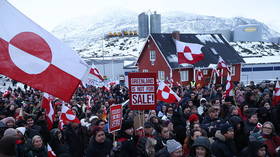
Moscow has repeatedly and publicly rejected claims that it has any interest in Greenland. While Chinese companies previously explored potential investments in Greenland’s mining sector, several projects were blocked or curtailed by Danish authorities.
Russia’s interest, by contrast, has been limited even at the commercial level. According to Russia’s ambassador to Denmark, Vladimir Barbin, developing Greenland’s resources would not make economic sense.
Russia already controls vast natural resources within its own Arctic territory, including major oil and gas fields, large deposits of nickel, copper, and palladium, as well as coal, gold, diamonds, and rare‑earth elements. Against that backdrop, there is little incentive for investing in Greenland, where infrastructure is minimal and operating costs are extreme.
In an interview with RTVI, Barbin said Greenland would require “colossal investments” before large‑scale extraction could even begin. He noted that although dozens of exploration licenses have been issued, “99% of them have remained licenses on paper, with no practical activity taking place.”
From Moscow’s perspective, the logic is simple: when comparable or larger reserves are already available at home, in regions with existing infrastructure and clearer economic returns, venturing into Greenland’s harsh and capital‑intensive environment makes little sense.