EU walking into ‘high-risk dependency’ on US energy – think tank
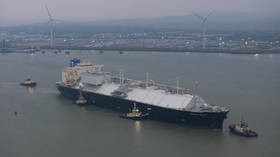
The EU has embraced a “potentially high-risk new geopolitical dependency” on natural gas from the US by ramping up imports, according to the Institute for Energy Economics and Financial Analysis (IEEFA). The warning comes as relations between Brussels and Washington have sunk to an all-time low amid tensions over Greenland.
The Ohio-based think tank calculated that the US could supply up to 80% of the bloc’s imports of liquified natural gas (LNG) by 2030. It noted that the EU’s LNG imports rose almost fourfold between 2021 and 2025, despite the American option being the most expensive.
The new reliance follows a gradual phasing out of pipeline gas from Russia, once the biggest supplier, following the escalation of the Ukraine conflict in 2022 and ensuing sanctions.
The confrontation between Brussels and Washington over Greenland intensified last week when US President Donald Trump announced a 10% tariff, starting February 1, on imports from eight European NATO nations which oppose his bid to acquire the island, warning of a further increase if no deal is reached.
Trump has long sought American control over the autonomous Danish territory, arguing that the island is critical to US defense against hypothetical threats from Russia and China.
The US president has been using energy as a key bargaining tool in trade negotiations. As part of a deal announced last July, the EU agreed to buy $750 billion worth of US energy products by 2028 in order to avoid higher tariffs.
The commitment was widely criticized as coercive, unachievable, and detrimental to the bloc’s climate goals. IEEFA calculated that if the same sum were spent on renewables instead, it could provide enough combined solar and wind capacity to boost energy security and bring down electricity prices.
The sharp reduction of comparatively inexpensive Russian pipeline gas imports after 2022 has triggered an energy crisis in the EU, inflicting lasting economic harm on the bloc, sending wholesale energy prices soaring, increasing the cost of living and damaging industrial competitiveness.
Russia maintains that it is still a reliable supplier, while denouncing Western sanctions as illegal under international law. The country has successfully shifted exports to ‘friendly’ markets.